Advertisement
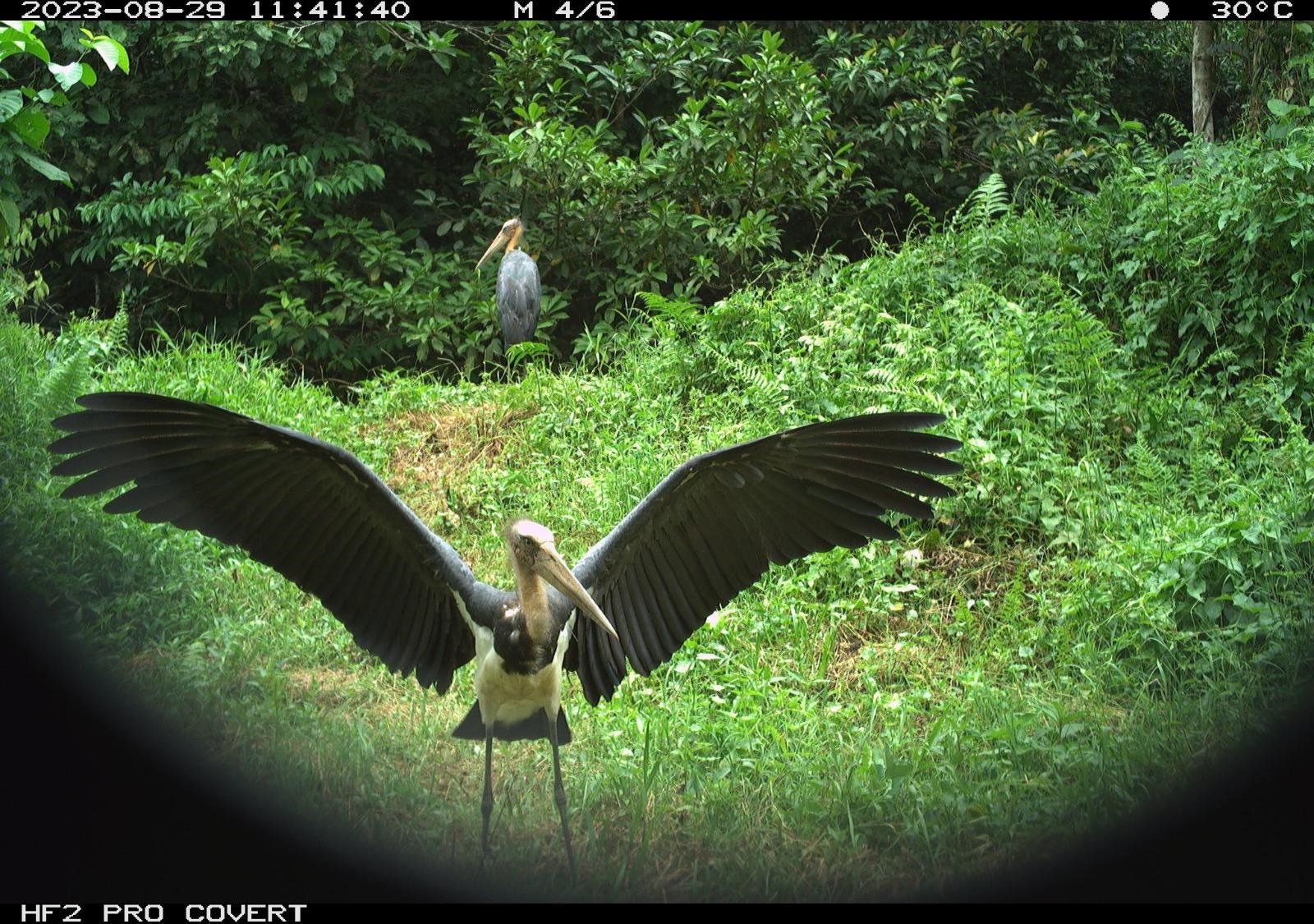 Lesser adjutant flapping its large wings on acquired land.
Advertisement
Advertisement
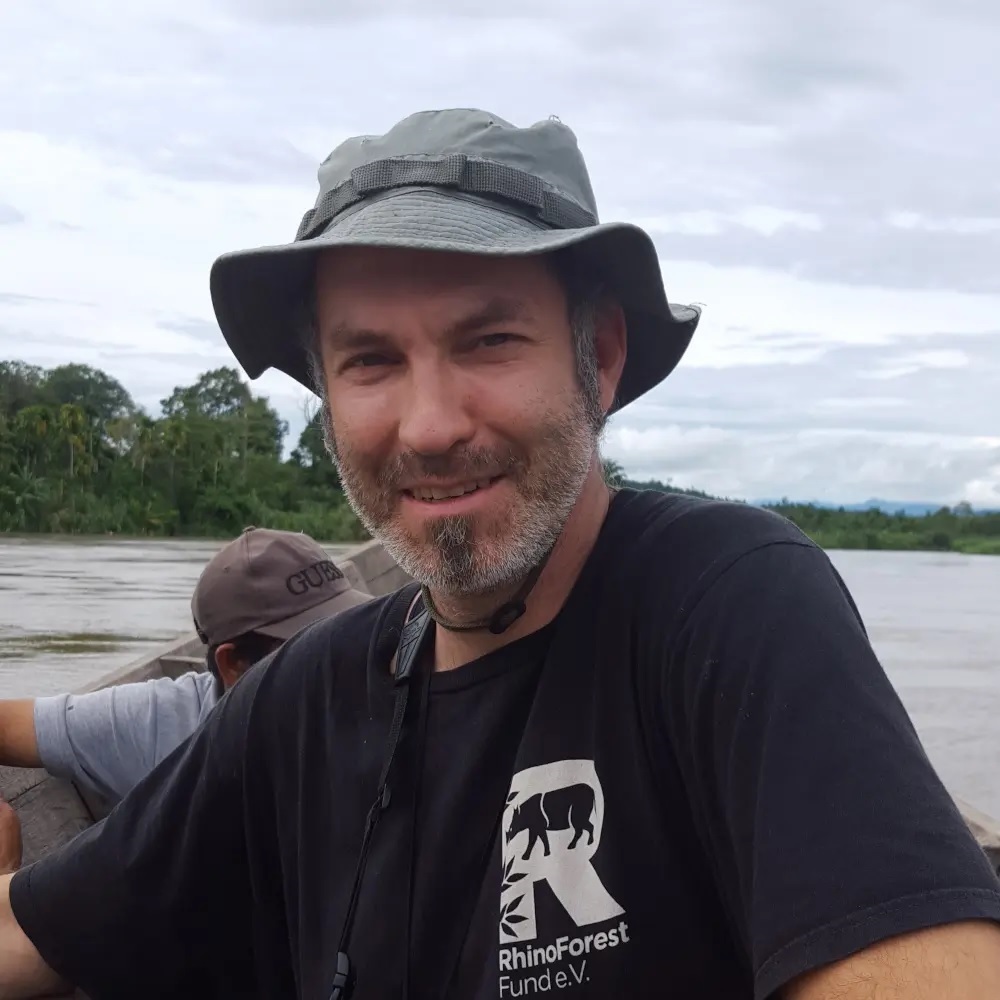 ‘Despite being degraded by logging, at least 8,000ha are still primary forest.’ – Robert
“After heavy logging especially in the 1970s and early 80s, in 1984 the Tabin Wildlife Reserve (TWR) was gazetted, setting aside a considerable tract of lowland wilderness for conservation,” he noted.
“Despite being degraded by logging, at least 8,000ha are still primary forest and vast parts regenerate since logging ceased.”
Conservationist John Payne, who contributed a lot to Tabin’s protection, has been quoted as saying:
“One of the most significant remaining tracts of lowland mixed dipterocarp forest in the world. It’s of great importance for Bornean lowland vertebrates.”
Long time spared by humans
According to Risch, before 1952 there is no evidence of human presence in the interior area of the Tabin Landscape at all.
And even today there are only very few human settlement in this area and accessibility is still very difficult.
“The absence of people might explain why there are still elephants on Borneo,” he opined.
‘Despite being degraded by logging, at least 8,000ha are still primary forest.’ – Robert
“After heavy logging especially in the 1970s and early 80s, in 1984 the Tabin Wildlife Reserve (TWR) was gazetted, setting aside a considerable tract of lowland wilderness for conservation,” he noted.
“Despite being degraded by logging, at least 8,000ha are still primary forest and vast parts regenerate since logging ceased.”
Conservationist John Payne, who contributed a lot to Tabin’s protection, has been quoted as saying:
“One of the most significant remaining tracts of lowland mixed dipterocarp forest in the world. It’s of great importance for Bornean lowland vertebrates.”
Long time spared by humans
According to Risch, before 1952 there is no evidence of human presence in the interior area of the Tabin Landscape at all.
And even today there are only very few human settlement in this area and accessibility is still very difficult.
“The absence of people might explain why there are still elephants on Borneo,” he opined.
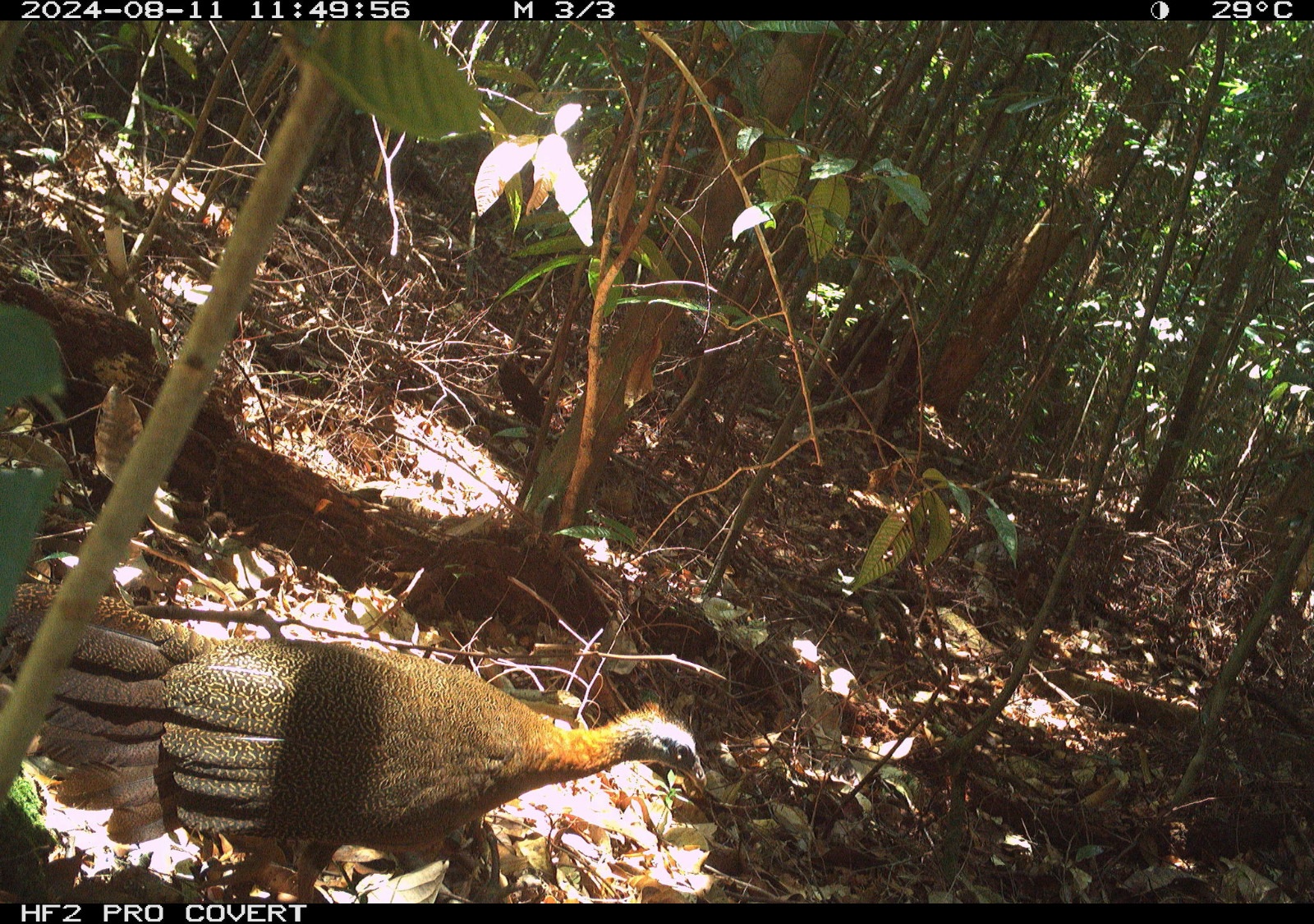
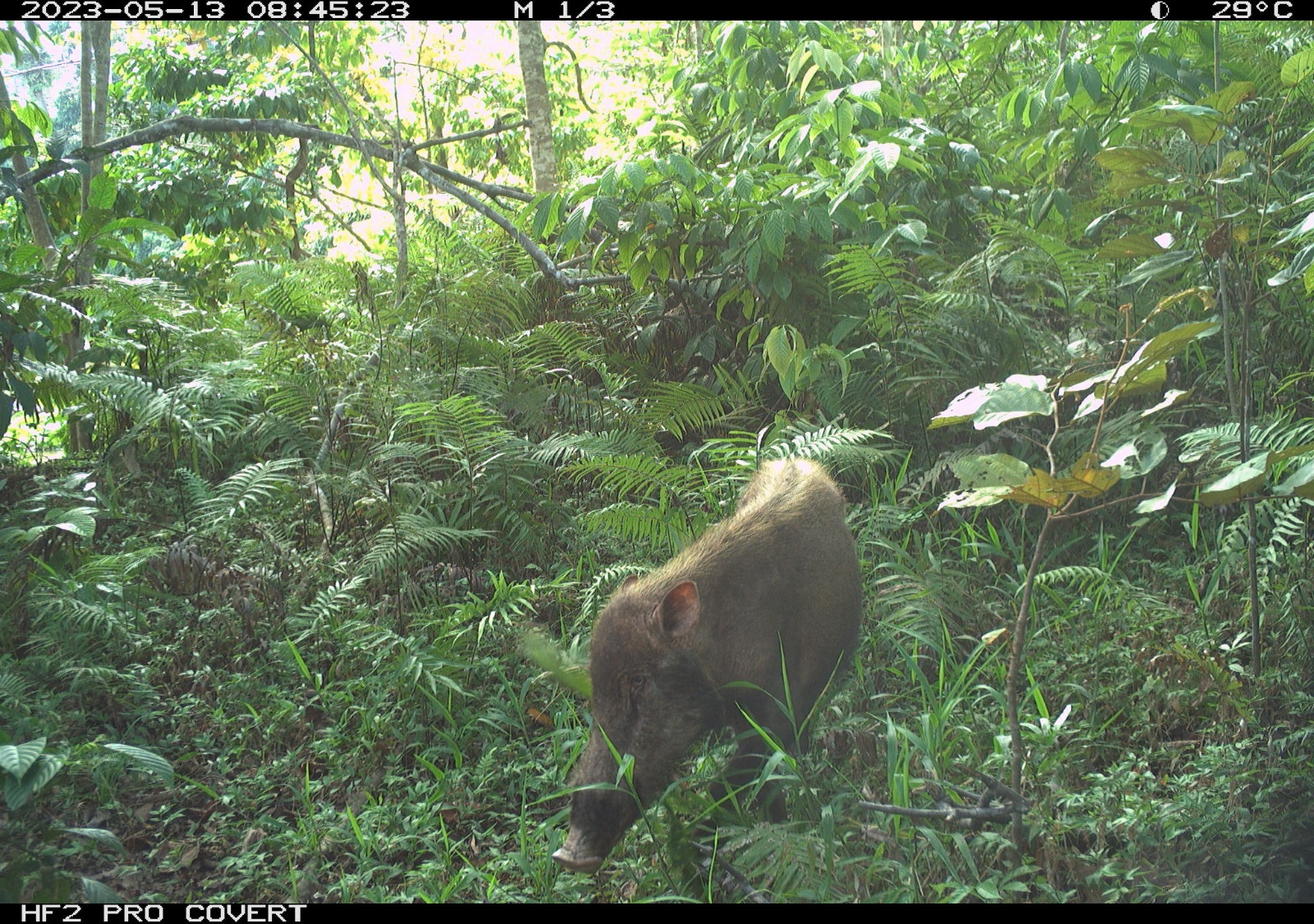 (Above left) First bearded pig spotted after population collapse due to the African Swine Fever. (Below) Pheasant on restoration site.
 “The evidence from anachronistic fruits throughout Borneo suggests that elephants used to be common in Borneo’s lowland areas, but due to hunting pressure only survived in the unpopulated areas in East Sabah,” Risch said, quoting from Phillipps’ Field Guide to the Mammals of Borneo and Their Ecology Sabah, Sarawak, Brunei, Kalimantan.
But the presence of elephants might also explain why this area was never densely populated:
“Elephants are likely the reason why there are hardly any sago palms in East Sabah as they eat and destroy them. So “there was no fallback food... for humans resulting in few humans and much wildlife,” Risch noted, once again citing Phillipps’ Field Guide to the Mammals of Borneo and Their Ecology Sabah, Sarawak Brunei and Kalimantan.
“Besides illegal hunting activities, habitat fragmentation is the most important challenge to species survival in the landscape.
“Decades of logging and conversions of lowland forest for agriculture left the Tabin Wildlife Reserve isolated in oil palm estates and swamps disconnected to the remaining forests in the north, south and west of Tabin,” he said.
“But to preserve a species, a minimum viable population size is crucial to maintain a healthy gene pool.
“Hence we need enough individuals in one place that require suitable and well protected habitat of a sufficient size and quality to survive,” he noted.
This is the point.
“Despite its considerable size of more than 120,000ha, the Tabin Wildlife reserve is still too small for viable population sizes of several endangered species such as clouded leopard and others with large home ranges,” Risch said.
Tackling a limited carrying capacity
“In order to tackle the problem of the limited carrying capacity of Tabin, especially for large mammals, several initiatives have been started,” he credited contributing NGOs.
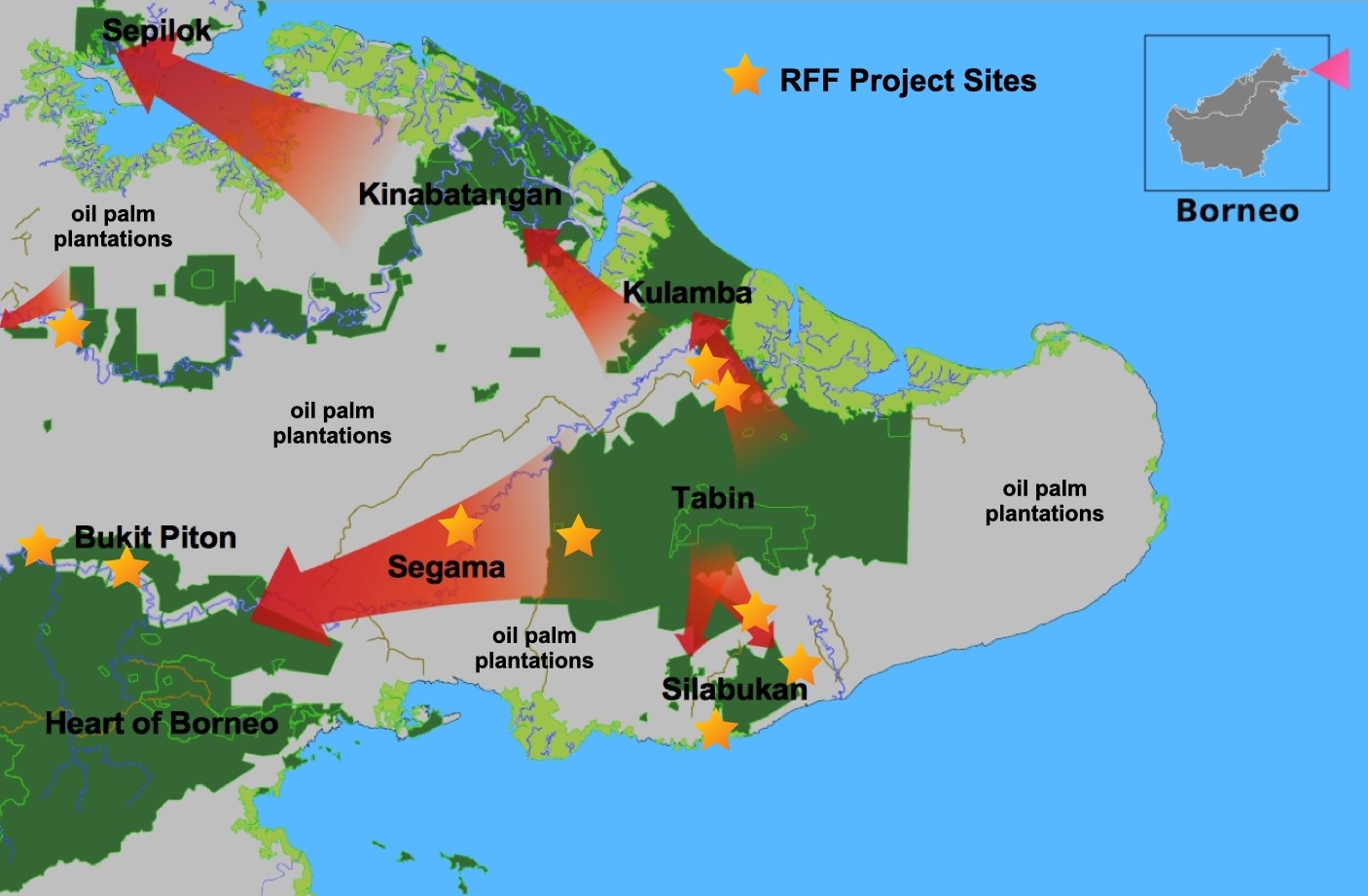
“While Bora establishes pasture areas for bantengs and elephants that preferably feed on grass to boost the numbers of individuals in some parts of Tabin, the Rhino and Forest Fund (RFF) and WWF work on improving habitat connectivity to break Tabin’s isolation,” he cited.
“In 2022 the WWF started working on small wildlife corridors between Tabin and the Silabukan Forest Reserve in the south.”
But here is a first from RFF.
“Already in 2012, the RFF in cooperation with the Sabah Wildlife Department and the Sabah Forestry Department started restoring the buffer zone of the Tabin river in the north and planted 4,000 trees of various indigenous species along the river bank resulting in a first but narrow forest connectivity on dry land connecting Tabin to the Lower Kinabatangan and Segama Wetlands,” Risch pointed out.
At the same time, the RFF identified c. 2,300ha of unprotected forest between Tabin and the Kulamba Wildlife Reserve in the north and managed to convince the relevant government authorities and a private land owner to protect these crucial land parcels,” he added. .
RFF mounted extra mile efforts in order to build up enough corridors.
“The evidence from anachronistic fruits throughout Borneo suggests that elephants used to be common in Borneo’s lowland areas, but due to hunting pressure only survived in the unpopulated areas in East Sabah,” Risch said, quoting from Phillipps’ Field Guide to the Mammals of Borneo and Their Ecology Sabah, Sarawak, Brunei, Kalimantan.
But the presence of elephants might also explain why this area was never densely populated:
“Elephants are likely the reason why there are hardly any sago palms in East Sabah as they eat and destroy them. So “there was no fallback food... for humans resulting in few humans and much wildlife,” Risch noted, once again citing Phillipps’ Field Guide to the Mammals of Borneo and Their Ecology Sabah, Sarawak Brunei and Kalimantan.
“Besides illegal hunting activities, habitat fragmentation is the most important challenge to species survival in the landscape.
“Decades of logging and conversions of lowland forest for agriculture left the Tabin Wildlife Reserve isolated in oil palm estates and swamps disconnected to the remaining forests in the north, south and west of Tabin,” he said.
“But to preserve a species, a minimum viable population size is crucial to maintain a healthy gene pool.
“Hence we need enough individuals in one place that require suitable and well protected habitat of a sufficient size and quality to survive,” he noted.
This is the point.
“Despite its considerable size of more than 120,000ha, the Tabin Wildlife reserve is still too small for viable population sizes of several endangered species such as clouded leopard and others with large home ranges,” Risch said.
Tackling a limited carrying capacity
“In order to tackle the problem of the limited carrying capacity of Tabin, especially for large mammals, several initiatives have been started,” he credited contributing NGOs.
“While Bora establishes pasture areas for bantengs and elephants that preferably feed on grass to boost the numbers of individuals in some parts of Tabin, the Rhino and Forest Fund (RFF) and WWF work on improving habitat connectivity to break Tabin’s isolation,” he cited.
“In 2022 the WWF started working on small wildlife corridors between Tabin and the Silabukan Forest Reserve in the south.”
But here is a first from RFF.
“Already in 2012, the RFF in cooperation with the Sabah Wildlife Department and the Sabah Forestry Department started restoring the buffer zone of the Tabin river in the north and planted 4,000 trees of various indigenous species along the river bank resulting in a first but narrow forest connectivity on dry land connecting Tabin to the Lower Kinabatangan and Segama Wetlands,” Risch pointed out.
At the same time, the RFF identified c. 2,300ha of unprotected forest between Tabin and the Kulamba Wildlife Reserve in the north and managed to convince the relevant government authorities and a private land owner to protect these crucial land parcels,” he added. .
RFF mounted extra mile efforts in order to build up enough corridors.
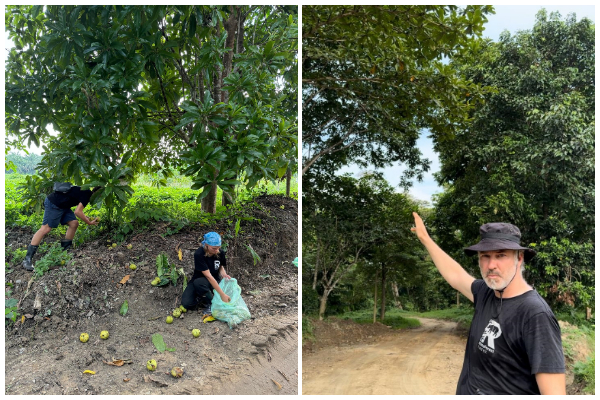 Fruits from Simpoh laki, one of 60 species of trees planted by the RFF project in 2012, are loved by elephants (left photo). A healed landscape: Risch pointing at trees planted in 2012 have now grown significantly larger with closed canopy, linking Tabin to other conservation areas (right photo).
“In 2017 the RFF started compensating land owners adjacent to Tabin river to surrender their land for conservation to extend the Tabin-Kulamba Wildlife Corridor,” he revealed.
“So far 65ha of mostly oil palm land were acquired and planted with more than 50 tree species.
“Further land parcels are in the process to be acquired and fundraising continues to achieve a sufficient wildlife corridor with more than 2km diameter,” Risch noted.
Does the wildlife corridor work?
“Already during the first years after replanting the 20m buffer zone of Tabin river in 2012, we occasionally put up camera traps and started recording wildlife at the river bank and inside the adjacent oil palm estates.
“But for several years we didn’t find much,” Risch conceded.
“Captured by our cameral traps were mostly pigs and macaques. Even the elephants were not able to pass, because the north of Tabin was completely fenced up,” he said.
Fruits from Simpoh laki, one of 60 species of trees planted by the RFF project in 2012, are loved by elephants (left photo). A healed landscape: Risch pointing at trees planted in 2012 have now grown significantly larger with closed canopy, linking Tabin to other conservation areas (right photo).
“In 2017 the RFF started compensating land owners adjacent to Tabin river to surrender their land for conservation to extend the Tabin-Kulamba Wildlife Corridor,” he revealed.
“So far 65ha of mostly oil palm land were acquired and planted with more than 50 tree species.
“Further land parcels are in the process to be acquired and fundraising continues to achieve a sufficient wildlife corridor with more than 2km diameter,” Risch noted.
Does the wildlife corridor work?
“Already during the first years after replanting the 20m buffer zone of Tabin river in 2012, we occasionally put up camera traps and started recording wildlife at the river bank and inside the adjacent oil palm estates.
“But for several years we didn’t find much,” Risch conceded.
“Captured by our cameral traps were mostly pigs and macaques. Even the elephants were not able to pass, because the north of Tabin was completely fenced up,” he said.
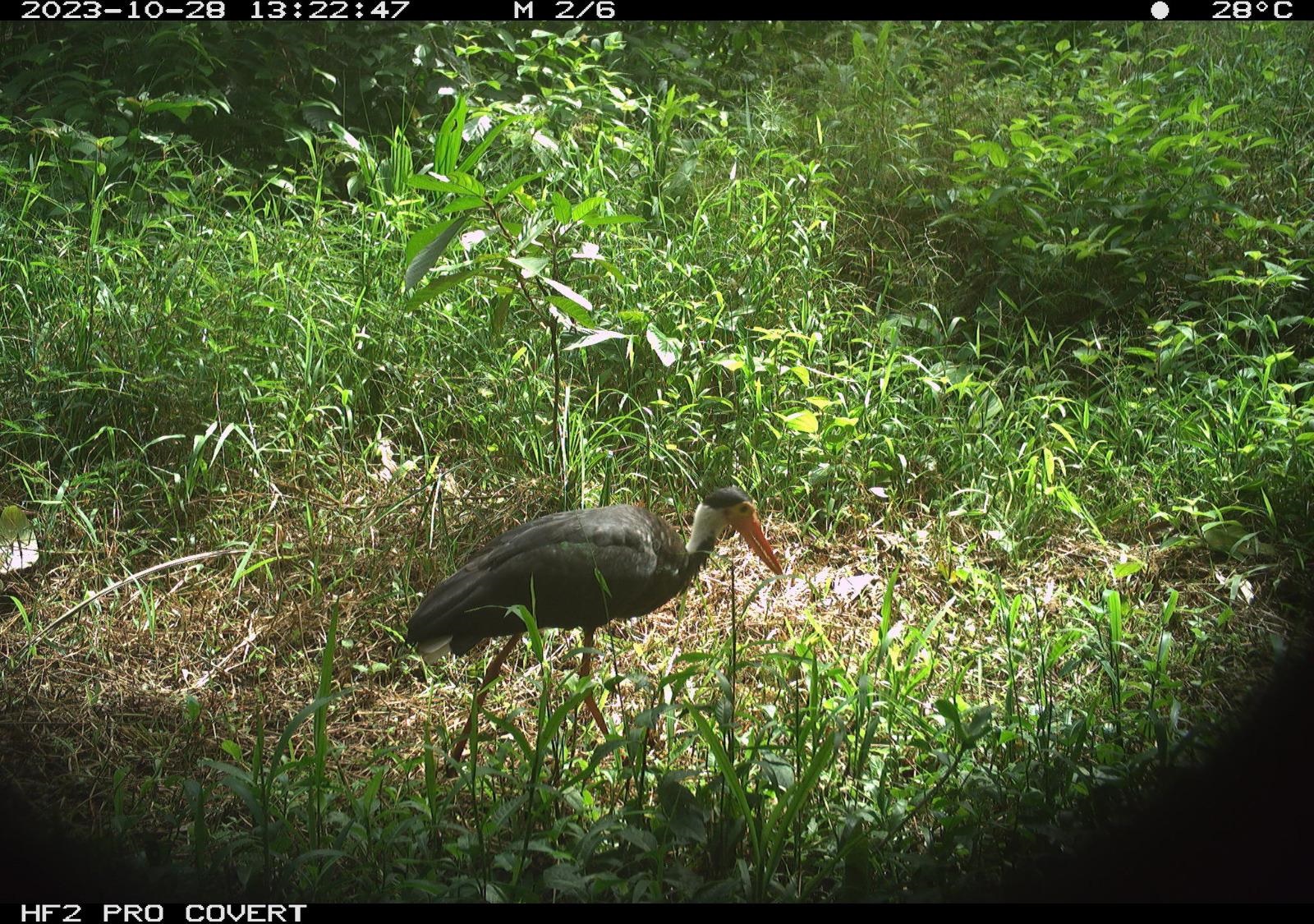 A very rare Storm’s stork on restoration site.
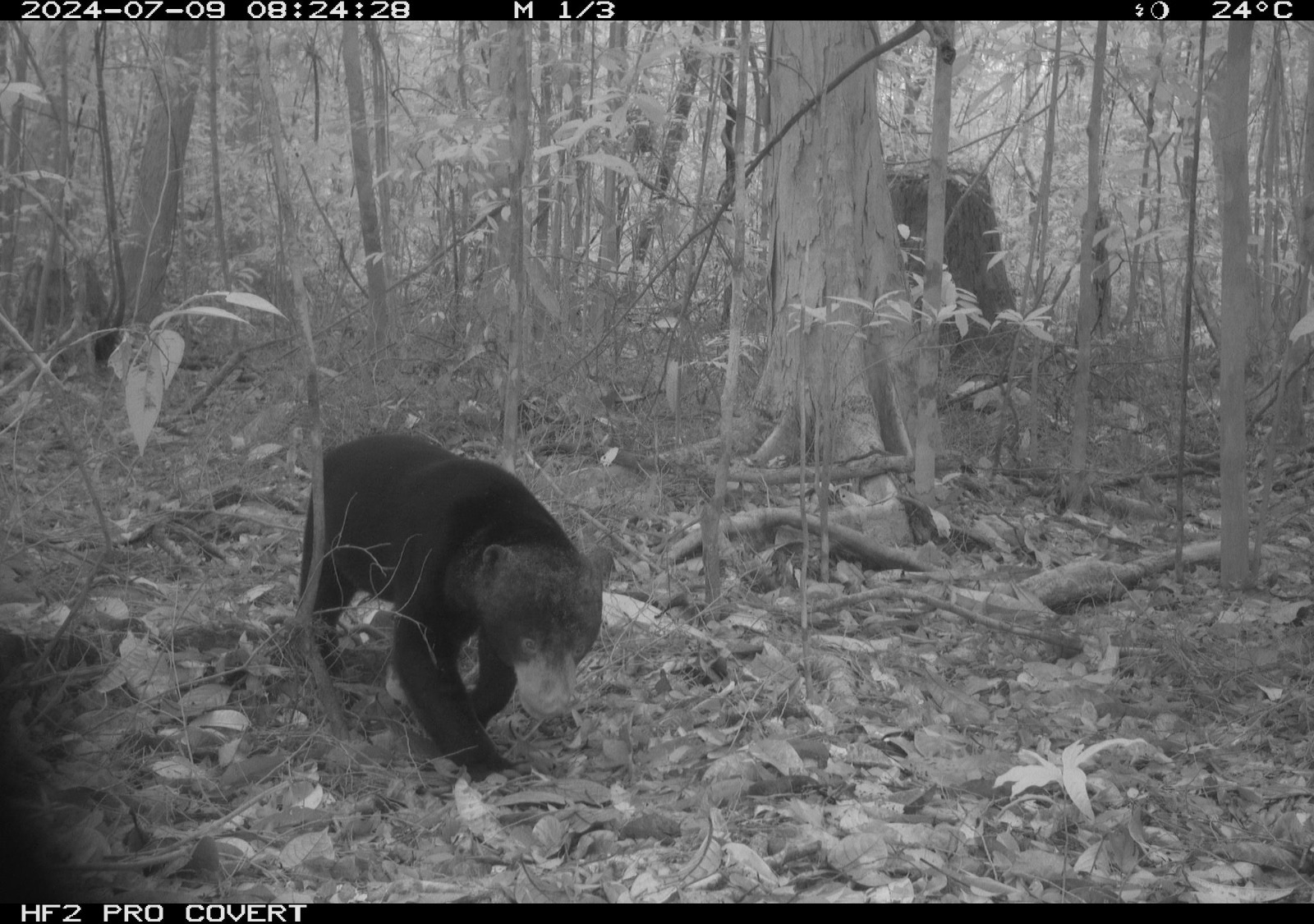 Sun bear on restoration site.
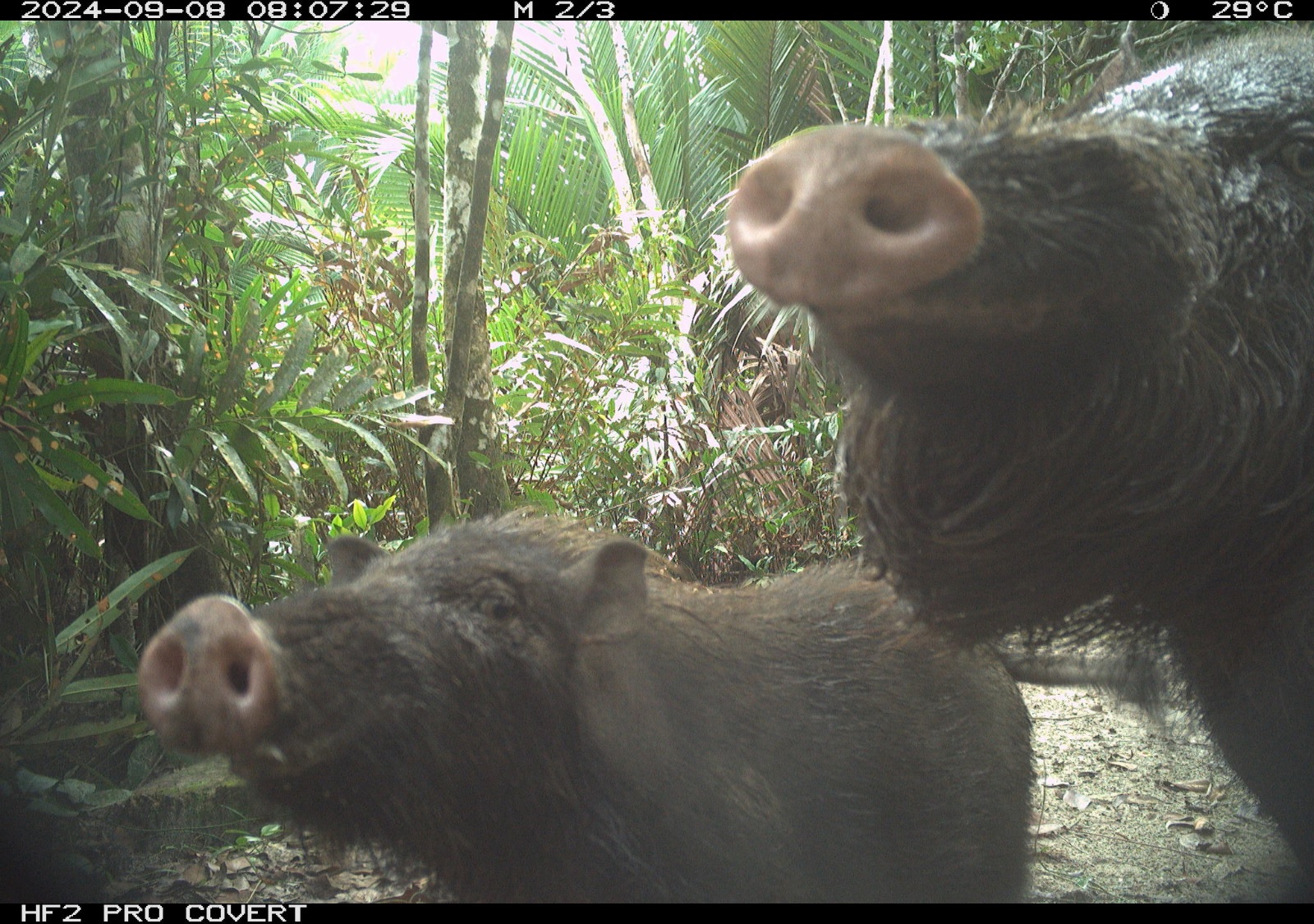 Big wild boar on restoration site.
“Later the fences were partly removed and we managed to acquire 50ha of plantation and 15ha of forest next to the river extending the Tabin Wildlife Corridor from 40m to 800m. In 2020 we started restoring the oil palm area back to species-rich forest.
‘‘This includes planting of dipterocarp trees, many wild fruit trees, creation of grass land patches and artificial water bodies,” Risch said.
Exciting breaks
Here’s the excitement when breaks on RFF’s corridor work became noticeably obvious over the last few years.
“Then the situation began to change significantly. During the last few years we recorded more and more interesting species using our corridor,” Risch reported.
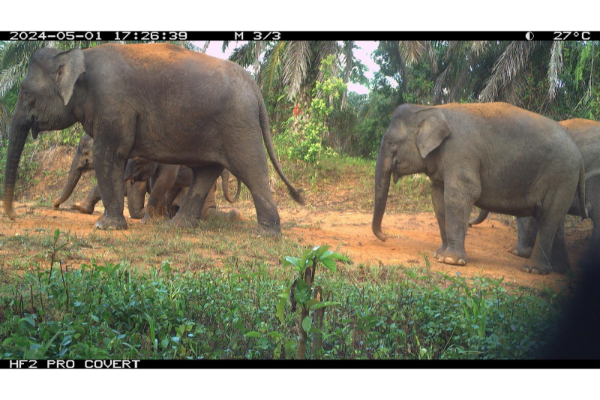
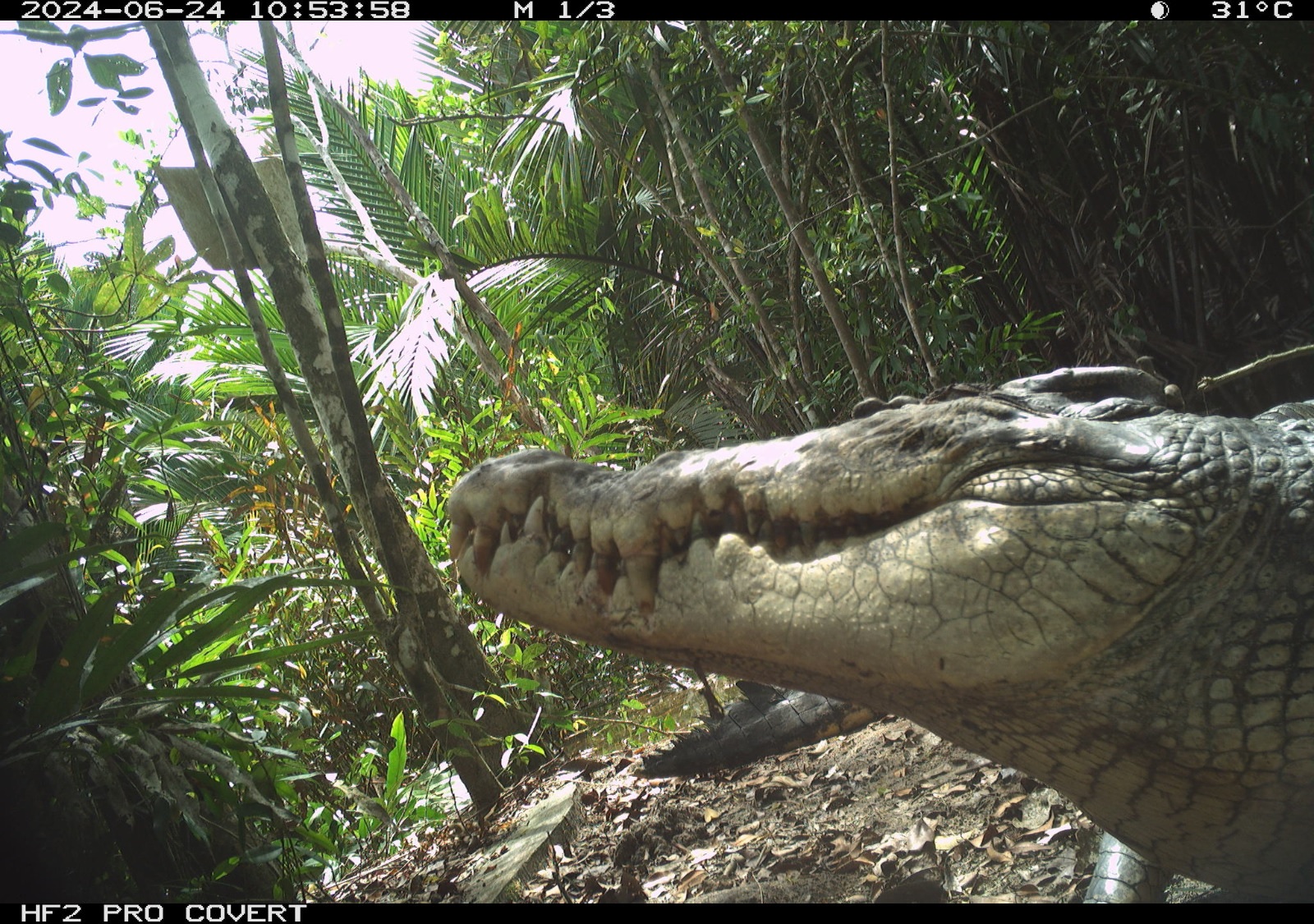
“Some threatened species to mention are: elephant, orang utan, clouded leopard, sun bear, pangolin, Storm’s stork, lesser adjutant, proboscis monkey, red leaf monkey, flat headed cat, otter civet, low loris, Amboina box turtle, estuarine crocodile and two otter species,” Risch enumerated. .
“More are expected to come. It’s rewarding to see the land quickly turning into a real wildlife oasis,” Risch enthused.
Big wild boar on restoration site.
“Later the fences were partly removed and we managed to acquire 50ha of plantation and 15ha of forest next to the river extending the Tabin Wildlife Corridor from 40m to 800m. In 2020 we started restoring the oil palm area back to species-rich forest.
‘‘This includes planting of dipterocarp trees, many wild fruit trees, creation of grass land patches and artificial water bodies,” Risch said.
Exciting breaks
Here’s the excitement when breaks on RFF’s corridor work became noticeably obvious over the last few years.
“Then the situation began to change significantly. During the last few years we recorded more and more interesting species using our corridor,” Risch reported.
“Some threatened species to mention are: elephant, orang utan, clouded leopard, sun bear, pangolin, Storm’s stork, lesser adjutant, proboscis monkey, red leaf monkey, flat headed cat, otter civet, low loris, Amboina box turtle, estuarine crocodile and two otter species,” Risch enumerated. .
“More are expected to come. It’s rewarding to see the land quickly turning into a real wildlife oasis,” Risch enthused.