FOR decades, the gravity-feed water catchment system in Kinarut has been a vital source of clean water for more than 1,000 villagers and the number continues to grow.
The water has long been relied upon for essential daily needs such as cooking, bathing, washing and drinking.
It has served the community faithfully for many years and has been an important lifeline, especially for villagers living in areas without consistent treated water supply.
However, the situation changed drastically about five years ago when activities began upstream of the catchment area.
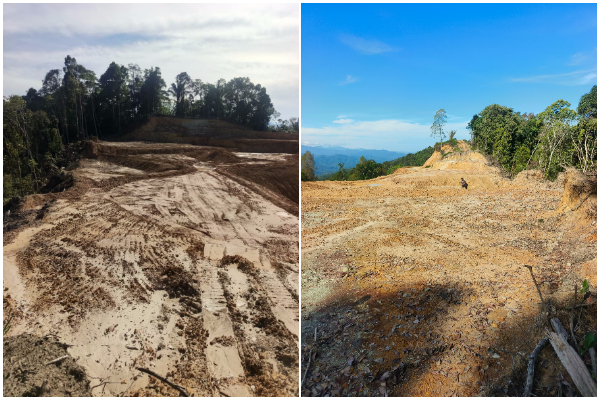
According to villagers, several irresponsible parties initiated a project involving extensive clearing of trees, earth removal, and land disturbance near the upstream area directly above the gravity pipe intake where the village catchment system is located.
Since then, the water has frequently turned yellow and muddy whenever it rains. Sediment, soil erosion and uncontrolled runoff from the disturbed land have severely affected the quality of the water flowing into the catchment.
Advertisement

Villagers are now forced to use contaminated water for daily activities, creating serious concerns over hygiene, health and the long-term sustainability of the water source.
The destruction of vegetation and land clearing upstream has likely weakened the natural ability of the forest to filter rainwater and stabilise the soil.
During heavy rain, loosened earth and sediments are washed directly into the streams feeding the catchment area. What was once a clean and dependable water supply has now become unreliable and unsafe during bad weather.
This issue is not merely an inconvenience. It directly affects the welfare, health and quality of life of the people of several villages in Kinarut.
Children, elderly residents and families are especially impacted whenever the water becomes discoloured. Some villagers have no alternative source of water and continue to depend entirely on the gravity-feed system despite the worsening condition.
The villagers believe that development should never come at the expense of basic human necessities such as clean water.
Any project carried out near environmentally sensitive areas must be properly monitored, responsibly managed and subjected to strict environmental safeguards.
Recently, a report published in the Daily Express highlighted a case in Ranau where villagers reportedly received RM30,000 in compensation to repair and rectify damage caused to their village water catchment area by works related to the Pan Borneo Highway project.
This sets an important precedent showing that affected communities have the right to seek accountability and assistance when development activities damage public water sources relied upon by villagers.
In light of this, the villagers of Kinarut respectfully call upon the relevant authorities, departments, elected representatives and responsible parties to take immediate action, including:
- Conducting a full investigation into the upstream activities that caused the damage to the catchment area.
- Carrying out an environmental assessment to determine the extent of erosion, sedimentation, and ecological destruction affecting the water source.
- Identifying the individuals, contractors, companies, or parties responsible for the land clearing and earthworks.
- Implementing urgent mitigation measures such as slope stabilisation, reforestation, erosion control, and rehabilitation of the affected area.
- Repairing and upgrading the gravity pipe intake and catchment infrastructure to improve water quality and protect the system from future contamination.
- Providing compensation or financial assistance to the affected villagers and the village water committee for restoration works, similar to the assistance reportedly given in the Ranau case.
- Gazetting and protecting the catchment area to prevent future encroachment, logging, land clearing, or uncontrolled development near the water source.
The villagers may also consider taking the following steps collectively:
Submit an official memorandum to the District Office, Department of Irrigation and Drainage (DID), Department of Environment (DOE), and the State Water Department.
Request assistance from their elected representatives, including the Assemblyman and Member of Parliament.
Lodge formal complaints supported by photographs, videos, and water samples showing the condition of the water after rainfall.
The Village Security and Development Committee should act as a committee dedicated to protecting the catchment area and coordinating with government agencies.
Request a site visit by the authorities and relevant technical departments.
Explore legal avenues if negligence or unlawful land clearing can be proven.
Clean water is a basic necessity and a fundamental right of every community.
The people of Kinarut are not opposing development, but they strongly believe that development must be carried out responsibly and without destroying essential community resources that generations of villagers have depended upon.
The villagers hope that immediate and meaningful action will be taken before the damage becomes irreversible and before the water source deteriorates further in the years ahead.
Situl Mintow
The views expressed here are the views of the writer and do not necessarily reflect those of the Daily Express. If you have something to share, write to us at: [email protected]


.png)