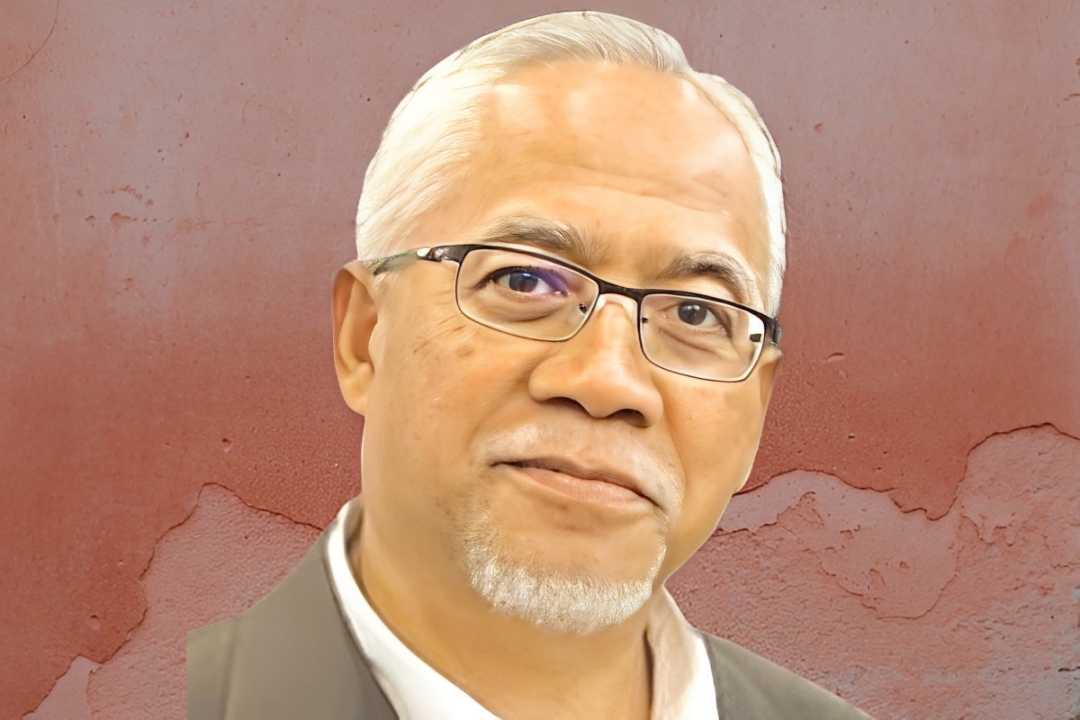
Kota Kinabalu: Oil and gas industry veteran Omar Suhaimi Abu Hassan said Sabah’s late entry into oil and gas development left local vendors decades behind their counterparts in Sarawak and Peninsular Malaysia.
The Unsur Hebat Sdn Bhd business advisor and former Petronas official told the 13th Sabah Oil, Gas and Energy Conference and Exhibition at the Sabah International Convention Centre that the historical sequence of oil and gas development in Malaysia had simply not favoured Sabah.
“It is so unfortunate that Sabah was left behind for many years. The earliest development was in Sarawak, even before Terengganu. That is why a lot of Sarawak companies were developed early. People from Sabah had to go and work in Sarawak,” he said.
He said Petronas Carigali’s development of the Duyong gas field in the late 1970s had given Terengganu and Peninsula Malaysia a head start, with vendor development programmes running for decades before Sabah saw comparable upstream activity.
Omar traced his own first involvement in Sabah back to 1986, when Petronas Carigali took over the Tembungo offshore oil field from Exxon, at a time when production stood at around 6,000 to 7,000 barrels of oil equivalent per day.
He said Peninsula companies benefiting from early vendor development programmes such as the Vendor Development Programme (VDP) and Vendor Development Programme Extension (VDPX) over the past two to three decades had built the track records and financial strength that Sabahan firms are now expected to match.
“It is not that Sabahan vendors are not capable. It is that they started later,” he said.
Omar said the picture was beginning to change, pointing to the Sabah-first policy requiring oil companies to offer tenders to Sabah-registered Standardised Work and Equipment Categories (SWEC) holders before opening bidding to outsiders.
He also cited the forthcoming Malaysia Bid Round, expected before the end of the year, which would put new Sabah offshore blocks up for award.
“When you have upstream, the rest of the value chain will follow. You will have midstream, refining, pipelines, processing and downstream. Once development comes to Sabah, Sabah will have its own petrochemical industry,” he said.
He said he was confident that within 10 to 15 years, Sabah’s oil and gas ecosystem could reach a level comparable to Sarawak and Terengganu, provided local vendors positioned themselves in emerging areas rather than crowding into established service categories.
“Do not go into the red ocean where everyone is already competing and cutting each other to win a contract. Go into the blue ocean.
“Find something the Sabah vendor can be first in providing,” he said, pointing to artificial intelligence, digitalisation and remote operations as areas with few local competitors.
Additionally, he said four elements determine whether joint ventures (JVs) genuinely empower Sabah oil and gas companies.
JVs between Sabahan oil and gas companies and outside partners must be built on four clear pillars to ensure genuine capability transfer rather than arrangements designed simply to access local contracts, he said.
He said many so-called partnerships fell short because terms were left vague or obligations went unspecified.
“A JV is just a contract between two partners. If you cannot agree on certain things, the contract will not work,” he said.
He said the first element was a clear technical agreement defining what each party would do, with a commitment from the stronger partner to help bridge any capability gaps.
The second was agreement on the scale and division of work, noting that a minority share in the right scope could sometimes deliver more value than a dominant share in the wrong one.
The third element was access to capital, which he said was often where partnerships broke down. He said JV partners needed to agree in advance on how start-up costs and project financing would be handled, whether one party would support the other or both would seek external funding.
“You cannot start a contract from zero without anything in your pocket,” he said.
The fourth element was talent development, which he described as a core obligation of the more experienced partner in any genuine empowerment arrangement.
“In a JV, if you are the lesser party, you would expect your partner who has more experience to do certain talent development, either on-the-job training or sending people together to gain the necessary technical capabilities,” he said.
Omar drew a clear distinction between meaningful JVs and memoranda of understanding (MoUs), which he said too often ended as signing ceremonies with no follow-through.
He said a substantive collaboration agreement with clearly defined obligations for both parties was the minimum standard for an arrangement that could be taken seriously.
He also cautioned against confusing agency agreements with JVs, saying a company appointed as an exclusive agent for a principal was an entirely different arrangement.
“A JV is like a marriage. You are going to venture together over a period of time. Normally it is longer than three years,” he said.