Kota Kinabalu: Sabah Parks plans to open more Mount Kinabalu climbing routes to reduce congestion on the existing trails and boost the local tourism economy.
Sabah Parks Board of Trustees Chairman Peter Lintar said the new routes aim to provide fresh experiences for climbers, diversify economic benefits to nearby districts and preserve the mountain’s delicate ecosystem.
“Currently, the existing route to Mount Kinabalu is heavily congested. When we open our online bookings, slots for six months are filled within just two days,” he said after officiating the Marai-Parai–West Gurkha Scientific Seminar 2024 closing ceremony, here, Monday.
He also said the high demand has created traffic on the trail, impacting climbers’ experience and the environment.
“The new trails which will extend into Kota Belud and Kota Marudu districts are part of an effort to develop tourism in areas beyond Ranau. Mount Kinabalu spans all three districts,” he said.
“We aim to create multi-night treks for those seeking more challenging adventures.
“This will also help spread the economic benefits to Kota Belud and Kota Marudu communities,” he added.
Peter highlighted that expanding the routes is necessary to give the mountain’s ecosystem time to recover.
“The pandemic showed us the benefits of reduced foot traffic. We observed significant environmental improvements when climbing activities were halted,” he said.
He added that plans include opening trails in areas like Gurkha Hut and Sayap, which offer unique flora and fauna not found elsewhere on the mountain.
Researchers have already discovered new plant species along these routes, adding to the allure of the trails.
“These areas offer different perspectives of Mount Kinabalu, with some sections featuring near-vertical ascents of up to 90 degrees.
“Such challenges will appeal to climbers looking for thrilling experiences,” he said.
He said climbers primarily focus on reaching Low’s Peak, the mountain’s highest point at over 4,000 metres.
However, he said, Mount Kinabalu has six distinct peaks, and Sabah Parks encourages climbers to explore them all.
“Many think they’ve conquered Mount Kinabalu after summiting one peak, but true victory lies in reaching all six,” he said.
While all peaks are accessible from the same trail, introducing new routes will make it easier for climbers to explore multiple summits.
Peter also revealed that Sabah Parks recently launched a high-altitude training route at Gurkha Hut.
New trails are being developed to enhance climbing opportunities further.
Sabah Parks, he said, continues to prioritise research and conservation alongside its tourism efforts.
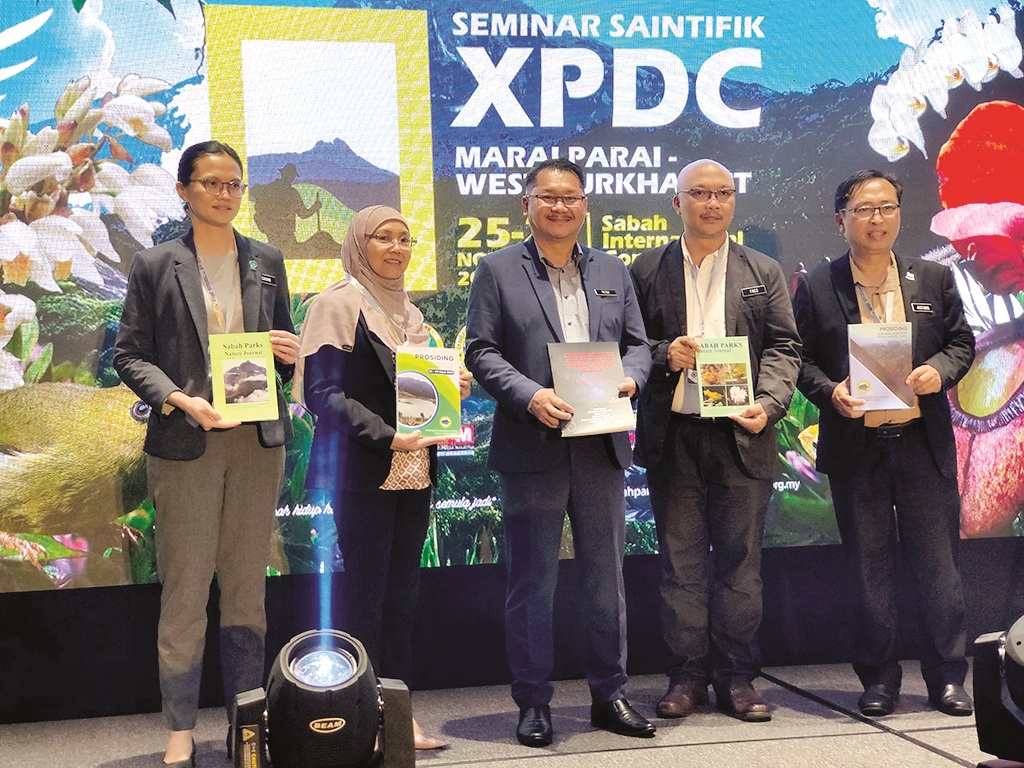
Peter also launched five research publications based on past expeditions at Monday’s event, providing invaluable references for future studies and conservation efforts.
“We are dedicated to preserving Mount Kinabalu’s natural beauty while meeting global demand for climbing experiences.
“These new routes will help us balance tourism and environmental sustainability,” he said.
Sabah Parks hopes to finalise and open the new routes as soon as possible to meet the growing demand from climbers worldwide.
In tandem with its tourism efforts, Sabah Parks concluded the Marai-Parai–West Gurkha Scientific Seminar 2024, focusing on empowering park management through research.
The seminar featured 33 presentations on flora, fauna, tourism and community impact, offering valuable data for sustainable management.
Peter emphasised evidence-based management as a cornerstone of Sabah Parks’ Strategic Plan 2021–2025.
“Research informs our strategies, ensuring they are dynamic and effective,” he said, noting the contributions of a 2023 scientific expedition along the Marai-Parai route to Mount Kinabalu.
The seminar also marked the launch of the Ulu Mandalipau Scientific Expedition 2025.
Scheduled for April, this expedition in the Crocker Range Biosphere Reserve aims to gather data to support park management and reporting obligations.
Sabah Parks continues to prioritise conservation alongside tourism. Recent publications, including the Sabah Parks Nature Journal and studies on dark tourism, document research findings that inform future policies.
Sabah Parks Deputy Director Rimi Repin praised partnerships with external agencies, saying, “Collaboration strengthens conservation efforts and ensures our initiatives are sustainable.”
From expanding Mount Kinabalu’s climbing routes to fostering scientific research, Sabah Parks is committed to preserving Sabah’s natural heritage while meeting global tourism demand.