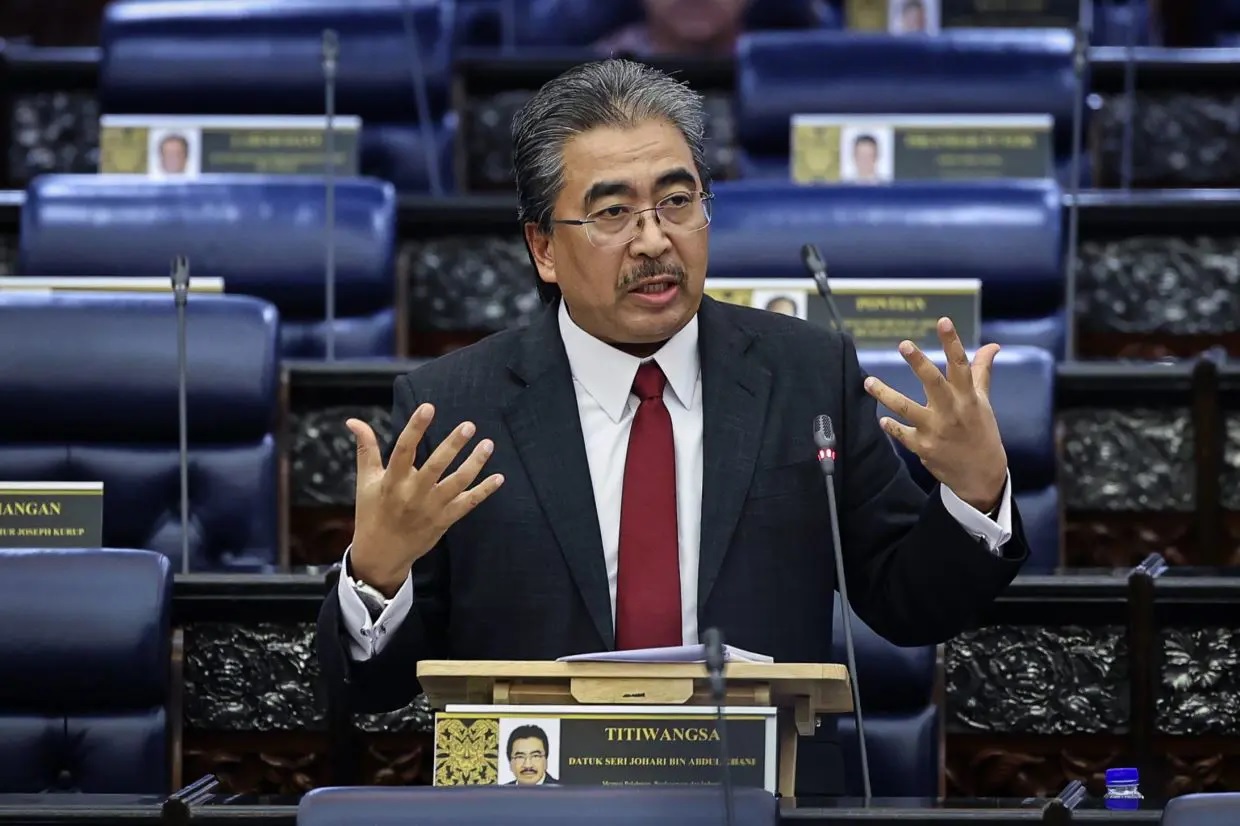
THE Federal Government is prepared to work with the Sabah government and relevant agencies to assess Sandakan’s potential as a new economic growth zone and a strategic industrial and logistics hub.
Minister of Investment, Trade and Industry, Datuk Seri Johari Abdul Ghani said the ministry, together with the Malaysian Investment Development Authority (Mida), the Sabah Economic Development and Investment Authority (Sedia) and the Sabah government, was ready to evaluate Sandakan’s strategic advantages to drive investment and industrial development.
Advertisement

He was responding to a question from Libaran Member of Parliament, Datuk Suhaimi Nasir, at Dewan Rakyat on Friday who asked whether the ministry would consider Sandakan as a new economic growth zone or strategic industrial-logistics hub given its proximity to Southern Philippines, the BIMP-EAGA region and East Asia, as well as its potential in logistics, food processing, fisheries, downstream palm oil, tourism and the blue economy.
Johari said Sandakan possesses significant competitive advantages due to its strategic location near Southern Philippines, the Brunei Darussalam-Indonesia-Malaysia-Philippines East ASEAN Growth Area region, East Asia and Indonesia’s new capital, Nusantara.
He said the location could strengthen cross-border trade, regional supply chains and attract high-quality investments in line with the aspirations of the New Industrial Master Plan 2030 (NIMP 2030).
“Among the sectors identified with strong growth potential are logistics and supply chain development, including an East Sabah logistics hub, BIMP-EAGA regional distribution centre, modern warehousing, e-commerce facilities and cold chain infrastructure to support the food industry,” he said.
The minister also highlighted opportunities in food and agro-processing industries by leveraging local resources such as palm oil, aquaculture, fisheries and tropical fruits to produce halal food, ready-to-eat products, marine protein and value-added health foods for export markets.
He added that Sandakan also has strong prospects in fisheries and aquaculture through tuna and shrimp processing, high-value seafood products, mariculture, seaweed cultivation and marine biotechnology under the Blue Economy agenda, alongside downstream palm oil industries such as specialty fats, biodiesel, Sustainable Aviation Fuel (SAF), biomass and biochar.
“The biodiversity-based ecotourism remains another priority sector, capitalising on Sandakan’s internationally recognised attractions including the Sepilok Orangutan Rehabilitation Centre, Kinabatangan River and Turtle Islands Park.
“The government also supports efforts to strengthen Sandakan’s tourism sector through the proposed Special Tourism Investment Zones (STIZ) under the Thirteenth Malaysia Plan,” he added.
In addition, Johari said Sabah, including Sandakan, has been identified under the West Economic Corridor and Central Economic Corridor of the BIMP-EAGA Vision 2035, focusing on logistics, cross-border trade, manufacturing, halal industries, tourism and regional supply chains.
He stressed that unlocking Sandakan’s full potential would require a conducive ecosystem, including improved port facilities, cold chain infrastructure, logistics networks and skilled human capital through close coordination between the Federal Government, Sabah government and relevant ministries and agencies.
Johari also said MITI and Mida would continue working closely with SEDIA and the Sabah government to facilitate quality investments, strengthen the industrial ecosystem and position Sandakan as a competitive investment destination and strategic industrial and logistics hub in the region.