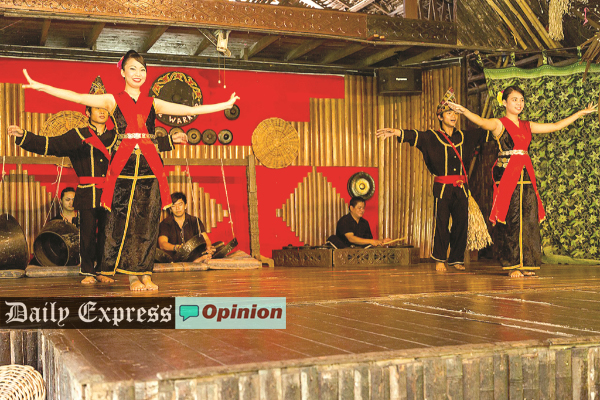
In 2015, a controversy raged when people discovered that the Federal government agencies had removed East Malaysian ethnicities on government forms and lumped ethnic groups under the term “lain-lain” (others).
The “lain-lain” (others) has become a point of contention among Sabahans who are mostly from ethnic stock; Sabah itself having over 30 ethnic races.
The controversial term was removed after strong protest from the Sabah and Sarawak state governments, which eventually saw the people of both Borneo states being allowed to state their own ethnicity on government forms.
Following the controversy, former State Secretary Sukarti Wakiman said the Sabah Cabinet has decided that the word “lain-lain” to denote the applicants race in government forms be dropped.
“The state government will submit a list of tribes or ethnic groups in Sabah to the National Registration Department as reference in the processing of applications for birth registration and identity cards by Malaysian citizens who hail from Sabah,” he said.
As a follow up, former Tourism, Culture and Environment Minister Masidi Manjun Sabah submitted a list of 42 ethnic groups and over 200 sub-ethnic groups to the federal government that will finally do away with the controversial “lain lain” race in official government forms.
He said he will table the list to be endorsed by the state Cabinet before bringing it to Putrajaya and specifically, the National Registration Department.
Removing Sabah ethnicities from the population census
In the 2010 statistics the population was categorized under the heading Melayu, Kadazan/Bajau, Murut, Bumiputera lain and Cina.
However, in the latest 2020 census, the ethnicities of Sabah has been removed and replaced with Melayu, Bumiputera lain, Cina, India and lain lain.
In 2010, the combined population of Sabahans of Kadazan/Dusun, Bajau, and Murut was 1,121,247, while “Bumiputera lain” was 659,865, giving a total of 1,781,112 for both categories.
In the 2020 census Kadazan/Dusun, Bajau and Murut categories were deleted and was replaced with a single category “Bumiputera lain” showing a total figure of 2,076,537.
These figures are difficult to analyse and compare as the demographic categories have been changed by removing Kadazan/Dusun, Bajau, and Murut ethnicities and lumping the ethnic races now under one category “Bumiputra lain”.
While the new “Bumiputera lain” category may be for statistical convenience, questions inevitably arise as to its intent and purpose.
Melayu Cina and India categories are more suited to semanjung Malaysia, being the three major races.
So now we have ethnic cleansing in Sabah via the change in census groupings.
One of the biggest danger of such acceptance is that future generation will not know their ethnicities or numbers as it has now been ethnic cleansed using a single census grouping, “bumiputra lain”.
It’s difficult to say what is the intent or purpose of such a drastic change in population categorisation.
We take pains to preserve our language, culture and traditions but the new census groupings have wiped out that part.
Unlike the 2015 dan lain lain incident, there do not seem any response or explanation from the authorities this time on lumping all Sabah natives under “bumiputra lain”.
Constitutional Malays and social contract
The new categorisation appears to support former prime minister Dr Mahathir Mohamad’s deluded theory about “constitutional Malays” and social contracts.
It will see Malaysia, at least on paper, moving towards creating a more homogenous society, with “constitutional Malays” as the dominant race, while the ethnic identities of other Borneo natives seemingly erased.
The 2021 Yearbook puts Sabah’s total population at 3,412,600 million, of which 2,633,200 million are citizens and 779,500 non-citizens.
There is always great difficulty in ascertaining the true population of Sabah due to the existence of a large undocumented and transient population.
Dr Chong Eng Leong, an expert on the illegal and undocumented population, to whom I spoke, deduced that the increased figure may be the result of the government masking the Project IC population figures and marrying it with the Sabah ethnic minorities.
While its sounds plausible, it does not explain the need to remove the ethnicity of the original population of Sabah.
No one likes their ethnicity to be deleted and placed under one category “bumiputra lain”.
There are no explanation notes on the Nota Keterangan/Explanatory notes at the back of the Buku Tahunan Perangkaan so it is left to the readers interpretation on why the ethnicities was removed.
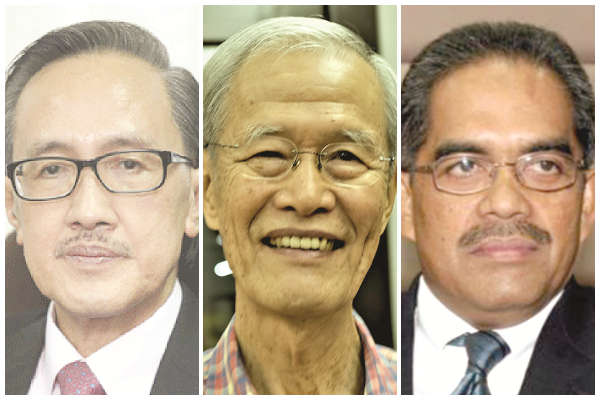 From Left to Right: Masidi, Chong and Sukarti

There should be an explanation as it is a major change in treating demographics statistics.
One of the biggest concerns is a mere acceptance of the new categorisation will result in a loss of identity for the affected ethnic groups in the longer term.
At this stage, it seems that the state authorities are mum on this matter when compared to the 2015 incident or maybe they are not aware.
Given the controversy over ethnicity on government forms in 2015, this new census treatment on Sabah ethnicity deserves greater scrutiny.
Mahathir ‘Malay’ only Malaysia
Ethnic cleansing refers to methodical forcible removal of members of a certain ethnic, religious, or racial group, typically with the goal to make it ethnically homogeneous.
In July, Mahathir said It is unconstitutional to promote a multiracial country as the Federal Constitution never mentioned that Malaysia is a multiracial country.
Anwar responded that the constitution protects the welfare of all citizens in Malaysia.
“The constitution is very clear on the position of the Malays but the constitution is also clear to protect the welfare of all citizens in this country. The future is for all Malaysians”, he said.
He also criticized those who were focused on who Malaysia belongs to and why in 2023 we are still fixated with the subject.
“We are not talking about governance, we are not talking about economic advancement or digital technology; we are stuck on who this country belongs (to),” he said.
Mahathir’s social contract is another invented political construct, an “unofficial agreement” shared by the different races in Malaysia, where certain races give concessions in return for freedom, security or some other benefits.
It’s a pecking order system in a food chain where the three major races of Malaysia sits on top of the chain leaving the natives of Borneo lower in the pecking order. This purported social contact has no basis under Malaysia Agreement 1963.
We shouldn’t be surprised; Mahathir is the champion of the “Ketuanan” Malay concept and Malay superiority ignoring the Borneo states are partners of Malaysia.
The complexity of racial categories
As of July 2023, it was estimated that 89 percent of the population in Sabah were Bumiputeras.
Bumiputera (bumiputra) is a neologism, constructed of Sanskrit components meaning “son of the land,” used conventionally in Malaysia for indigenous peoples who are granted special rights under the constitution, although the term itself does not appear in the constitution. In short bumiputra translates to “sons of the soil”.
Since bumiputras are not defined in the Federal constitution it is dangerous for us to accept the new categorization as it can appear that we are a grouping without any constitutional rights.
Malaysia is a “Malay” centric country and making it homogeneous through official categorization or groupings may create other issues.
While the category “bumiputra lain” may bring the same advantages as the Malays in Peninsular Malaysia, one size fit all thinking may lead to other socio-cultural issues and racial conflicts.
Unity through diversity is an accepted strength in any society looking to build a harmonious and just society.
We should celebrate our unity through diversity and respect out differences. After all we are all gods’ creatures.