ADVISOR to the Chief Minister Tan Sri Andrew Sheng reminisced the good old days when the exchange rate of the Malaysian Ringgit (MYR) and the Singapore Dollar (SGD) was on par during the 1970s. He explained a few of the reasons why it differs today, recently.
Sheng who had served as Bank Negara Chief Economist and Assistant Governor from 1976 to 1989 explained the historical lapse of the Currency Interchangeability Agreement established in 1967 between Malaysia, Singapore and Brunei.
Advertisement

Under this agreement, the three currencies were interchangeable at par value without fees, facilitating seamless cross-border transactions during the early post-independence era.
This arrangement reflected strong economic ties and shared colonial influences, allowing residents to spend either currency freely across borders.
However, things changed due to rising inflation, divergent monetary policies and economic pressures, leading to floating exchange rates.
Once the floating exchange rate took effect, there was a brain drain of human talents to Singapore because of the difference in the currency exchange rate.
He said when he was working with Bank Negara, the rate was around 1:1 and then we slipped.
He said two things happened. One was Singapore which moved along the industrial and the financial centre logistics path, which was very different from Malaysia.
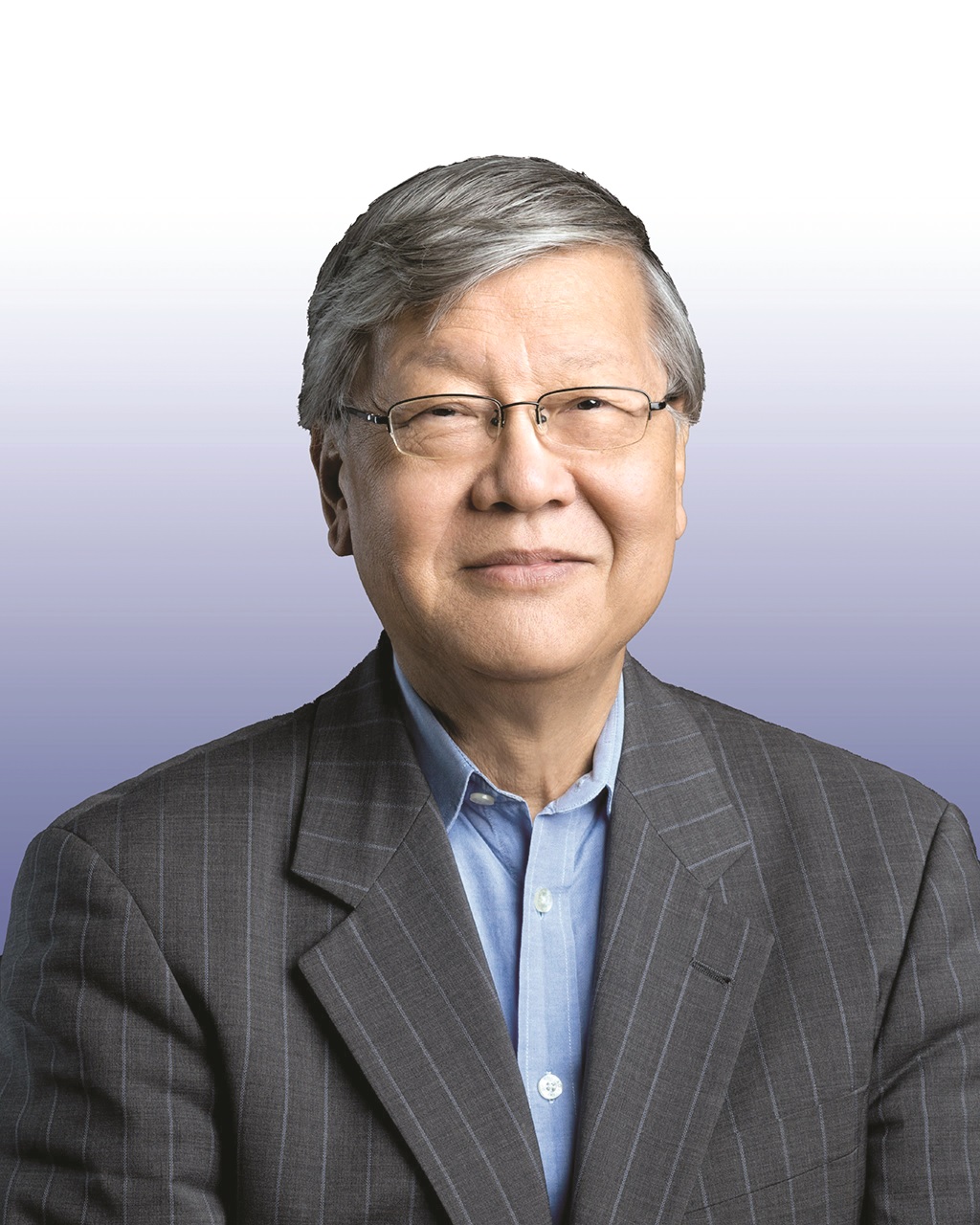
“Malaysia was still very rural at that time and had more primary rather than tertiary industries. Singapore, being a financial centre, wanted a strong Singapore dollar. They decided they wanted high value industries so they wanted a strong Singapore dollar.
“But in Malaysia, a lot of people were in rural areas where the prosperity depended on commodities like palm oil revenue. And, the palm oil price was pegged in US dollars, not in ringgit at that time because we were too small.
“So if we become very strong, we get less and less. A strong ringgit is good for the urban areas, but not the rural areas.
“With a weaker ringgit, if we sell our oil at the US dollar price, we get more ringgit for development. And if the rural people get more for their palm oil prices, get more for their rubber, get more for their tin prices. It’s good for Malaysia.
“Strong ringgit was good for urban people to buy foreign goods cheaply. But what matters was in the kampungs. So the political economy of Malaysia was very different from Singapore. We began to diverge.
And then of course we went through the Asian financial crisis. We boomed, then we had exchange controls (under Tun Dr Mahathir).
According to Sheng, the minute we had capital controls, people looked at Malaysia slightly differently. It took a while to convince foreign investors that investing in Malaysia would not stop them taking their money out.
So, there were differences in policies between Singapore which is a financial centre. They had to encourage people to come in take their money out at any time.
“In Malaysia, we had exchange controls. You still have to apply to Bank Negara. You can bring your money in, but if you don’t register with Bank Negara, you can’t take it out later. So these are the special factors which make it very different.”
The transition from parity to roughly 1 SGD≈3 MYR stems from several interconnected factors rooted in economic evolution. Each nation adopted independent central banking policies.
Malaysia shifted toward import substitution and protectionism, while Singapore pursued export-led growth with focus on manufacturing and finance. These paths led to differing inflation rates, interest rates and trade balances, causing the currencies to float independently rather than remain fixed at 1:1
Sheng said the Monetary Authority of Singapore (MAS) had historically managed SGD through a basket-weighted approach, often appreciating it against volatile neighbours like MYR due to Singapore’s stable economy and low inflation.
Conversely, Malaysia faced challenges like oil price fluctuations, political instability and capital controls, weakening MYR relative to SGD.
As Singapore became a hub for multinational corporations and financial services, its demand for SGD surged, bolstering its value.
Meanwhile, Malaysia’s reliance on commodity exports made MYR susceptible to global commodity prices and remittances.
Regional events, such as Asean integration and post-Covid recovery disparities, further widened the gap—SGD strengthened against MYR in late 2025, pulling the rate closer to 1:3.
On April 6, 2026, the spot rate stood at around 1 SGD = 3.13–3.39 MYR, reflecting ongoing appreciation of SGD driven by stronger Singaporean GDP growth and lower unemployment compared to Malaysia’s slower rebound.
Factors like U.S. Federal Reserve policies indirectly affecting Asian currencies also played a role, though direct bilateral ties remain limited.
This shift wasn’t arbitrary but reflected broader macroeconomic adjustments; neither currency is pegged anymore, unlike Brunei’s continued 1:1 peg with SGD.
As of the current date, 1 SGD typically buys about 3.13–3.39 MYR, depending on the provider – far from the old 1:1. For instance, major converters show averages near 3.13 MYR per SGD over recent sessions, with slight volatility due to geopolitical tensions and energy markets.
Forecasts suggest SGD may hold strength into 2026–2030, potentially stabilizing around 1:3 if Singapore maintains fiscal discipline, while MYR could recover with improved reforms.
- Some things about Sheng – He is a Sabahan and the Chief Adviser to the China Banking and Insurance Regulatory Commission, a member of the international advisory council of the China Investment Corporation, the China Development Bank and China Securities Regulatory Commission.
Sheng also served as Chairman of the Securities and Futures Commission of Hong Kong from 1998 to 2005, having previously been a central banker with the Hong Kong Monetary Authority and Bank Negara Malaysia.
He also worked with the World Bank from 1989 to 1993. From 2003 to 2005, he chaired the Technical Committee of the International Organisation of Securities Commissions (IOSCO). He was a Board Member of Khazanah Nasional Berhad, the sovereign wealth fund of Malaysia.
Sheng has First Class Honours in Economics from Bristol University and Honorary Doctorates from University of Bristol and University of Malaya. He is an Adjunct Professor at the Graduate School of Economics and Management, Tsinghua University, Beijing and Faculty of Economics, University of Malaya.
He is the author of “From Asian to Global Financial Crisis: An Asian Regulator’s View of Unfettered Finance in the 1990s and 2000s” (2009) and co-editor (with Ng Chow Soon) of the book, “Bringing Shadow Banking into the Light: Opportunity for Financial Reform in China” (2015).
Sheng writes regularly on international finance and monetary economics, financial regulation and global governance for Project Syndicate, AsiaNewsNet and leading economic magazines and newspapers in China and Asia.
In April 2013, he was named by Time magazine as one of the 100 most influential people in the world. Sheng also appeared in the Oscar-winning film “Inside Job” in 2011.
The views expressed here are the views of the writer and do not necessarily reflect those of the Daily Express. If you have something to share, write to us at: [email protected]