TURFING is a very, very old landscape activity in Sabah. In fact, the art of turfing is a much older skill when compared to the cultivation of many varieties of landscape greens, such as trees, shrubs, palms and ground covers, some of which were only introduced much later.
What is the definition of turfing?
Advertisement

In simplest terms, turfing is just planting grass to cover up exposed soil surfaces or to green up the ground to improve its aesthetics as well as that of the surrounding areas using selected grass varieties. In fact, turfing may be regarded as a fairly specialised profession on the ground where the landscape is covered with green grasses of various varieties through the application of manpower and relevant tools.
The science of the study of grasses, although closely linked with turfing, involves less of brawn but more of brain. Known as agrostology, it is more focused on the study of grasses such as their ecology, anatomy, economic significance, as well as their application to development and conservation of the environment.
As a multi-decade old landscaping activity, turfing, or for that matter, general landscaping, was initially monopolised by oms from Sulawesi, Pulau Timor and other foreign lands. This resulted in a lot of local youths especially those from the rural areas, to have little choice except to hang around without a job and zero income.
Such levels of unemployment, redundancy and joblessness were shocking which exacerbated their poverty level.
But as KK became more developed, the need for more greeneries and better landscaping became inevitable. This is in line with most developed cities around the world where conservation and development went hand-in-hand. More staffs and professionals were recruited to improve and implement greening plans.
The number of private nurseries and landscape companies mushroomed to partake of the good prospects offered by such new fields.
Therein lies the rise of the multi million ringgit landscaping industry in Sabah. With this, more eligible Sabahans now have a better opportunity to earn a decent income.
In fact, many of them have already dumped their wobbly old clunkers for decent but powerful 4WD pickups to run increasingly successful landscaping businesses. Apart from ornamental shrubs, trees, palms, ground covers and footing plants which are staples on any landscape surface, turfing therefore represents a very profitable avenue for such businesses.
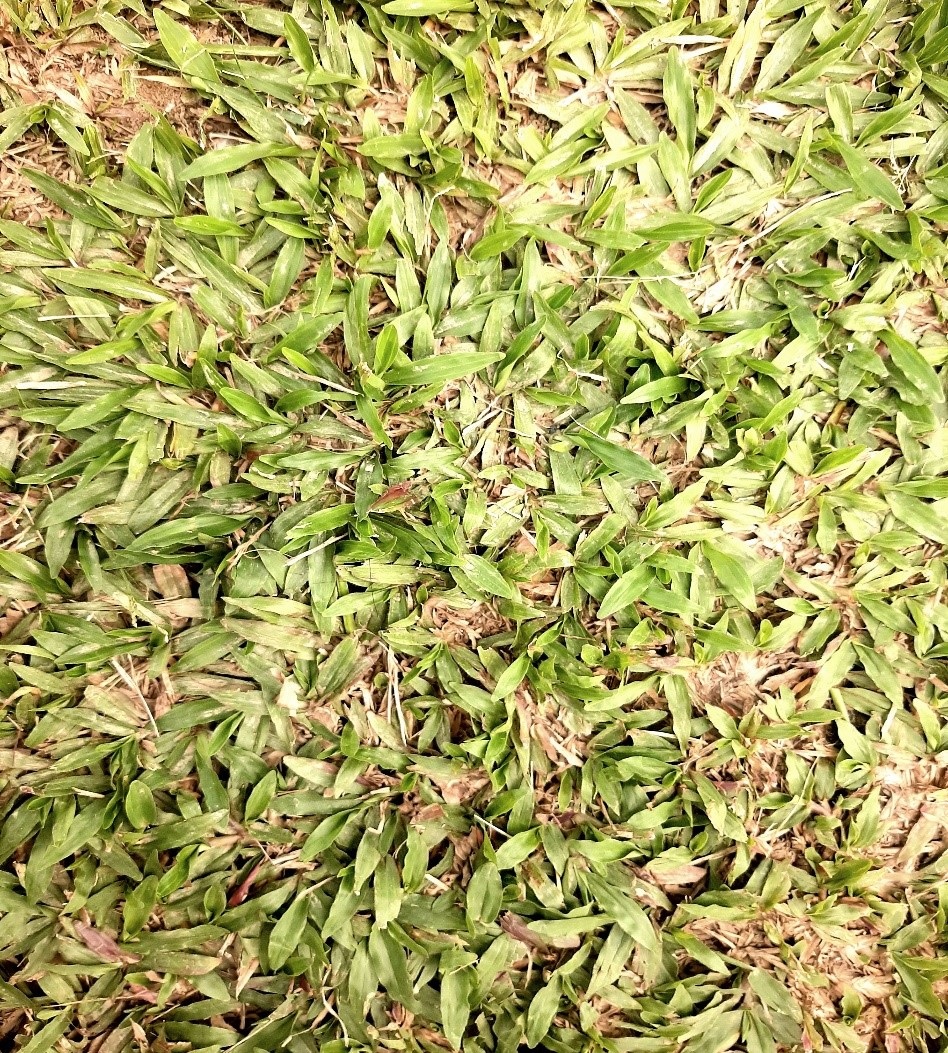
Grasses belong to the family Gramineae. The varieties most widely used locally comprise the common but hardy Axonopus compressus. It is also known as carpet grass, lawn grass, blanket grass or cow grass.
How the name of cow grass came into the picture is very interesting. It is well-known that once upon a time, cows were let loose to roam freely to feed on whatever they could find. Indeed, they had a lot to chew on because cow grass was plentiful, with untrimmed swaths growing densely and achieving heights of 30-40 cm. They grew quickly thus earning the livestock farmers good money. Of course the gossip eventually landed on the grasses the cows ate…the rest is history.
Other grasses that are often used for turfing include zoysia and Bermuda grass. These are the fine bladed grasses that appear to be softer and more delicate. There are numerous varieties of Bermuda grasses with fine, thin and elongated leaf blades. Generally, the thin-bladed turfs are lumped together as Bermuda grass. In areas that require greening as a single item green, or mixed together with an assortment of landscape plants in private and public spaces, cow grass suits the purpose well.
Private spaces may include the compounds of houses or individually-owned properties, while public spaces usually cover turfing jobs in fields, roadsides, parks, sports fields and playgrounds, etc.
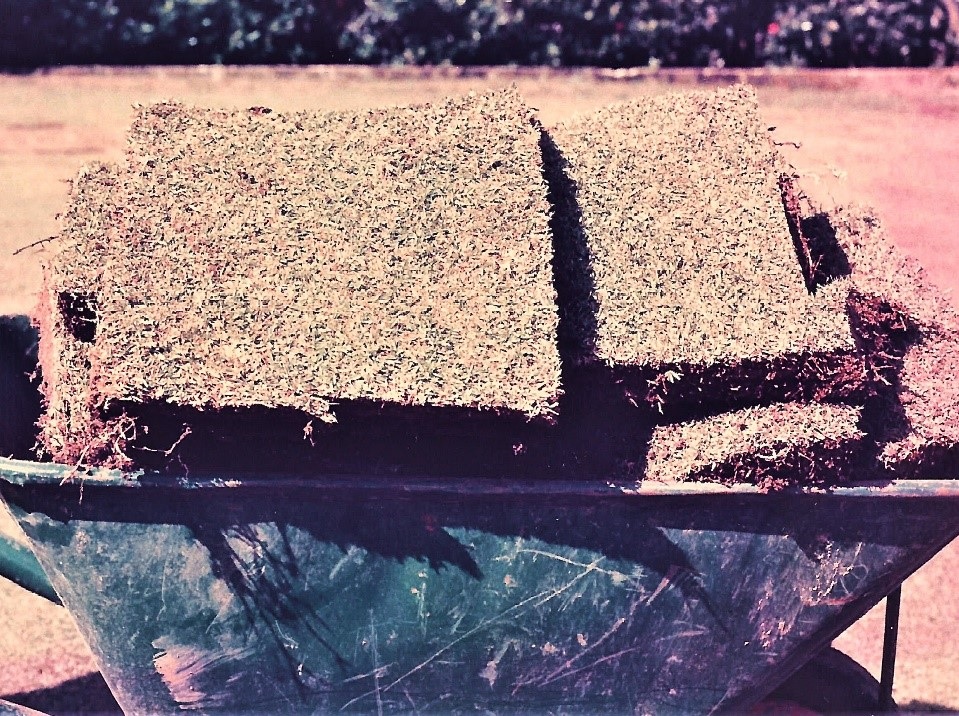
To start turfing with cow grass, sprigs, sods or rolls are usually used. Alternatively, seeds, rhizomes or stolons may be used but it may require a long time for complete coverage. It is also cheaper to use spot turfing where little bits of the grass are planted into the ground. Full coverage though, may take several months compared to close turfing where patches of turf are neatly cut out from a turf farm and then planted.
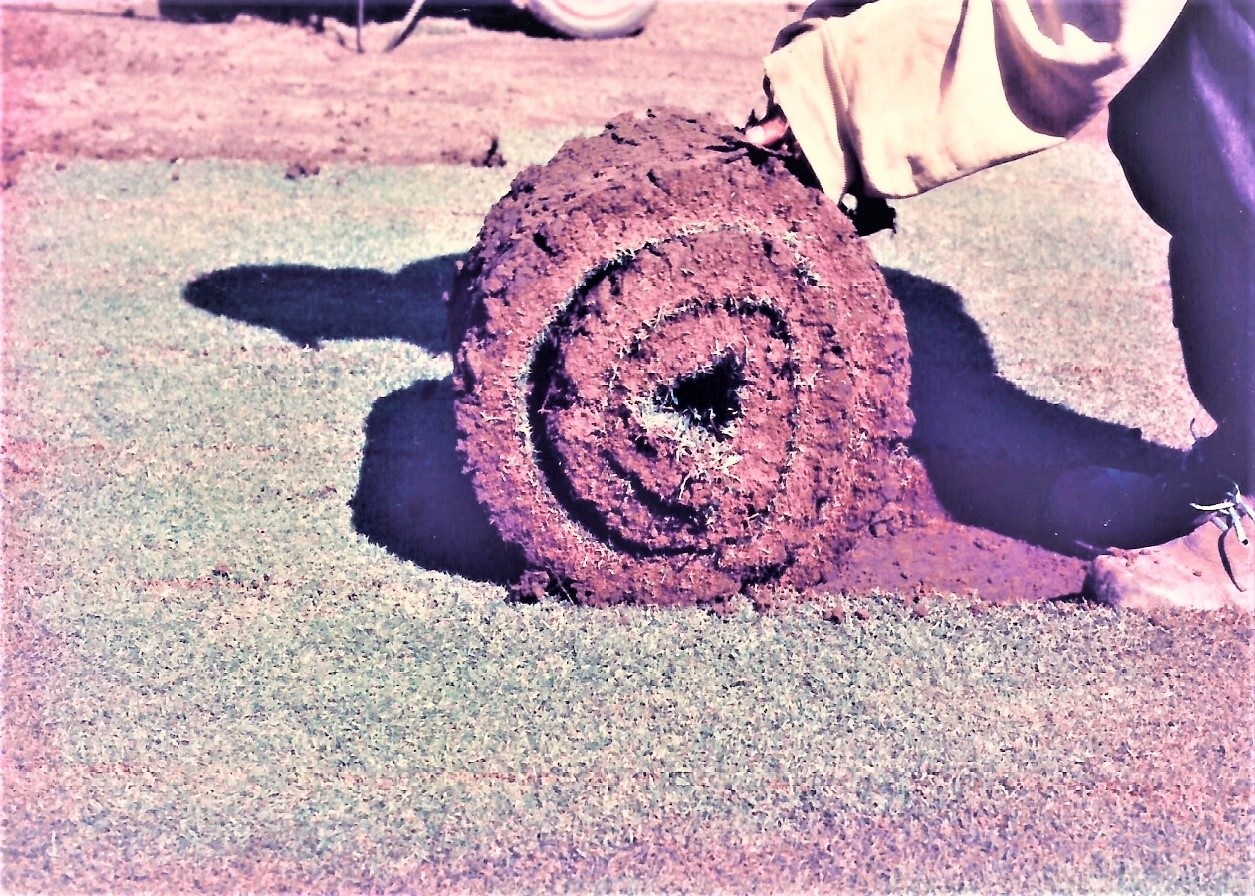
Close turfing may also involve the use of rolls of turf where machines are used to harvest them, rolled up and then loaded onto lorries for transport to its destination.
These rolls are then rolled out on well-prepared grounds to complete the turfing job easily. Oftentimes, such rolls, as they are often very heavy to handle, are cut down into smaller square mats, and then laid out neatly to cover the ground.
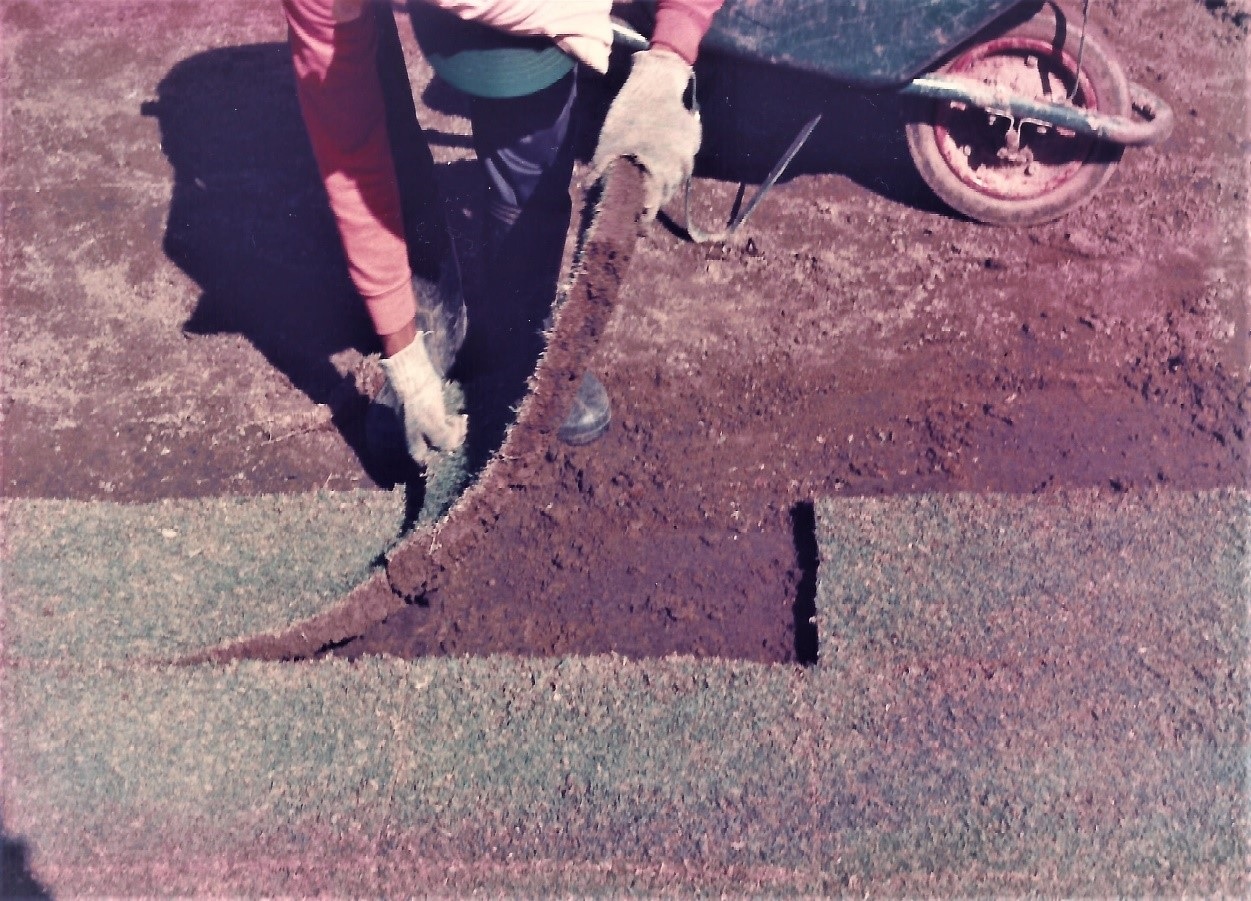
However, before the rolls or pieces of turf are laid out, the ground has to be prepared first. Any depression has to be filled up with soil mixed with coarse river sand, to be followed by drainage, grading, levelling, rolling and ensuring there is a slight gradient of the soil surface that leads outwards.
While turfing with live grasses such as cow grass may sound very heavy and taxing on body and limb, the easiest and most convenient way out is to use artificial turf.
This is made of turf-like materials that include popypropylene, polyethylene and nylon, most of which are extracted from the petroleum industry. Artificial turfs usually come in rolls of 5m x 2m, or larger. Sometimes, small mat sizes of 30cm x 30cm are also available to meet customer needs.
Surprisingly, modern artificial turfs do indeed look like real grasses. They are tough, hardy and long-lasting, even under fully exposed conditions. Most interesting is that after years of use, the turf is still able to keep its green with very little sign of bleaching or degradation.
Add in the other advantages such as little wear and tear, and zero need for lawn mowing or watering, therefore such turfs obviously make for a very good and viable alternative to natural grasses.
The writer can be reached at: [email protected]