AS Kota Kinabalu continues to add new shopping malls and commercial developments, veteran architect, urban planner and environmental advocate Dr Henry KF Chok believes the more pressing question is not how many malls the city can build, but whether every project is guided by sound planning, reliable data and a long-term vision.
He warns that commercial development and environmental conservation can coexist only when growth is carefully managed through comprehensive master plans that are consistently implemented.
Advertisement

Without proper planning, he says, new developments may simply shift customers from one mall to another instead of creating genuine economic growth, while poor planning could worsen traffic congestion, place greater pressure on public infrastructure and erode the city’s environmental assets.
“Planning is not just about approving projects,” he said.
“It is about understanding what people need today and what future generations will need tomorrow.”
Drawing on decades of experience in architecture, property development, urban planning and environmental conservation, Dr Chok believes Kota Kinabalu has the expertise to become a more liveable, sustainable and climate-resilient city.

A founder of the Sabah Environmental Protection Association (SEPA), he has also contributed to shaping Kota Kinabalu’s urban landscape through both the public and private sectors.
Among the developments he was involved in are the former Karamunsing Hotel, the Oriental Hotel and Jewel Tower. During his tenure with the former Kota Kinabalu Municipal Council, he championed initiatives to incorporate greenery into housing developments while advocating the protection of water catchment areas, coastal setbacks and other environmentally sensitive zones.
His experience as both a developer and environmentalist gives him a rare perspective on balancing economic growth with responsible urban planning – an issue he believes has become increasingly important as Kota Kinabalu continues to expand.
Revitalise before replacing
While many ageing shopping centres struggle to compete with newer developments, Dr Chok believes revitalisation should always be considered before building another mall.
“I think it can be done,” he said.
“But it requires proper planning, cooperation among owners and support from the local authorities.”
Unlike many newer developments owned by a single entity, older shopping complexes are often divided among numerous individual owners, making large-scale redevelopment more challenging.
“When there are many owners, everyone has to agree. Some will support it, some won’t.
“That is why many developers find it easier to build somewhere else.”
Nevertheless, he believes redevelopment remains achievable if stakeholders are willing to work together.
Drawing from his recent visit to Perth, Australia, Dr Chok cited the successful revitalisation of Morley Galleria (Galleria Shopping Centre), where older retail premises were redesigned, accessibility improved and tenant mixes reorganised instead of constructing an entirely new complex.
“They reviewed the entire layout, improved accessibility, reorganised the tenant mix and created better public spaces.
“It shows that revitalisation is possible.”
However, he stressed that successful redevelopment requires more than cosmetic upgrades.
“You need planners, architects, engineers, local authorities and the owners themselves to work together.
“It is a team effort.”
Master plans must guide development
Looking beyond individual shopping malls, Dr Chok believes Sabah already possesses the framework needed for sustainable development.
“We already have master plans,” he said.
“We should revisit them, review them where necessary and then follow them.”
He said planning for the next 30 years should involve reliable demographic projections, transport planning, commercial demand, housing needs and infrastructure development.
As Kota Kinabalu expands into Penampang, Tuaran and neighbouring districts, he believes planning can no longer be undertaken in isolation.
“People live outside the city but travel into Kota Kinabalu every day.
“Transportation, housing, commercial development and infrastructure all have to be planned together.”
According to him, many of today’s challenges – from worsening traffic congestion to increasing pressure on public facilities – could be mitigated through stronger coordination between local authorities.
Planning must be backed by data
Although public perception suggests Kota Kinabalu may already have more shopping malls than demand can sustain, Dr Chok declined to make that conclusion without supporting evidence.
“I cannot honestly answer that because I don’t have the data.”
Instead, he said planning decisions should be driven by objective information.
“We need to know the population.
“We need to know where people live, their purchasing power, traffic movements and future demand.
“Only then can we decide whether another commercial development is justified.”
He believes local authorities should possess such information before approving new developments.
“When we approve developments, we should know whether they are really needed.
“Planning should be based on evidence.”
Recalling his time in local government, he noted that approvals for new shoplots had once been temporarily suspended after authorities determined there was already an oversupply.
“That shows planning authorities recognised the need to match supply with demand.”
When new malls compete with old ones
Consumer behaviour, Dr Chok observed, naturally favours newly opened shopping centres.
“People naturally want to visit something new.
“But the real question is whether the new development can remain sustainable over the long term.”
Without proper planning, he warned, new malls may simply divert customers from existing ones instead of generating fresh economic activity.
“When one mall takes business from another, we have to ask whether we are creating new demand or simply shifting it.”
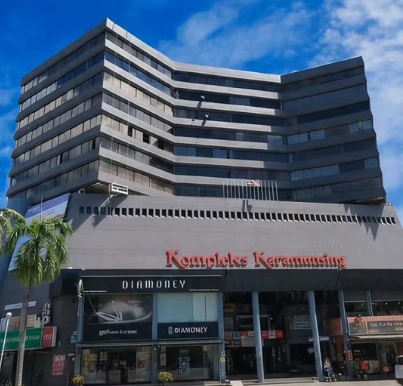
He cited Karamunsing Complex as an example of how older commercial developments can remain relevant through thoughtful improvements to accessibility, facilities and tenant offerings.
“Sometimes revitalising what we already have makes more sense than building something entirely new.”
Consumers still drawn to new experiences
For many shoppers, however, novelty remains a powerful attraction.
North Borneo University College student Geena Roslyna said she would likely choose a newly opened shopping mall because young people enjoy exploring fresh destinations.

“There are plenty of things to do, from shopping and entertainment to simply hanging out with friends or passing the time while waiting for the traffic to ease,” she said.
She admitted that new malls often encourage impulse buying and noted that traffic congestion during weekends and peak hours remains a major drawback.
Retailers feel the pressure
For one anonymous small business owner operating in a shopping mall, rising operating costs have made survival increasingly difficult.
The retailer said shop lots generally offer greater flexibility because businesses are not burdened by high rentals, management fees and parking-related expenses associated with shopping malls.
At the same time, online shopping and freelance service providers have significantly altered consumer behaviour.
“More customers are shopping online or turning to unlicensed freelance technicians who offer lower prices,” the retailer said.
“As licensed retailers, we invest in qualified technicians, staff training, genuine parts and after-sales service. Those costs are reflected in our prices.”
The retailer believes mall operators and tenants must work together to create a more sustainable business environment.
Convenience comes at a cost
Music centre owner-manager Melinda Angus acknowledged that shopping malls remain attractive locations for businesses serving families because of their accessibility, security and convenience.
“Parents can shop or have a meal while waiting for their children’s lessons,” she said.
However, she noted that music schools rely on regular weekly enrolments rather than passing shoppers.
“Even if a mall has heavy foot traffic, it doesn’t necessarily translate into more students.”
She added that operating outside a shopping mall is generally more sustainable because of lower rental and utility costs.
What shoppers really want
Mother of three Marjorie Angus said comfort remains one of the biggest reasons she visits shopping malls.
“I enjoy visiting shopping malls because they offer a comfortable, clean and air-conditioned environment, especially on hot days,” she said.

She also appreciates cinemas, diverse dining options and the convenience of having restaurants, pharmacies, clothing outlets and health and beauty stores in one location.
However, she believes malls could do more to improve accessibility for wheelchair users and parents with strollers, while better traffic management at drop-off points and consistently clean public toilets would further enhance the overall experience.
Planning beyond the next project
For Dr Chok, the future of Kota Kinabalu should never be measured by the number of shopping malls on its skyline.
Instead, it should be measured by whether development follows a coherent long-term vision that balances economic growth, environmental sustainability and the needs of future generations.
“Planning is not just about approving projects,” he said.
“It is about understanding what people need today and what future generations will need tomorrow.”
He believes sustainable urban development requires more than investment.
It requires discipline, reliable data, respect for master plans and the willingness to place the long-term interests of the community ahead of short-term gains.
“If we have a good master plan but we do not follow it,” he said, “we end up back where we started.”
‘Not every vacant land should become commercial property’
HAVING worked both as a developer and an urban planner, Dr Henry KF Chok said he understands the commercial pressures behind development. However, he cautioned against allowing market forces alone to dictate how land is used.
“I am a developer myself,” he said. “I was involved in projects such as the former Karamunsing Hotel and the Oriental Hotel.”
That experience, he said, has reinforced his belief that development should always be guided by long-term planning rather than short-term financial returns.
Asked whether every vacant parcel of land should eventually become commercial property, his answer was unequivocal.
“No,” he said.
“We need to understand what the city actually requires and what its future needs will be.
“Very often, people see a piece of land and think, ‘If I make it commercial, I can earn more money.’ But planning should not be driven solely by profit.”
Dr Chok said Kota Kinabalu already had comprehensive planning frameworks in place decades ago.
“We had a master plan. I remember experts from Denmark helped prepare some of the planning studies.
“The question is, did we follow the master plan?”
His answer was equally direct. “No.”
He cited water supply planning as an example.
“When the city experienced water shortages, comprehensive planning was carried out to address future needs. We spent considerable time studying the issues and preparing plans.
“But what happened to those master plans? I don’t know.”
Plans are only meaningful if they are followed
According to Dr Chok, effective urban planning depends not only on producing good plans but also on consistently implementing them.
“In the past, we had town planners and technical departments responsible for safeguarding long-term planning.
“The systems were there.”
Drawing from his experience during Sabah’s earlier years of development, he said planning principles inherited from the British administration had provided important safeguards for the environment.
“We adopted many planning principles from the British system.
“There were designated water catchment areas, river reserves, coastal setbacks and buffer zones. These were established for good reasons.”
However, he questioned whether those safeguards continue to be adequately respected.
“Are they still being followed today?
“That is something we have to ask ourselves.”
He pointed to instances where development has encroached on environmentally sensitive areas, arguing that such decisions could have long-term consequences for water resources, biodiversity and public safety.
“When developments extend right up to rivers, coastlines or other sensitive areas, we must ask whether we are planning for today’s convenience or for the wellbeing of future generations.”
Protecting the city’s future
Throughout his decades of environmental advocacy, Dr Chok said SEPA consistently raised concerns whenever development threatened environmentally sensitive areas.
He acknowledged that economic development is essential but stressed that it should never come at the expense of sound planning.
“If we have planning guidelines, we must respect them.
“Planning is about looking ahead. Once we ignore those principles, we create problems that future generations will have to solve.”
For Dr Chok, the challenge facing Kota Kinabalu is not whether development should continue, but whether growth is being managed in a way that protects the city’s natural assets while ensuring it remains resilient, liveable and sustainable for decades to come.