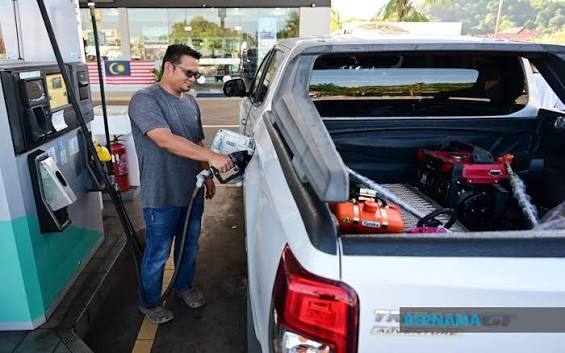
Kota Kinabalu: Savings of about RM40 to RM50 a week may seem modest to some, but for diesel users in Sabah, the amount offers much-needed flexibility in managing their families’ daily living costs.
For those who depend on diesel vehicles for their daily commute, the money saved on fuel can now be channelled towards other needs, including children’s education, school activities, food and household expenses.
IT manager Gloria Chew, 49, from Kota Kinabalu, said she began feeling the benefits of the Budi Diesel initiative within a week of using it, as her fuel expenses had dropped significantly.
“I did not expect the Government to extend an initiative similar to the RON95 scheme to diesel users. I was delighted when this initiative was introduced because I drive a diesel vehicle. Now, I can enjoy lower fuel prices and save on costs,” she said.
The Budi Diesel initiative, which offers diesel at RM2.10 per litre through a MyKad-based mechanism, was implemented on June 27 in Peninsular Malaysia and on July 1 in Sabah, Sarawak and Labuan. More than 238,000 users have benefited from the programme so far.
Gloria said she typically fills up about 50 litres of diesel for a week’s use, which previously cost her more than RM100. With the initiative, she now saves about RM40 to RM50 over the same period.
“These savings can be put to good use, particularly for my children’s needs, including school expenses, their activities, education, and food,” she said.
Besides hoping that the Budi Diesel initiative will continue, Gloria also called for information on the programme to be disseminated more widely, especially in rural and remote areas, so that more people are aware of its benefits.
She said broader outreach was important as many communities in rural and remote parts of Sabah rely heavily on diesel vehicles for transportation and the movement of goods.
Trader Satar Bahari, 49, from Sepanggar, also expressed gratitude for the implementation of Budi Diesel, saying the savings had helped ease the burden of daily expenses.
Meanwhile, factory worker Johnson Jonis, who commutes from Tamparuli to his workplace at the Kota Kinabalu Industrial Park, said he began feeling the benefits of the scheme within a week of its implementation as his fuel expenses decreased.
He said his weekly diesel spending, which previously exceeded RM100, has now dropped to about RM60, describing Budi Diesel as an excellent initiative for diesel vehicle users.
However, Johnson hoped greater attention would be given to the needs of rural and remote communities in Sabah that continue to rely on diesel for daily use.
He said the 200-litre monthly quota under Budi Diesel may still be insufficient for some users in Sabah, particularly those who use diesel vehicles for long-distance travel.
Johnson also pointed out that diesel is not used solely for vehicles, as it also powers generators for residents in rural and remote areas, especially in villages without a full electricity supply.
He suggested that a comprehensive study be carried out to identify the actual needs of diesel users in Sabah, including those in rural and remote communities, to ensure future improvements are aligned with local conditions.
I hope the Government can introduce a more comprehensive initiative in the future, as diesel is not just for cars. Generators also run on diesel, especially in remote areas that still lack electricity,” he said.