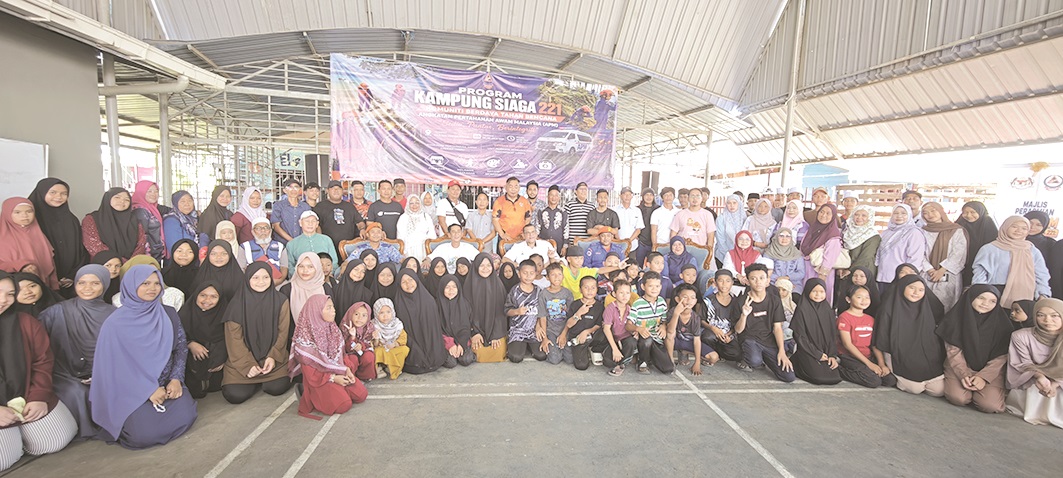
TAWAU: Kampung Titingan has been identified as a higher-risk settlement and selected for the Kampung Siaga 221: Disaster-Resilient Community Programme by the Malaysian Civil Defence Force (APM) to strengthen local disaster preparedness.
Sabah Youth Development, Sports and Creative Economy Minister Datuk Nizam Abu Bakar Titingan said the selection was based on the village’s population of nearly 10,000 people and its coastal location.
He said the area is exposed to risks including fires, storms and high tides due to its geographical setting near Tawau town.
According to him, the two-day programme aims to enhance community preparedness in responding to emergencies and reduce disaster impacts through early action.
He said the initiative is also intended to ensure residents understand their roles in assisting security and rescue agencies during emergency situations.
Nizam, who is also Apas Assemblyman, said this after officiating the programme organised by the Tawau District APM in collaboration with the Community Development Leader Unit (UPPM) at the Kampung Titingan Community Hall on Sunday.
He also highlighted the need for continuous community-level measures to address public health and environmental risks in the area.
Nizam proposed that a large-scale and continuous gotong-royong programme be carried out in Kampung Titingan to maintain cleanliness and reduce disease risks.
He said his ministry would work with the Tawau Municipal Council (MPT) to implement a one- to two-month cleanliness campaign in conjunction with National Month celebrations.
He added that maintaining cleanliness should be a shared responsibility between local authorities and residents, beginning at the household level.
On development matters, Nizam said several infrastructure projects are being implemented or planned for the area, including river widening works, upgrading bridges to concrete structures and land reclamation in former wooden bridge zones.
He said the projects are expected to improve safety and living conditions while gradually transforming parts of the settlement into more stable land-based housing areas.