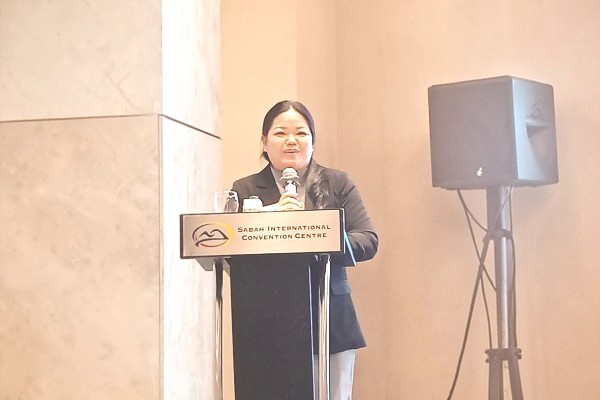
Kota Kinabalu: Preventing child abuse before it reaches the courtroom should be society’s greatest priority, as no judicial decision can erase the trauma suffered by a child, Registrar of the Subordinate Courts of Sabah and Sarawak Elsie Primus said.
Speaking at the Child Protection Conference here, Elsie drew on more than two decades of judicial experience as a magistrate and Sessions Court judge, saying the courts are usually the last stop in a child protection case.
Advertisement

She said before a case reaches court, families, teachers, doctors, welfare officers and police have often already been involved.
“By the time a child enters the courtroom, harm has already often occurred.
“No judicial order, however carefully considered, can fully erase the trauma that a child has experienced. Courts may determine rights, impose accountability and provide legal remedies, but they cannot undo abuse that has already taken place,” she said, on Saturday.
Elsie said this is why prevention remains the country’s greatest investment in protecting children.
“Every child who is protected before entering the justice system represents a success not only for the family concerned, but for society as a whole,” she said.
Elsie said safeguarding children is not solely the responsibility of the courts, parents or law enforcement agencies, but a collective duty shared by every member of society.
“Protecting children is not the responsibility of one institution alone. It is the whole of society’s responsibility, where every individual and institution has both a moral and legal obligation to safeguard children,” she said.
She said child protection cases rarely stem from a single catastrophic incident but more commonly arise after multiple warning signs are overlooked.
“Someone observed a warning sign but remained silent. Someone recognised indicators of abuse but assumed another person would intervene. Someone hesitated because they feared interfering in what was perceived to be a private family matter.
“That moment of hesitation can have profound consequences,” she said.
Elsie said families provide the first and most fundamental layer of protection, while teachers are often the first to notice changes in a child’s behaviour or emotional wellbeing.
Healthcare professionals play a crucial role in detecting signs of abuse and neglect, while police, welfare agencies and civil society organisations each contribute to protecting children through investigations, rehabilitation, counselling and community support.
She added that technology companies also have an increasing responsibility to safeguard children in the digital environment.
“The answer is both simple and profound. It is all of us,” she said when addressing who bears responsibility for protecting children.
She urged members of the public not to regard reporting suspected abuse as interference in family affairs.
“Protecting a child should never be viewed as interference. It is an act of courage, compassion and civic responsibility. A timely report may be the difference between continued abuse and a child’s opportunity to live in safety, dignity and hope,” she said.
Elsie said amendments to the Child Act 2001 now require anyone who has reasonable grounds to believe a child is being abused, neglected or needs protection to report it to the authorities.
While Malaysia has enacted comprehensive legislation and established specialised institutions to protect children, she said the country’s greatest challenge now is making sure those laws are properly carried out.
“The law is sufficient. It’s more than enough because Malaysia has enacted comprehensive legislation and established specialised institutions dedicated to child protection.
“Rather, the challenge lies in ensuring that these laws are implemented effectively, that institutions work collaboratively rather than in isolation, and that society remains vigilant in protecting those who are often least able to protect themselves,” she said.
Elsie also reminded the media of their responsibility to protect children’s identities, noting that the Child Act prohibits publishing information that could identify children involved in legal proceedings.
She said such safeguards are not intended to curtail press freedom but to uphold children’s right to privacy, dignity and protection.