Kota Kinabalu: Bhutan is seeking to prove that economic growth, environmental conservation and human well-being can coexist through an ambitious new city designed around sustainability, with tourism serving as a catalyst rather than a threat to nature and culture.
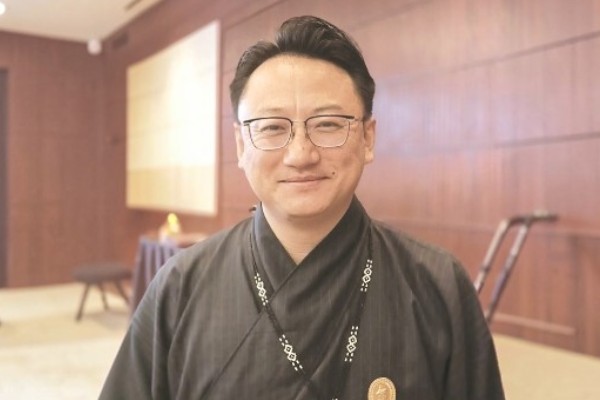
Speaking at the Sabah Asia-Pacific Impact Investing for Sustainable Development Summit 2026, Gelephu Mindfulness City (GMC) Managing Director for Tourism Phuntsho Rabsel Dorji said the project represents Bhutan’s effort to build a new model of development rooted in the country’s philosophy of Gross National Happiness.
Advertisement

“For us Bhutanese, it’s nation-building 101. It’s how we transform the future potential of our country while trying to build a model of development and mindful prosperity,” he said.
GMC is the King’s global vision to establish an oasis of mindfulness and prosperity amid increasing global uncertainties and geostrategic challenges. It aims to offer the world a different path to development, where Bhutan’s traditional values of spirituality and harmony with nature are blended with innovation, technology and economic vibrancy.
The city also embodies the King’s domestic vision to catalyse Bhutan’s administrative reforms and economic advancement under the concept of “One Country, Two Systems”.
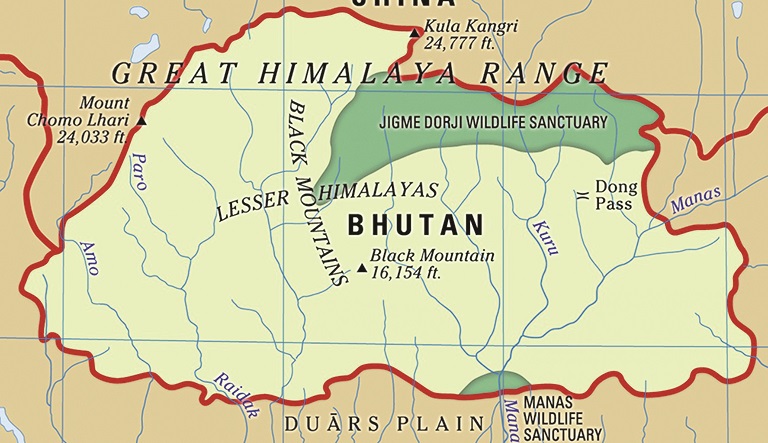
Located on Bhutan’s southern plains bordering the Indian state of Assam and spanning more than 4,000sq km, GMC was established by Royal Charter in December 2024 as a highly autonomous Special Administrative Region (SAR).
The status allows it to establish its own legal and regulatory frameworks, enabling new policies to be tested before being introduced nationwide.
The GMC will be run by global and local talents to build an advanced economy by adopting and adapting best practices in governance and business from around the world.
Rabsel said Bhutan wanted to be recognised not only for its monasteries and pristine landscapes, but also as a nation embracing innovation.
“Bhutan is not just monks meditating in the mountains. It’s also young people; young, bright, dynamic, vibrant, innovative and ready to do business.”
He said Bhutan had long viewed itself as a small, landlocked country between China and India, but now saw itself at the centre of a rapidly expanding regional economic corridor.
“As we zoom out on the map, we realise we’re right at the centre of this economic corridor... Suddenly we’ve become a place of opportunities.”
The GMC aims to integrate renewable energy, sustainable industries, tourism and modern infrastructure while preserving forests, biodiversity and Bhutan’s cultural identity.
Tourism is one of eight priority sectors, but Rabsel said the objective is to strengthen communities, protect biodiversity and preserve culture rather than simply attract more visitors.
“That’s partly the reason why I’m here in Sabah. What kind of tourism policies can I learn from? What kind of investments are we able to attract?” he said.
The city will be guided by four principles: remaining green, clean, safe and happy.
Bhutan’s Constitution requires at least 60 per cent forest cover, while the country currently maintains about 70 per cent.
“How can we remain clean? The water that we drink, the air that we breathe, how can we preserve that Himalayan quality?”
Rabsel said the concept of being “clean” also extends to governance.
“Clean here also means the system; transparency, meritocracy and accountability.”
The city will feature an international airport, rail connectivity with India and advanced digital infrastructure, with even the airport designed to reflect Bhutan’s philosophy of mindfulness.
“Airports are usually places of stress and anxiety... but in GMC we want this to be a place of realisation, meditation, mindfulness, yoga and sound healing, so that your first and last impression of our country is authentic to who we are.”
Quoting the King, Rabsel said: “What Gross National Happiness is doesn’t change, but how we achieve it must change.”
He described GMC as a “sandbox” for testing new ideas.
Inviting governments and investors to participate, Rabsel said: “The Gelephu Mindfulness City, for us Bhutanese, of course, is nation-building, but it’s also an invitation to the world.
“Help build the city with us... help chart the future of what my country is going to look like... and be a partner in this journey of designing what mindful prosperity and mindful living could look like.”