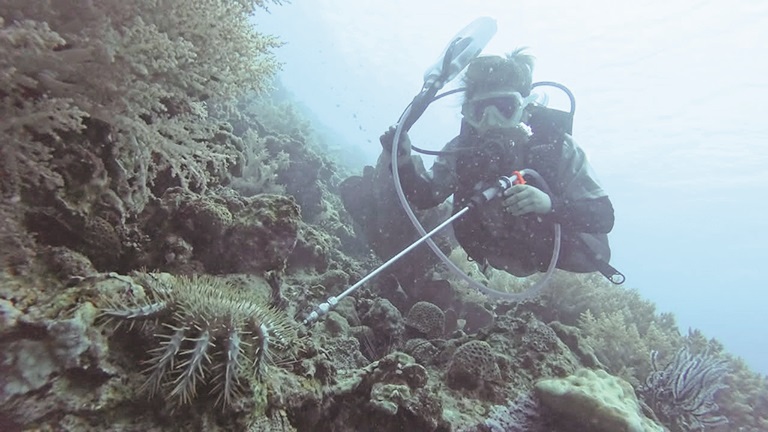
SEMPORNA: Coastal communities, conservationists and international volunteers are joining forces to protect Sabah’s coral reefs from an outbreak of crown-of-thorns starfish, a coral-eating species capable of causing extensive damage when its population grows unchecked.
The community-led effort is being coordinated by Reef Check Malaysia’s Semporna branch in collaboration with Semporna Aqua Planet and marine conservation groups from Selakan Island, Larapan Island and Kunak through regular monitoring and removal activities across the district’s waters.
Advertisement

Reef Check Malaysia senior programme manager Adzmin Fatta said the crown-of-thorns starfish is a natural predator within coral reef ecosystems and plays a role in maintaining ecological balance under normal conditions.
He explained that outbreaks occur when natural predators, including humphead wrasse and several reef fish species, decline, allowing the starfish population to multiply rapidly and place coral reefs under increasing pressure.
Adzmin said timely intervention is essential to prevent further damage to reefs that support marine biodiversity, fisheries and tourism throughout Sabah.
Larapan Marine Conservation Group chairman Mazni Jakarullah said local participation is central to the conservation effort because coastal families rely on healthy marine ecosystems for their livelihoods.
Advertisement

Having received dive training, she said she was motivated to take part in removal operations to help safeguard the coral reefs around his community and elsewhere in Sabah.
The initiative has also attracted support from overseas divers, with participant Ouy Ang from China describing coral reef conservation as a shared responsibility that transcends national borders.
He expressed hope that more members of the public and the diving community would take part in future conservation activities to help preserve Sabah’s marine environment for generations to come.
Reef Check Malaysia said a total of 9,209 crown-of-thorns starfish have been removed from the waters off Semporna and Kunak so far this year, with eradication efforts continuing to protect coral reefs, marine biodiversity, fisheries and the region’s tourism industry.