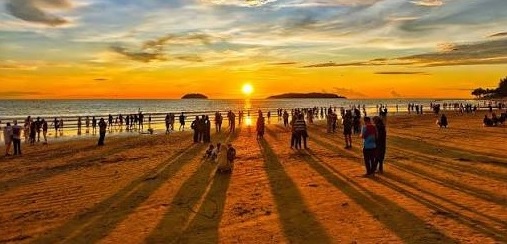
SITTING by the Tanjung Aru beach watching one of the most stunning sunsets in the world, I reflected on what it would take to prioritize the UN Sustainable Development Goals (SDGs).
We just finished an intense three days with 170 local and global organizations like WWF, mostly non-governmental civil societies, businesses, investors and policy makers on how we should accelerate action on bringing impact investing in SDG projects at scale in Sabah and beyond.
Advertisement

The United Nations launched their 17 SDGs in 2015 and ten years later, only 18% of the goals have been achievable by 2030. Bluntly speaking, lots of aspirations, but insufficient impact and almost no money, on top of lack of political will.
If practical execution is the process, the end game is to Pick or Prioritize the Problems, Fix them and Show everyone. Complaining gets you nowhere.
The people will only believe when you deliver planetary and human justice. But we must start small, thing big and act at scale.
So, with limited resources, where would we pick to deliver impact on biodiversity, water, food and energy?
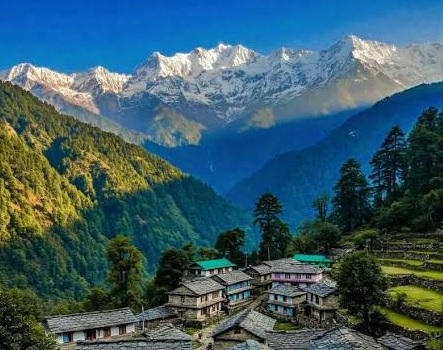
The Amazon Basin, Borneo Island, and the Hindu Kush Himalaya (together ABH) are not just wild and exotic, they form the planetary frontier for experimentation and action on climate stability, biodiversity, and human survival.
Combined, ABH holds nearly 40% of the Earth’s terrestrial carbon, sustain one quarter of all known species, and secure water, food, and energy for nearly 3 billion people across three continents.
But the threats are daunting: deforestation, peat destruction, glacial melt, and short sighted uncoordinated development may trigger irreversible tipping points that will harm rich and poor across the world.
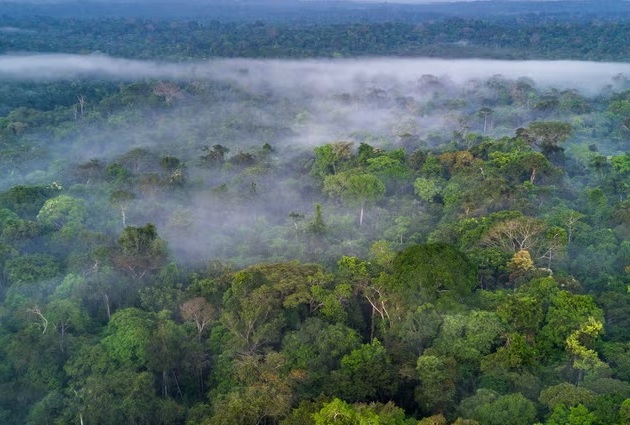
Each region shows unique features. According to the UN 2025 report, the Amazon basin spans nine countries and holds 120–200 billion tonnes of carbon.
The mighty Amazon discharges one fifth of global river flow from the Andes to the Atlantic.
Home to 47 million people, slash and burn for industrial output has cut 18% of its original forest, and if climate warming accelerates, the world’s largest rainforest could shift permanently to savannah — altering global weather patterns forever.
The Hindu Kush Himalaya is the “Third Pole” holding much of high altitude ice compared with the North and South Poles, but it is warming 2–2.5 times faster than the global average.
Its glaciers feed ten major rivers that sustain 1.7–2 billion people across Asia. If these glaciers disappear, they will trigger huge floods or droughts, threatening heat and food crises for nearly one quarter of mankind in South Asia alone.
Borneo — and within it, Sabah in East Malaysia, is the smallest of the three regions by area and population, but it packs the highest carbon density on Earth, storing nearly 40 billion tonnes including vast peatlands that hold 40% of that total. Sabah’s blue economy — with four of the world’s top dive sites to 59% of Malaysia’s mangroves — contributes 18–22% of state GDP and supports millions of livelihoods.
But Sabah and Borneo are also at extreme risk: 30% of original forest is cleared, and peatlands exposed to industrial agriculture is releasing methane that adds to global warming.
In terms of human biodiversity, Borneo has the same number of 2.2 million Indigenous people who protect the forest, rivers and seas as the Amazon.
The economics are unambiguous. Adding data from all the UN reports suggest that protecting all three regions requires US$67–91 billion annually through 2030 — less than 0.1% of global GDP.
These could return huge benefits in terms of avoiding climate heating, water stress for billions of people and finding solutions for sustainable, inclusive and environmental protection and productivity at scale.
Impact investing means finding the blended sources of capital from charitable foundations, friends and family, retained profits and mainstream equity markets banking, insurance and pension and sovereign wealth funds to make change at scale.
Put human capital (money) to fix and nourish natural capital. We need money, technology and markets to help communities protect nature.
We just need pilot projects and pioneer eco-warriors to show the way. Listening to the passionate native civil society movements, particularly from the indigenous tribes, Sabah can prove how to close this gap.
It is uniquely positioned to combine four finance streams unavailable together anywhere else: terrestrial forest carbon, peat carbon, blue carbon from mangroves and reefs, and premium markets for sustainable palm oil, seafood and ecotourism. Sabah straddles the highlands of Mount Kinabalu like the Himalayas, the Kinabatangan river basin that is a micro-model of the Amazonas, and lies at the heart or head of Borneo island.
The choice is clear: we either treat the three ABH regions as separate “environmental” crises spots, or act together to secure the systems that keep our climate stable, our food growing, and our water, energy and economies flowing. Sabah can show us the way — now the world must back her, and scale the lessons to the Amazon, Borneo and the Himalayas.
This is thinking global, framing regionally, and be the focal for acting local. This fusion of urgency, integration, and forward looking policy makes the small state of Sabah the ideal global pilot.
Her 2025 Climate Change & Carbon Governance Enactment — the first of its kind in Southeast Asia — enshrines free, prior and informed consent (FPIC), guarantees 50%+ benefit sharing for customary communities, and creates a unified registry for forest, peat and blue carbon. No other jurisdiction in these three regions has combined these elements into law.
Time to stop preaching and just do it. The risks of not acting are higher than being the path-maker and thought leader hub of climate action.
References
1. The Sustainable Development Goals Report 2025 — United Nations Statistics Division, July 2025.
https://unstats.un.org/sdgs/files/report/2025/The-Sustainable-Development-Goals-Report-2025.pdf
2. Amazon Assessment Report 2025 — Science Panel for the Amazon (SPA), UN SDSN, November 2025.
https://eng-ar25.sp-amazon.org/251111%20AR2025%20SYNTHESIS%20IP%20LC%20AP_ENG.pdf
3. Science Panel for Borneo (SPB) Assessment 2025 — UN SDSN, November 2025.
https://www.unsdsn.org/our-work/science-panel-for-borneo/
4. Hindu Kush Himalaya Assessment 2025 — International Centre for Integrated Mountain Development (ICIMOD), October 2025.
https://www.icimod.org/hkh-assessment-2025/
5. Sabah Climate Change & Carbon Governance Enactment 2025 — Sabah State Attorney General’s Chambers, July 2025.
https://sagc.sabah.gov.my/sites/default/files/law/Sabah%20Climate%20Change%20and%20Carbon%20Governance%20Enactment%202025.pdf
6. State of Finance for Forests 2025 — UNEP / UNEP FI, October 2025.
https://www.unepfi.org/themes/ecosystems/growing-forest-finance-at-cop30-and-beyond-how-financial-institutions-can-reap-the-benefits/
7. Global Nature Based Solutions Valuation Report 2025 — UNEP / World Bank, September 2025.
https://www.unep.org/news-and-stories/story/reducing-disaster-risk-safeguarding-nature-proves-smart-financial-investment
8. Sabah Blue Economy & Carbon Profile 2025 — Sabah State Government / CarbonWire, August 2025.
https://carbonwire.org/carbon-voices/sabahs-moment-why-this-state-must-seize-its-carbon-leadership-now/
Tan Sri Andrew Sheng is a Sabahan whose expertise has been sought by the World Bank and the HK Securities Commission. He once served Bank Negara and is now Advisor to the Sabah Government on investments.
The views expressed here are the views of the writer and do not necessarily reflect those of the Daily Express. If you have something to share, write to us at: [email protected]