AS a child, I dreaded going to the school toilet. Long before I understood the importance of hygiene, I remember the overpowering stench of urine that greeted me before I even stepped inside.
The squatting toilet bowls were stained, the walls were grimy, and the floors were perpetually wet.
Advertisement
Like many children, I feared the dreaded splashback every time I used the toilet – an experience that was not only unpleasant but felt deeply unhygienic.
Sadly, decades later, too many public toilets still evoke that same feeling.
This is not merely about comfort or aesthetics. It is about public health, dignity and the image we project to the world. Poorly maintained toilets can contribute to the spread of infectious diseases if hygiene standards are not upheld.
Wet floors also pose a slipping hazard, especially for children, senior citizens and persons with disabilities.
Many of us have become so used to carrying our own tissue paper that we’ve almost accepted missing toilet paper as normal. But should we?
When we speak of infrastructure, we often think of roads, bridges and airports. Yet one of the most basic indicators of a civilised society is how it maintains its public toilets.
A clean restroom tells people that those in charge care about the wellbeing of residents and visitors alike. A filthy one sends precisely the opposite message.
As Sabah prepares for Visit Malaysia Year 2026 and Visit Sabah 2027, we rightly celebrate our world-class islands, majestic Mount Kinabalu, wildlife and cultural diversity. But all that can be overshadowed by something as ordinary as a dirty public toilet.
Few tourists travel to Sabah thinking about public toilets. Yet when nature calls, the condition of the nearest restroom can leave an impression almost as lasting as the attractions they came to see.
The first toilet they use after landing at Kota Kinabalu International Airport (KKIA) or Tawau Airport could shape their very first impression of Sabah. Likewise, the last toilet they visit before boarding their flight home may become one of the last memories they take with them.
Visitor feedback, travel reviews and media reports have highlighted recurring concerns about unpleasant odours, slippery wet floors, broken fixtures, missing toilet paper, the absence of soap and inconsistent maintenance at some public facilities.
Popular locations, including tourist attractions and night markets, have also drawn criticism over hygiene standards and the lack of basic amenities.
Families and persons with disabilities have likewise called for more child-friendly facilities and accessible features such as grab bars.
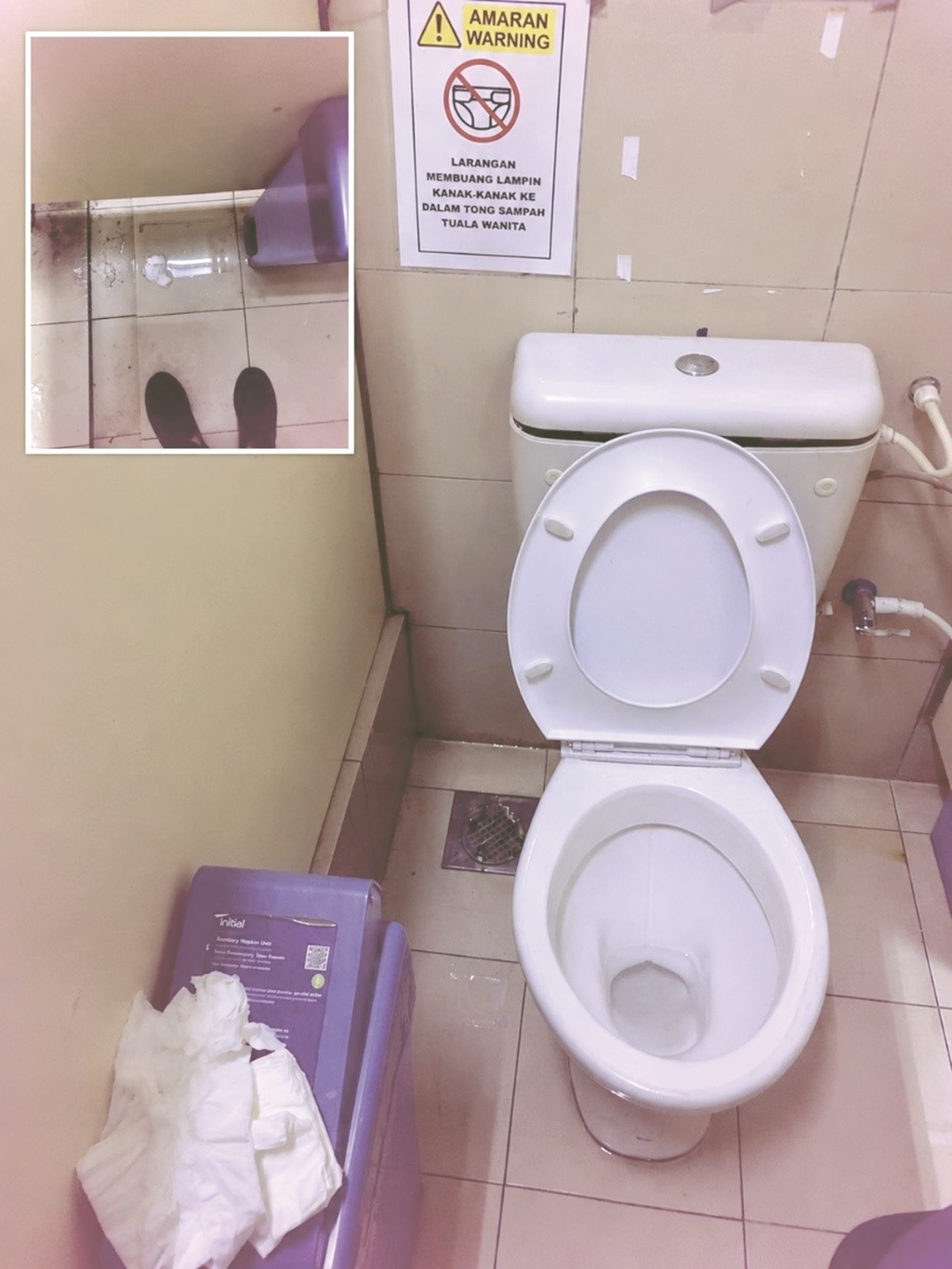
These concerns go beyond convenience. Poorly maintained public facilities can leave visitors with a negative impression and reduce the likelihood that they will recommend Sabah as a travel destination. The good news is that the issue is receiving long-overdue attention.
Following public complaints, authorities have begun taking steps to improve standards.
At KKIA, 26 toilet facilities are currently undergoing refurbishment under an RM11.8 million upgrading programme aimed at improving passenger comfort and enhancing the visitor experience. The works also include facilities for persons with disabilities.
Meanwhile, Kota Kinabalu City Hall (DBKK) has intensified inspections of public and commercial toilets, stressing that clean toilets reflect not only public health standards but also the city’s commitment to quality public services.
The inspections assess maintenance, ventilation, water supply, waste disposal systems and user safety, while businesses are reminded that toilets must be kept clean and functional at all times.
These initiatives complement the national push for the “BMW” standard – “Bersih, Menawan, Wangi (Clean, Attractive and Fragrant) – championed by the Housing and Local Government Ministry as a benchmark for public toilet cleanliness.
But new toilets alone will not solve the problem. Maintenance must be continuous rather than reactive. Cleaning schedules should be enforced and displayed publicly.
Toilets should be inspected throughout the day, not only before VIP visits. Broken locks, leaking pipes and empty soap dispensers should be repaired promptly instead of being allowed to remain in disrepair for months.
Users, too, have a responsibility.
No amount of government spending can keep facilities clean if members of the public continue littering, vandalising or treating public toilets as though someone else will always clean up after them.
Civic responsibility begins with something as simple as flushing properly, disposing of rubbish in the bin and leaving the toilet as clean as we would hope to find it.
Ultimately, public toilets are about more than sanitation. They reflect our values and how much we respect one another. More importantly, they show whether we genuinely believe every person – resident or visitor – deserves clean, safe and dignified public facilities.
As Sabah prepares to welcome the world in 2026 and 2027, we should remember that visitors may forget what they paid for lunch or the name of the souvenir shop they visited.
But they are unlikely to forget the condition of the public toilet they had no choice but to use. Because sometimes, the smallest room tells the biggest story about who we are.
Audrey is a senior editor at DE
The views expressed here are the views of the writer and do not necessarily reflect those of the Daily Express. If you have something to share, write to us at: [email protected]