THE recent Sabah Asia-Pacific Impact Investing for Sustainable Development Summit 2026 highlighted many of the investments needed to secure Sabah’s future. Yet sustainable development ultimately depends not only on where we invest, but also on whether we understand the interconnected systems that those investments seek to transform.
Global growth of population, exacerbation of climate change and crisis, and intensifying competition for scarce and natural resources are all increasing the pressures on our basic resource system; namely water, energy, and food.
These necessities cannot be taken lightly, and most definitely cannot be addressed independently of each other. For example, water is used to produced energy and food, energy is required to treat and distribute water, whilst both water and energy are basic requirements for the production of agriculture and food.
Over the years, Malaysia has increasingly place importance in these interrelationships through its various national frameworks for water, energy, and food -securities, yet their importance and urgency to sustainable optimisation, remains pronounced throughout the country, especially for Sabah, which has explicitly stated initiatives such as investing in water infrastructure and food security while also pursuing improved electricity access, as laid out by Sabah Budget 2026 and Sabah Energy Roadmap and Master Plan 2040.
However, the critical question is: are these ambitions being planned as part of a larger interconnected system; or are they being pursued largely in isolation? It is precisely this challenge that the concept of water-energy-food nexus, or otherwise known as WEF nexus, that this approach seeks to address.
The WEF nexus approach addresses and examines these three sectors, very often in relation to others such as livelihoods, economic development, sustainability, and etc., holistically and through identified dependencies, trade-offs, and synergies, rather than treating them as separate sectoral concerns.
Advertisement

This is important as decisions made, policies formed, and capital invested in any one sector, could potentially harm another, if they were made in isolation, while coordinated considerations could uncover opportunities for mutual benefits.
Revisiting the WEF nexus of Sabah thus means examining if the developmental plans for Sabah in the coming years could be better holistically optimised and coordinated as part of a quite larger and very important interconnected ecosystem.
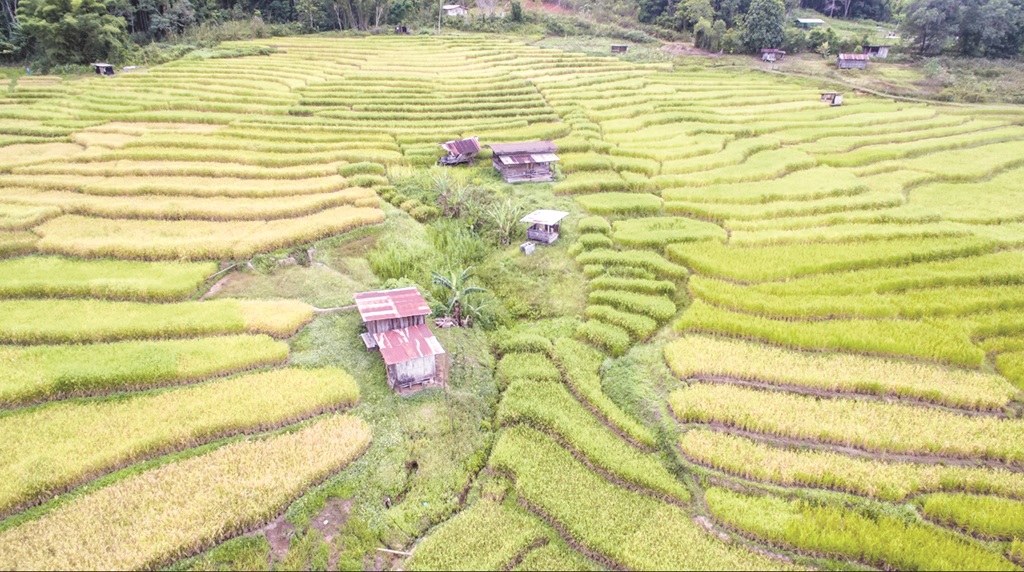
An example of a WEF nexus dynamic in Sabah is its target to achieve 60% self-sufficiency level in rice, as laid out in Sabah Budget 2026. Initiatives in Papar, Keninggau, Tambunan, Kota Belud, Tuaran, and Kota Marudu would support this target and objectives would include restoring abandoned paddy fields, equipping with modern machinery, upgrading irrigation and drainage systems, and optimising management.
However, this cannot be viewed solely from the lens of food security or agricultural programme, as the activities will impact the water and energy sectors. For example, increasing rice production comes with increasing need of water availability, upgrading irrigation for efficiency, and increasing energy for various paddy supply chain uses such as pumping, machine use, adequate drying, milling, storage, and transportation.
Additionally, linking to the larger ecosystem, coordinating these local Sabah aims would align the state’s food security objectives with Malaysia’s National Agrofood Policy 2021-2030, which advocates for sustainable, resilient, and technology-driven agrifood sector.
Water security presents another WEF nexus dynamic in Sabah. The Sabah Budget 2026 allocates RM848 million for operational and development expenditure across 77 projects under the 13th Malaysia Plan, which includes new or upgraded water treatment facilities located across Papar, Lahad Datu, Tawau, Kota Kinabalu, and Sandakan.
These development plans are definitely important, especially when water supply coverage for rural area stood at only 70% as of December 2024.
However, looking from a WEF nexus and systems lens, developing water treatment and distribution capacities should not be viewed primarily as a water-sector-only affair, but one that involves cross department to energy, as treatment plants, pumps, and distribution networks requires substantial electricity use; to food, as availability and quality of raw water depends on catchment protection, land use, climate and environmental changes, as well as competing demands from residential and industry.
Consequently, development in the water sector, which includes infrastructure planning and resource management, requires coordination together with Sabah’s energy, agricultural, and environmental departments.
Likewise, the energy sector represents the third important sphere within the WEF nexus. Within Sabah’s energy landscape, the Sabah Energy Roadmap and Master Plan 2040 aims for full rural electrification as well as upgraded electricity supply reliability by 2030, in addition to increasing renewable energy (RE) substantially within the State.
These goals have always been aligned with national development goals as well as sustainable development goals (SDG). However, when put within the context of a region’s WEF nexus, energy goals alone do not remain solely within the energy sector, especially when taking a detailed look at the developments planned.
For example, Hydropower development involves significant alterations to rivers and catchments; solar power installations require large amounts of land; and biomass/biogas generation depends on agricultural residues which may have their own economic and ecological uses.
Consequently, decision-making responsibilities to achieve RE goals of the state may not rest solely upon stakeholders within the energy sector, but rather it would involve stakeholders of WEF as well as all other impacted stakeholders. An integrated approach such as this would align with Malaysia’s National Energy Policy.
Besides the wellbeing of the three interrelated sectors, the health of the natural environment, with which the WEF nexus depends on, is inextricably linked to the three resources. Forests, rivers, wetlands, soils, and watersheds are natural infrastructure that provide water flow regulation and quality, agricultural production, and livelihood support.
The degradation of any of these components can lead to poorer water quality with costly treatment implications downstream, reduced river flows with lower agricultural yields, or lower soil production that can affect communities’ wellbeing.
Accordingly, any resource-related projects in Sabah should not only seek to promote the WEF nexus principles and address the region’s sustainability concerns, but must go beyond the Sabah Biodiversity Strategy 2024-2034, while interpreting the WEF-Ecology issues holistically.
The national level plans (Thirteenth Malaysia Plan, 2026-2030; National Food Security Policy 2030; Malaysia’s Water Sector Transformation 2040; National Energy Transition Roadmap; National Policy on Biological Diversity 2022–2030; National Climate Change Policy 2.0) are in place. The state level plans (Sabah Budget 2026; Sabah Maju Jaya 2.0 Development Plan, 2026-2030; Sabah Energy Roadmap and Master Plan 2040; Sabah Biodiversity Strategy 2024–2034; Sabah Agriculture Blueprint 2021–2030; Sabah Structure Plan 2033) are in place.
There is not an immediate or urgent need to develop a new roadmap or framework for Sabah. Instead, these existing guidelines could be translated into locally grounded approach that carefully considers Sabah’s geography, natural resources, local communities and culture, as well as development needs.
The focus should be to ensure that there is alignment between these laid out plans and that they progress beyond just shared aspirations towards coordinated planning, implementation, evaluation, and realised benefits on the ground.
Moving forward, Sabah could begin by establishing a cross-sectoral coordination mechanism which involves departments and stakeholders across water, energy, agriculture, food, land use, environment, and township planning.
This mechanism would be useful for subjecting any policies, developmental plans, or infrastructure investments to a simple “Sabah WEF Test” to identify and capture cross-sectorial and cross-domain dependencies, trade-offs, affected communities, opportunities for mutual benefits, or compromises before actual implementation.
Of course, this is performed and supported by real data, stakeholder engagement, systems modelling, and scenario analysis. The role of universities could be leveraged where knowledge workers can contribute as neutral conveners and research experts in the process.
Revisiting the WEF Nexus in Sabah is therefore not about adopting another trendy concept, but more about ensuring that Sabah’s existing ambitions and aspirations work together harmoniously and synergistically to produce sustainable, resilient, and tangible benefits for its people.
Eng Hwa Yap, Wawasan Open University, Malaysia Andrew Huey Ping Tan, Xi’an Jiaotong-Liverpool University, China
The views expressed here are the views of the writer and do not necessarily reflect those of the Daily Express. If you have something to share, write to us at: [email protected]


.png)