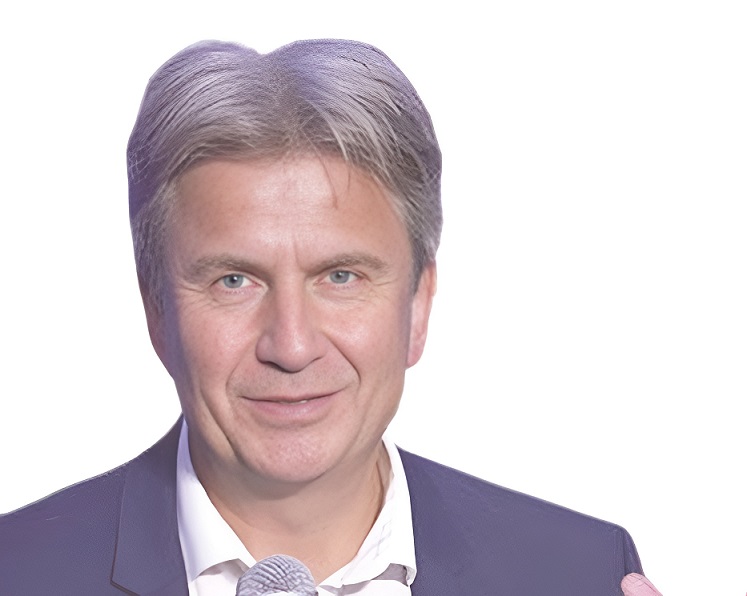
I'M home on my Scottish island of Arran after three days in Sabah with leaders from indigenous communities, business, finance, NGOs and policy.
At the Sabah Asia Pacific Impact Investment Summit, headed by Andrew Sheng, we asked a blunt question: how do we deliver the SDGs at the speed and scale needed to mitigate and adapt to climate and biosphere breakdown, and the fallout from global geopolitical crises?
The opportunity gave me a unique chance to compare the efforts and ambitions of Scotland and Sabah – places that may literally be a world apart, yet might be uniquely placed to work together to show how speed and scale can be achieved.
I met Andrew five years ago through our friend, complexity pioneer Stu Kauffman, who is based in Santa Fe, USA. I was chasing “rapid impact at scale” through soils—the planet’s largest, most vital terrestrial ecosystem.
We keep degrading farmland soils that store more carbon than forests, plants, and the atmosphere combined, and that store most of the water we use. As a professor at Glasgow, I teamed with Hugh Harley, then the PwC Financial Services lead for Asia-Pacific, to build a corporate–science coalition capable of restoring the health of 60% of global agricultural soils and sequestering about half of the world’s hard-to-abate GHG emissions. Andrew and Stu warned a top-down corporate push wouldn’t change farm-level practice.
Despite the involvement of the UN, WEF, and OECD, competing financial interests and challenges of impact verification proved them right.
Advertisement
We pivoted to bottom-up, place-based change, working with Sneha Poddar (then at the Himalayan Institute of Alternatives) on an accounting framework that operationalises the SDGs. Working in collaboration between Glasgow University and Glasgow City Council, we have demonstrated that it is almost certainly impossible to predict the outcome of either government- or community-led programmes to deliver the SDGs.
This is because policies, multiple SDG targets, and outcomes affect one another through a complex and unknowable network of interactions. If we can’t predict, then we are not in control, and if we are not in control, how do we manage the delivery of the SDGs?
The answer lies in a quote from George Box in 1987, then President of the American Statistical Society – “the only way to know how a complex system will change when you modify it is to modify it and see how it changes”.
Translating to community-led transformation, the only way to succeed is for empowered communities to make a start, monitor outcomes, analyse, and refine – in other words, to learn by doing. The role of policymakers, financial institutions, and NGOs is to enable that.
Here lie the fundamental challenges: learning-by-doing is slow to scale, every place is different, and investors can’t price uncertain outcomes—so capital stays away.
We fragment complexity into silos—projects, ministries, and finance pools—creating an illusion of control all the while blocking the potential for systemic transformation.
The solution is to leverage the power of networks. Connect communities with research and learning institutions to provide them with the training and upskilling they need.
Network communities with each other and share what works, and avoid repeating mistakes. Link projects with policymakers to co-create the right support where and when it’s needed.
Network finance—from philanthropy to seed and growth—so risks are shared and managed in real time. This also enables integrated landscape management to optimise social, economic and environmental returns.
Technology now lets us scale this fast. At the Summit, we proposed a Global Creative Commons (GCC) for the SDGs: a digital cooperative owned by participating communities. It supports an ecosystem of shared knowledge and data that accelerates parallel, place-based learning and co-innovation.
Networks matter: disconnected communities innovate additively; connected ones innovate multiplicatively – resulting in faster-than-exponential innovation. Trust matters too, so the GCC must be community-owned, legally protected so it can never be sold on, and allow creators to retain control of their data and know-how.
The GCC enables; local facilitators still implement. Communities, investors and policymakers co-create pathways, align decisions, and monitor and adapt at annual SDGx (SDG eXchange) meetings that connect regional ecosystems to spread what works, fast.
So how might Scotland fit in? Scalable solutions must prove themselves across contrasting contexts, quickly. Alongside Sabah, we’re collaborating in Bhutan, northern India and New Mexico—small, agile places with distinct cultures and challenges.
Scotland is also a fitting testbed: a largely rural, mountainous nation shaped by a thousand years of land conflict, near-total historic deforestation, and extensive, degrading peatlands that currently store carbon equal to ~140 years of current national emissions.
It leads on renewables but still relies on fossil fuels for heat and transport.
It also protects rich cultural and natural assets—three UNESCO Global Geoparks (including my island), seven World Heritage sites, two Biospheres and four Creative Cities—among them the first World Heritage Site inscribed solely for exceptional peatland as a global carbon sink.
Institutionally, Scotland hosts the global Wellbeing Economy Governments (WEGo) alliance, seeded the first of 17 global WEAll hubs, and maps wellbeing frameworks to the SDGs. Its National Performance Framework links SDG outcomes to budgets, indicators and procurement.
A new Community Wealth Building strategy brings assets, spending power and decisions closer to communities, and aims to empower them to realise their own futures.
Here on my island, Arran, we are now piloting how digital infrastructure can support community-led transformation under that strategy—alongside youth, food system, and reforestation projects—to demonstrate real-world impact.
My village has one of the last remaining fragments of temperate rainforest – can we restore and expand it? Bhutan, India and Sabah are on the same journey. Across these places, the challenge is shared: scale and speed.
The opportunity is also shared: use networks to empower, co-create, test many ideas at once, and innovate fast. Together we can prove that solutions can be shared and scaled across diverse cultures and geopolitical contexts.
Money isn’t the main constraint; bankable projects are. Working together, with committed leaders, philanthropies, financial institutions and communities, we can de-risk in stages, convert learning into investable pipelines, and scale quickly—turning complexity from a barrier into a powerhouse of progress.
We have a way to get started now, get better fast, and scale globally. There will never be a better time than now to just do it, and to do it together.
The views expressed here are the views of the writer and do not necessarily reflect those of the Daily Express. If you have something to share, write to us at: [email protected]


.png)