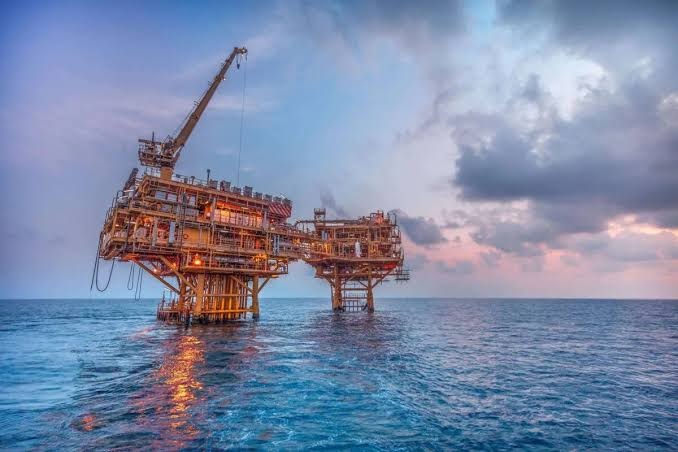
EARLY last year, Petroliam Nasional Bhd (Petronas) announced it would retire the Sabah-Sarawak Gas Pipeline (SSGP) by 2027. The pipeline cost RM4.6 billion and was built less than 10 years ago, so shutting it down early is a major financial and operational event.
The decision followed several gas leaks, including a fatal incident in 2022. These problems were linked to soil movement and sinking caused by climate change. The shifting ground made the pipeline unstable, which led to leaks and an explosion. The SSGP case shows that climate risk is now a real and physical threat to infrastructure in Malaysia’s upstream oil and gas (O&G) industry.
Reality of exposure
The O&G industry operates in an exposed industrial landscape. Coastal bases, offshore platforms and subsea networks are situated in areas prone to rising sea levels, intensified monsoons and shifting soil.
The National Hydraulic Research Institute of Malaysia predicts that sea levels along Malaysia’s coast could rise by almost a metre by 2100. This change will determine whether a facility can keep running or will become unusable.
When the National Oil and Gas Services Equipment Sustainability Roadmap was developed in 2024, both industry leaders and policymakers agreed that adaptation was just as critical as mitigation for long-term survival.
Advertisement

Investors and financial institutions now regularly review these risks using the Task Force on Climate-related Financial Disclosures (TCFD) framework, which has been integrated into the International Sustainability Standards Board (ISSB) adopted by Malaysia’s National Sustainability Reporting Framework (NSRF). The financial community is also increasingly assessing whether assets align with national climate goals, not just carbon emissions.
This careful review is growing. At the 30th United Nations Conference of the Parties (COP30) last year, the Task Force on Nature-related Financial Disclosures (TNFD) was formally recognised, showing that risks like biodiversity loss and ecosystem damage are now part of financial reporting.
In the O&G industry, TCFD and TNFD are becoming more connected. Not adapting to climate change often leads to problems such as coastal erosion and habitat loss, which can cause financial losses. If Malaysia’s O&G industry cannot show its assets are resilient under both frameworks, it may struggle to access global capital markets that now focus on climate and nature risks.
Policy intent versus field implementation
Malaysia has set up several major frameworks. The National Climate Change Policy 2.0 is the main plan to include climate action in government and move the country towards net-zero emissions by 2050. The National Energy Transition Roadmap (NETR) speeds up the use of renewable energy and low-carbon technology in power and transport. The upcoming National Adaptation Plan (MyNAP) aims to build resilience against risks like rising sea levels and severe floods. However, there is still a big gap between these high-level plans and what is happening on the ground.
Currently, companies handle climate risk in different ways. Some update old equipment to manage these risks, but others do not, so the industry is not equally prepared. This is why there needs to be a basic, industry-wide standard — a clear set of adaptation requirements and best practices for everyone.
This standard should establish minimum rules for managing storm patterns, coastal changes and Malaysia’s tropical climate, making the industry more consistent and resilient.
International standards and discipline
Last year, Malaysia updated its Nationally Determined Contributions (NDC) to cut absolute emissions by up to 30 million tonnes of carbon dioxide by 2035, helping with climate mitigation. But what about the commitment under the Global Goal on Adaptation (GGA) to get ready for climate impacts? Article 7 of the Paris Agreement requires countries to prepare for climate change and build resilience in key sectors of the economy. For Malaysia, this means turning climate goals into concrete actions across all industries. Since O&G is both important and at risk, it should be one of the first industries to act.
Norway is a good example of how to handle climate resilience. In Norway, climate risks are considered from the start in O&G operations, covering rules for licences, site construction and safety management. Planning for change is important from the beginning, not something to add later. Even though Malaysia’s environment is different from the Arctic, the same basic steps apply: clear rules, teamwork among agencies and shared responsibility between regulators and operators.
Structured and industry-specific adaptation framework needed
To bridge the gap between plans and actual action, the O&G industry needs clear, enforceable adaptation requirements that align with Malaysia’s climate risks.
Policymakers and industry leaders should work together quickly to develop these standards and ensure they are adopted across the sector.
Setting these requirements will help protect key infrastructure, keep the industry strong in the face of climate change and make Malaysia a leader in climate adaptation in the region. Because the upstream O&G industry provides more than 70% of the country’s energy and is a big part of the economy, protecting it from climate risks is also about national economic security.
Nor Asmah Mohd Noor is a Global Reporting Initiative-certified sustainability professional. Dr Abdul Aziz Ahmad and Dr Mohd Fairuz Abd Rahim are assistant professors at Multimedia University, Malaysia. The authors are developing a climate adaptation framework for Malaysia’s upstream O&G industry. This appeared in the Edge.
The views expressed here are the views of the writer and do not necessarily reflect those of the Daily Express. If you have something to share, write to us at: [email protected]


.png)