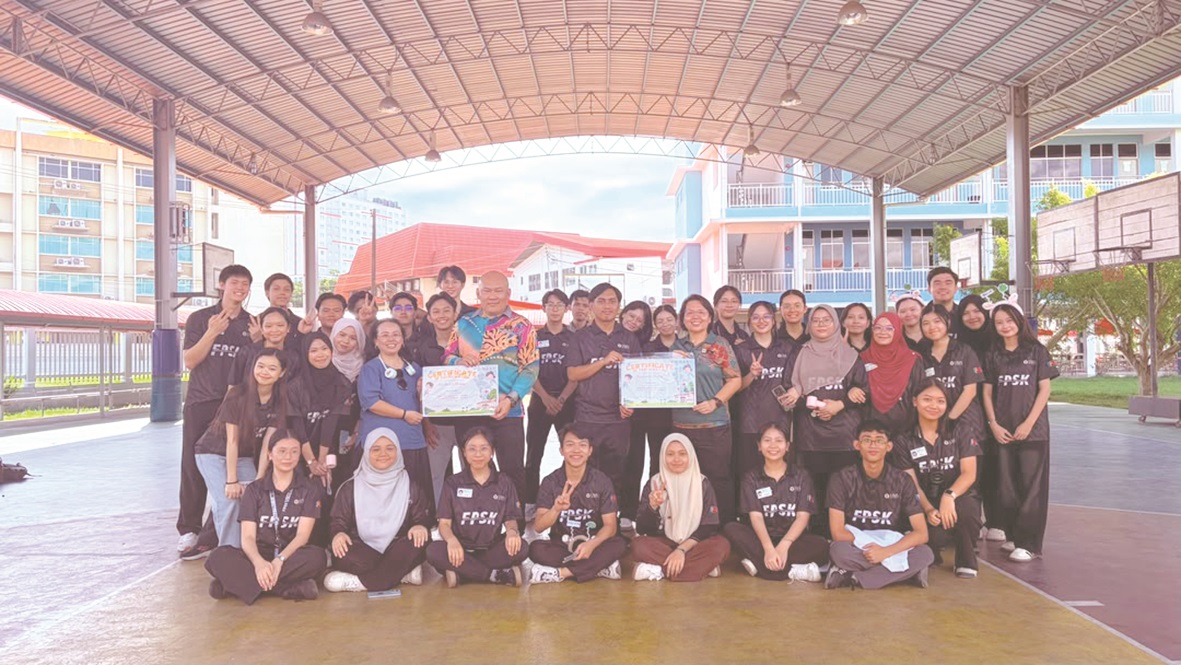
Kota Kinabalu: Year Six pupils from four Chinese primary schools gained hands-on lessons in infectious disease prevention through a three-day “Little Medic” programme by Universiti Malaysia Sabah’s (UMS) Faculty of Medicine and Health Sciences from June 24 - 26.
Programme Coordinator Dr Sylvia Daim said the initiative gave UMS medical students a community-based learning platform to apply their academic knowledge while delivering health education directly to the public.
“The programme adopts an interactive and age appropriate approach to help pupils better understand common infectious diseases and the importance of preventive healthcare practices,” she said.
“The module focuses on diseases commonly encountered in schools and within Sabah’s tropical environment, including influenza, hand, foot and mouth disease, dengue fever, food poisoning and conjunctivitis.
“The programme also introduces pupils to the medical and health sciences professions, with the hope of inspiring them to pursue careers in healthcare in the future,” she added.
The programme, carried out under the Ministry of Higher Education’s Service Learning Malaysia – University for Society initiative, involved pupils from SJK© St Peter Telipok, SJK© Good Shepherd Menggatal, SJK© Yick Nam Inanam and SJK© Lok Yuk Likas.
It was developed as the capstone project for first year medical students under the MM10506 Disease module, ahead of a revised medical curriculum set to take effect in September.
Sylvia credited the Likas Assemblyman’s Service Centre for coordinating the programme with the State Education Department, the District Education Office and the participating schools.
Meanwhile, Likas Assemblyman Tham Yun Fook said educating children on disease prevention from an early age is essential in nurturing a generation that is more health conscious and better equipped to practise healthy lifestyles.
“We hope the pupils will share the knowledge they have gained with their families and friends, becoming young advocates for healthy living within their communities,” he said.
“We will continue to support community-oriented initiatives that benefit the public through strategic collaborations with higher education institutions,” he added.
The programme also gave UMS Doctor of Medicine students a chance to apply their classroom learning in real community settings, in line with the university’s goal of pairing academic learning with meaningful community engagement.


.png)