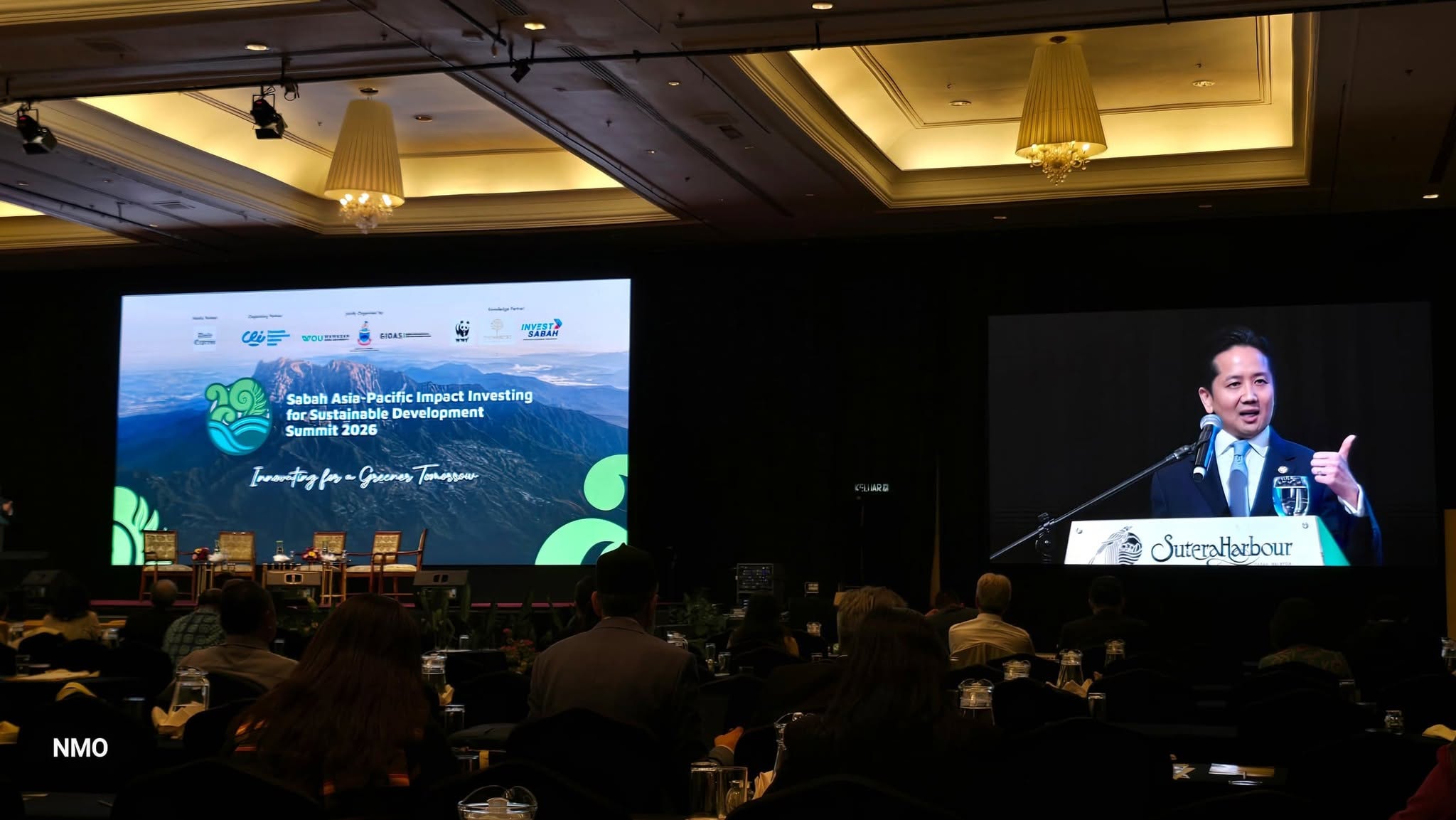
Kota Kinabalu: NATURAL Resources and Environmental Sustainability Minister Datuk Seri Arthur Joseph Kurup said revenue from Malaysia’s upcoming carbon tax will be channelled into a National Adaptation Fund to directly benefit the indigenous communities who serve as custodians of the forests.
“For example, here in Sabah, our biggest asset is our natural forest coverage. And who are the custodians of the forest? They are the local indigenous people who live there,” he told a media conference at the Sabah Asia-Pacific Impact Investing for Sustainable Development Summit 2026, Monday.
He was responding to a question on how the Ministry plans to engage indigenous communities in the country’s carbon market and carbon tax initiative.
Arthur said communities had raised concerns that the Government would collect revenue from carbon credit and carbon tax schemes without any benefit trickling down to the people who maintain the forests.
“Some of the questions asked, if you implement carbon tax and carbon credit, the Government gets money, but how do we benefit? And that is why we have to make sure that the revenue from the carbon credit flows back into the local indigenous communities,” he said.
He said one of his plans for the carbon tax was to ensure the funds collected are directed into a National Adaptation Fund reserved solely for climate mitigation projects such as flood mitigation, forestry conservation and tree planting.
“That is how we make sure that the revenue goes back to the indigenous communities so that they can help to preserve our natural forests and then the revenue can keep on being there for our country,” he said.
He said the Ministry places heavy emphasis on indigenous stewardship in its broader nature finance strategy, recognising indigenous peoples and local communities as the most effective custodians of the country’s forests.
“Under the Malaysia Forest Fund, financial models are structured to ensure carbon revenue flows directly back into local communities, supporting sustainable livelihoods, building resilient village economies and funding nature positive food economies,” he said.
“This approach proves that genuine conservation goes hand in hand with human development,” he added.