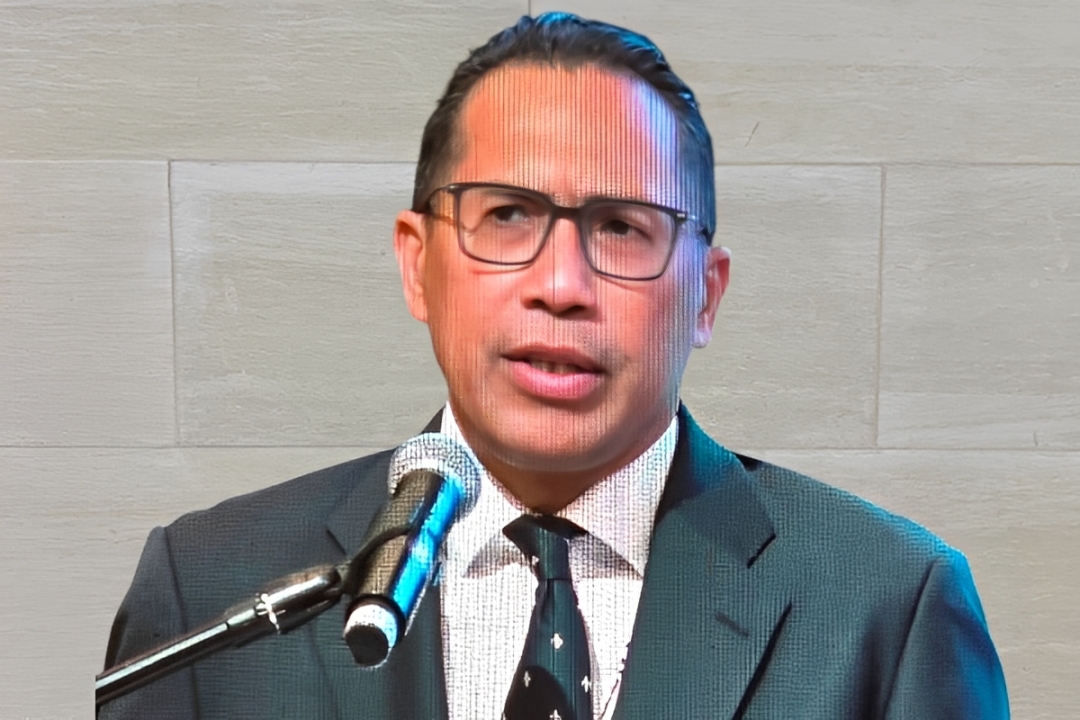
Kota Kinabalu: HSBC Malaysia has pledged to leverage its global expertise and international investor network to help position Sabah as a leading Asia-Pacific hub for impact investment, while calling for a pipeline of bankable projects to accelerate the State’s sustainable development agenda.
Its Chief Executive Officer Dato’ Omar Siddiq said the bank’s global experience in sustainable finance placed it in a strong position to support Sabah in attracting large-scale capital for infrastructure and environmental projects.
“As Malaysia’s leading global trade, commercial and wealth bank, we bring international connectivity, access and capability. Globally, HSBC had delivered almost half a trillion US dollars of impact investing, sustainable finance, and sustainable investment between 2020 and 2025, and we remain on track to achieving our target of mobilising between US$750 billion and US$1 trillion by 2030.
“This experience matters. It gives Sabah’s project sponsors access to international standards, global investors and financing structures that have proven capable of mobilising impact investment at scale,” he said.
Omar said this in his keynote address on the second day of Sabah Asia-Pacific Impact Investing for Sustainable Development Summit (Sabah AIMS) 2026, here, Tuesday.
He said unlocking large-scale impact investment would enable Sabah to accelerate the delivery of critical infrastructure projects that could not be financed quickly enough through conventional government budgets alone.
“We need to unlock financeable infrastructure projects for Sabah, which governments and their budgets are not able to address immediately, so that we do not lose time and can continue accelerating Sabah’s development requirements.
“By unlocking impact investment at scale, we will also be able to significantly assist the State and Federal governments’ ambition to continue to diversify, deepen and broaden Sabah’s economy, while advancing the Chief Minister Datuk Seri Hajiji Noor’s vision of positioning Sabah as a regional centre for impact investment,” he said.
To achieve that goal, Omar proposed three priority actions.
“Firstly, is to come up with a prioritised list of investable projects across infrastructure, clean water, sustainable agriculture and tourism, while each is supported by clearly identified project sponsors, implementation timelines, clear and measurable specific outcomes.
“Secondly, calling for a shared integrity baseline or framework covering measurement, reporting and verification, alongside of defining legal safeguards, legal protection and transparent community benefit-sharing mechanisms that could strengthen investors’ confidence and the projects can stand up to scrutiny.
“Finally, perhaps a risk-sharing framework between the public sector and private partners to clearly allocate responsibilities and what risks each other can take so that we can drive capital at scale,” he said. With these elements in place, Omar said they can move from discussion to implementation.
Omar stressed that sustainability and economic development should not be viewed as competing priorities.
“This is not a trade-off between sustainability and development. I firmly believe sustainability can be harnessed to power responsible development by mobilising impact investment at scale.
“I also strongly believe that Sabah is one of the few jurisdictions in the Asia-Pacific that has the right (natural) assets and the right (development) needs to make this work,” he said, while adding that HSBC has long existed in Malaysia since 1884 when it opened its first branch in Penang and opened its first branch in Kota Kinabalu in 1947.