BELURAN: The implementation of the targeted Budi Diesel subsidy in Sabah and Sarawak could create serious challenges if the policy is not reviewed to better reflect the needs and realities of the people, says Sabah Backbenchers Club chairman Datuk Masiung Banah.
“The targeted Budi Diesel subsidy places greater pressure on individual vehicle users, particularly those living in rural areas. We respect the Federal Government’s efforts to curb diesel subsidy leakages, but the road networks in Sabah and Sarawak are vastly different from those in Peninsular Malaysia,” he said.
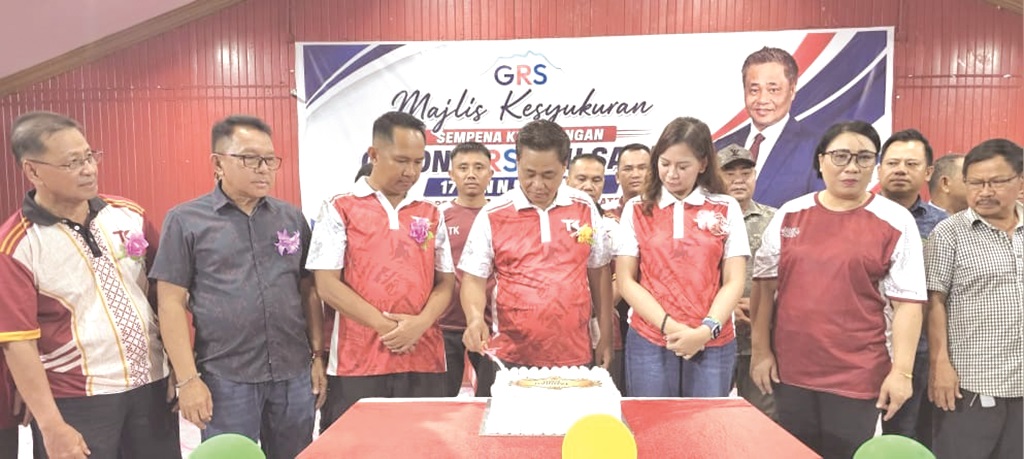
Masiung, who is also the Kuamut Assemblyman, said this after attending a thanksgiving gathering for outstation voters held in conjunction with Gabungan Rakyat Sabah’s (GRS) victory in the Kuamut state constituency at the Tonoting Ulu Sapi Nangoh village hall in Tongod, recently.
He said the current monthly quota of 200 litres was impractical given the vast distances between rural communities and urban centres, and urged the Federal Government to increase the allocation to between 300 and 500 litres per eligible diesel vehicle.
Masiung said the geographical conditions in Sabah and Sarawak could not be compared with those in the smaller states of Peninsular Malaysia, adding that the voices of the people in both Borneo states deserved greater consideration, especially as Sabah and Sarawak are among the country’s largest oil-producing regions.
He also said the strict eligibility criteria had prevented many deserving residents from benefiting from the targeted subsidy and proposed that the government relax the conditions to allow diesel to be sold in bulk at a standard subsidised rate, similar to the existing petrol subsidy mechanism.
Citing his own constituency as an example, Masiung said residents of Kuamut require between five and six hours to travel to Kota Kinabalu, consuming about 100 litres of diesel for a one-way journey. A return trip alone would exhaust the entire monthly allocation of 200 litres.
“It must be remembered that Kuamut, in the Tongod district, is larger than Kedah and almost the size of Johor. Many rural residents, especially farmers, own vehicles that are not registered under their names because they were purchased through company loans or hire-purchase arrangements.
As a result, they are not eligible for the BUDI Diesel subsidy.
“Large parts of the interior also have no road access or electricity supply. Many communities rely on boats for transportation and diesel-powered generators for electricity, yet they are unable to benefit from the Budi Diesel subsidy and are forced to purchase fuel at the unsubsidised price of RM3.97 per litre,” he said.