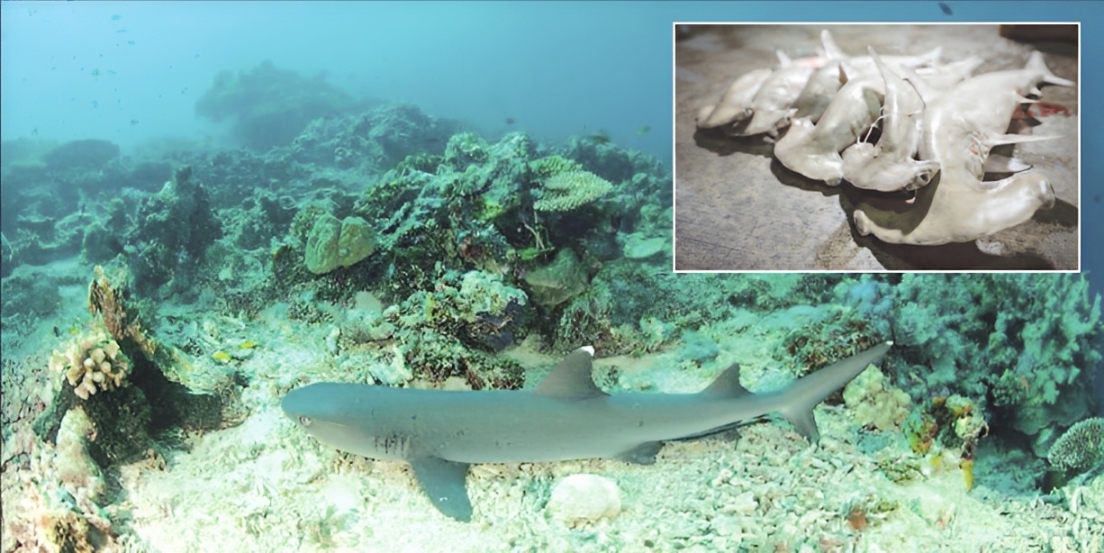
KUDAT: New research by WWF-Malaysia reveals significant changes in Sabah’s marine environment, with rays appearing more frequently and shark populations becoming increasingly scarce – highlighting growing pressure on these species and reinforcing the need for stronger conservation action and community participation in protecting Malaysia's marine biodiversity.
The findings come from a combination of Baited Remote Underwater Video Surveys (BRUVS), fisheries landing surveys and community conservation initiatives conducted across Sabah, including within Tun Mustapha Park.
Advertisement

As part of the global FinPrint Phase 2 Survey, the world’s largest reef shark and ray study, WWF-Malaysia and its partners are assessing the status of shark and ray populations within marine protected areas and identifying ways to strengthen habitat protection.
The surveys involved collaboration with Sabah Parks, Department of Fisheries Sabah, Deakin University, Scuba Junkie and the Banggi Corals Conservation Society (BCCS).
More than 500 hours of underwater footage were collected and analysed frame-by-frame to document the presence of sharks, rays, and other marine species.
Previous assessments under the FinPrint programme found Malaysia among the countries with the lowest recorded abundance of reef predators in the region.
At some sites in Sabah, including Mabul and Kapalai Islands, no sharks were recorded during surveys.
In contrast, rays were observed more frequently, potentially indicating changes in ecosystem balance resulting from the decline of shark populations.
The findings align with global conservation concerns. A 2021 reassessment by the International Union for Conservation of Nature (IUCN) found more than one-third of shark and ray species worldwide threatened with extinction.
In Malaysia, the number of threatened shark and ray species has doubled since 2014, while the number classified as endangered or critically endangered has more than tripled.
WWF-Malaysia and University Malaysia Sabah (UMS) also conducted catch landing surveys at fish markets and landing sites in Kota Kinabalu and Sandakan between November 2023 and December 2024.
Researchers recorded 1,748 sharks and 2,890 rays representing 79 species – 34 shark species and 45 ray species. Early analyses revealed approximately 80pc of sharks and 93pc of rays landed had not yet reached reproductive age.
Given that many shark and ray species require between 12 and 15 years to mature, the capture of juveniles poses a significant threat to long-term population recovery.
Furthermore, some species never appeared in BRUVS footage but showed up in catches, suggesting they may already be under significant pressure in the wild.
“After thousands of minutes reviewing BRUVS footage, it is disheartening to find the very species we hoped to observe already landed and lifeless. Many of the sharks and rays recorded in our landing surveys were juveniles.
“That is why we are working closely with coastal communities — not only to monitor incidental catches but also to build awareness, capacity, and support for the live release of juvenile sharks and rays,” WWF-Malaysia Senior Marine Programme Officer Serena Adam said.
Recognising that conservation efforts must involve local communities, WWF-Malaysia recently launched a pilot programme in Tun Mustapha Park encouraging fishers to safely release juvenile sharks and rays caught alive.
A total of 13 fishers from Kampung Inaruntung and Kampung Perpaduan volunteered to participate in the initiative, receiving training, safety equipment, and ongoing support.
Early results from the programme are encouraging. Of the 49 sharks and rays recorded by participating fishers, 61pc were landed alive and successfully released back into the sea.
Released species included bamboo sharks, catsharks, whiprays, and other stingray species.
The programme is already attracting interest from neighbouring communities, including Kampung Parapat Laut and Kampung Malubang, demonstrating growing local support for sustainable fisheries and marine conservation.
“We engage coastal communities not only to raise awareness but to truly listen. Our officers sit with fishers in focus group discussions, hearing firsthand how shark and ray populations have changed over the years. These lived experiences are invaluable.
“By placing trained enumerators within villages, we’re not just gathering data—we’re building trust and empowering communities with knowledge that strengthens conservation from the ground up,” said WWF-Malaysia Head of Marine Chitra Devi.
Sharks and rays play a critical role in maintaining healthy marine ecosystems. As apex and mesopredators, they help regulate prey populations, support nutrient cycling, and contribute to overall ecosystem stability.
Their decline can have far-reaching impacts on coral reefs, fisheries, and ocean health.
Every released shark and ray represents an opportunity for recovery and a step towards healthier oceans for future generations.