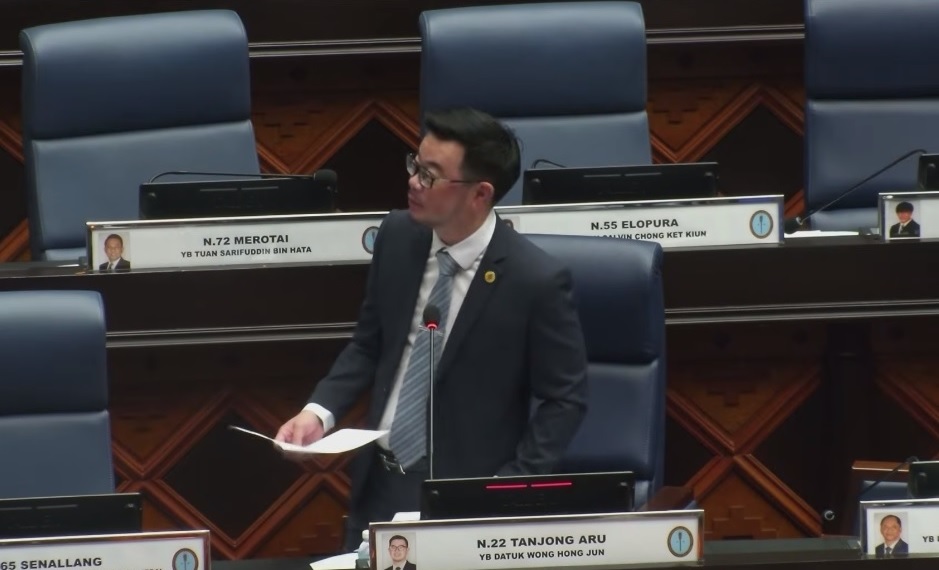
TANJUNG Aru Assemblyman Datuk Junz Wong said Sabahans deserve to know why the State agreed to hand over half ownership of its main port for a fraction of its value, likening it to selling a business for almost nothing.
“Somebody wants to buy 51 per cent of my business, but the person has no money,” he said.
“The person merely pays me a small amount and owns 51 per cent of my business, then starts running it and only pays me back quarterly over the next nine years. This is a very raw deal, even in layman’s terms,” he said when debating the Sabah Ports (Privatisation) (Amendment) Enactment 2026 Bill.
He said he supported the bill but added that it presented an opportunity for the House to look at broader questions on port ownership and accountability.
Citing Suria Capital Holdings Berhad’s 2024 financial statement and disclosures to Bursa Malaysia, Junz said DP World Sabah holds 51 per cent of the joint venture company that operates the Sepanggar Bay Container Port, while Sabah Ports Sdn Bhd remains the concessionaire until 2034.
He said DP World paid RM3.57 million to acquire the stake and is obligated to pay RM287 million over nine years through quarterly instalments.
Advertisement

“The issue before us is not that DP World is a foreign company. The real question is whether the transaction has secured the best value, adequate safeguards and sufficient strategic protection for Sabah,” he said.
He asked whether the government had commissioned an independent valuation before approving the deal and whether the cabinet had received a formal value-for-money assessment.
“If such an assessment exists, will the government table at least a summary before this August House. I think the rakyat has the right to know,” he said.
He also questioned whether any strategic or security risk assessment was carried out before the deal was approved and whether the State retains an exit clause in the event of extraordinary circumstances.
He noted that the port has imposed haulage and overnight charges that operators consider unreasonable and questioned who would ultimately be accountable given the foreign majority ownership.
“The chain of accountability must be transparent,” he said.
He said Warisan supports quality foreign investment but insisted that any decision involving a strategic public asset must ensure Sabah obtains the best value, that accountability remains clear and that the State’s long-term interests are protected.
“Transparency does not weaken investor confidence. Transparency strengthens public confidence,” he said.
He said he welcomed the State Industry, Entrepreneurship and Transport Minister’s offer to brief assemblymen but maintained that tabling the details in the House would let the wider public access the information through Hansard.


.png)