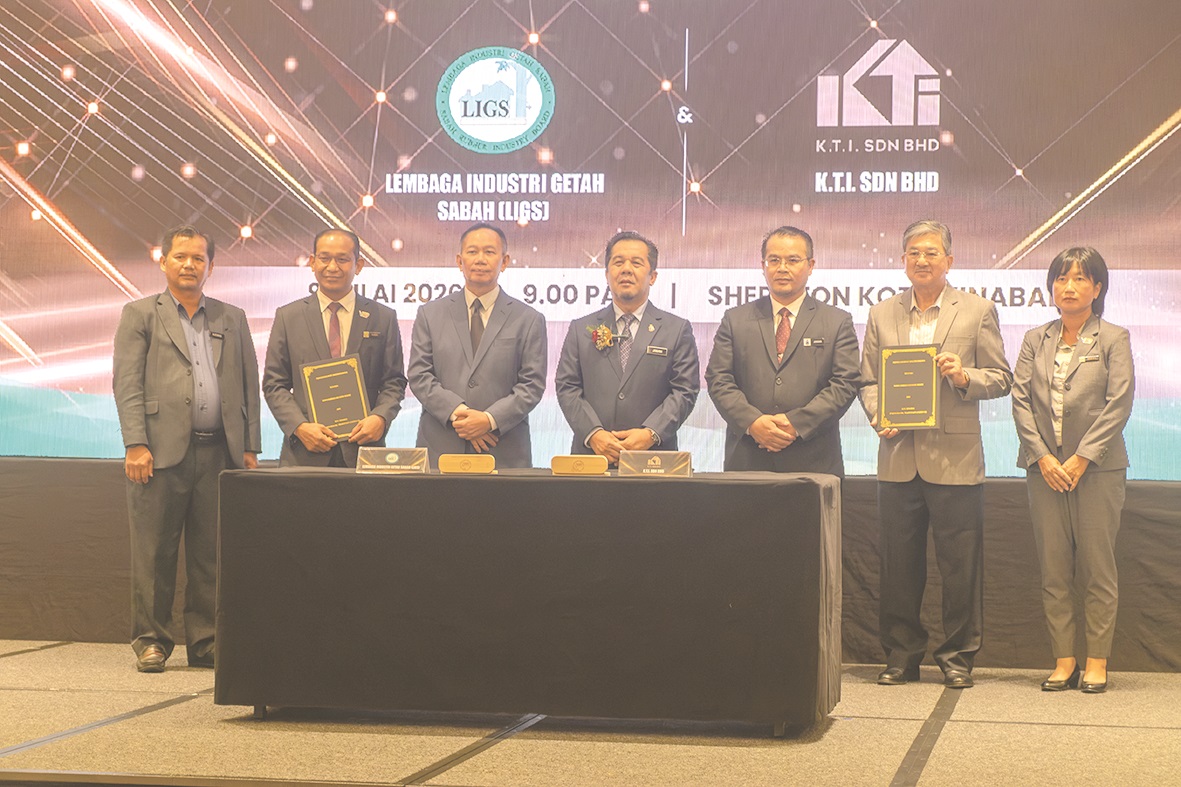
Kota Kinabalu: Two Memoranda of Understanding (MoUs) signed on Thursday are expected to serve as new catalysts for Sabah’s economic development. One is a mixed-use development project in Tuaran and the other a large-scale dairy industry development in Keningau.
Minister of Agriculture, Fisheries and Food Industry Datuk Jamawi Jaafar said the initiatives are in line with the aspirations of the Sabah Maju Jaya 2.0 (SMJ 2.0) roadmap, which aims to increase the state’s Gross Domestic Product (GDP) from the current RM85 billion to RM120 billion annually.
Advertisement

He said achieving the target would require close collaboration between the government, the private sector, statutory agencies and the people of Sabah, alongside efforts to diversify the state’s economy beyond its traditional reliance on natural resources into higher value-added industries.
“Our RM120 billion GDP target is more than just a number — it represents a shared vision for Sabah’s future. Achieving it will require us to accelerate economic diversification through sectors such as mixed-use property development, industrial growth and modern agriculture, including the dairy industry,” he said.
The first MoU involves the Sabah Rubber Industry Board (LIGS) and K.T.I. Sdn Bhd to explore a proposed 500-acre mixed-use development in Tuaran, comprising commercial shop lots, terrace houses, apartments and industrial areas.
Jamawi said the proposed development has significant potential given Tuaran’s strategic location as the main gateway to northern and eastern Sabah.
“Tuaran’s strategic location as the main route to northern and eastern Sabah positions it well to become a new stopover and economic growth centre, particularly for the tourism and services sectors,” he said.
The second involves collaboration between LIGS, the Sabah Department of Veterinary Services (DVS Sabah) and Farm Fresh Berhad to explore the development of a large-scale commercial dairy farm under the proposed Keningau Dairy Valley project.
Jamawi explained that the project is expected to attract private investment and technical expertise to strengthen Sabah’s local dairy industry, enhance the state’s self-sufficiency in fresh milk, beef and dairy products, and create more employment and training opportunities for livestock farmers and the people of Sabah.
He added that while Sabah has already achieved a 100pc Self-Sufficiency Level (SSL) in fresh milk production, the next priority is to expand downstream processing capacity to support the industry’s continued growth.
Without adequate processing facilities, the State could eventually face oversupply of fresh milk.
The integrated project is therefore intended to convert more locally produced milk into value-added dairy products, creating a more sustainable market for existing producers while strengthening Sabah’s dairy value chain.
He stressed that the partnership is not intended to replace or compete with local dairy farmers.
Instead, it is designed to complement existing producers by providing processing facilities for those who lack the capacity to build their own factories and processing plants.
Jamawi said although both MoUs are currently expressions of intent and do not yet constitute final commitments, they represent important initial steps towards implementing high-impact projects for the State.
“If successfully realised, these projects will not only stimulate economic growth at the district level in Tuaran and Keningau, but will also make a significant contribution towards achieving the broader SMJ 2.0 target of reaching an annual GDP of RM120 billion.
“This demonstrates that Sabah is not only rich in natural resources, but is also becoming increasingly mature in attracting diverse strategic investments, ranging from property and industrial development to modern agriculture and livestock farming,” he added.