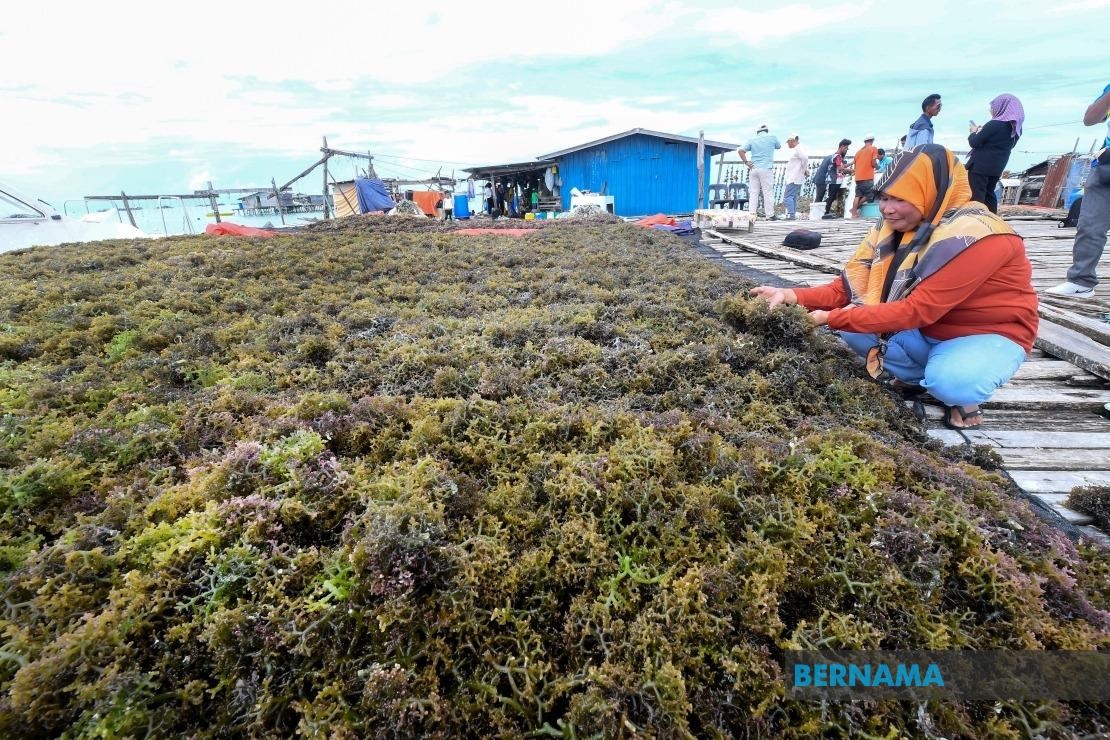
ANOTHER aquaculture practise involving seaweed in Sabah is making a growing impact and hopes that it would be another option that the State would consider in investing.
As seaweed is emerging as one of the world’s fastest growing industries, expanding far beyond its traditional role in food and into pharmaceuticals, biofuels, bioplastics and premium functional ingredients — and Sabah is uniquely positioned to benefit from this global surge.
During a session, Seadling founder Simon Davis said seaweed’s potential remains largely untapped despite more than 12,000 known species worldwide.
He said that it is not a new industry as Sabah has been farming seaweed since the 1970s and once stood as a major contributor to Malaysia’s blue economy.
However, he also said production has dropped sharply over the past decade due to strong competitions from neighbouring countries such as Indonesia and Philippines that have been able to undercut Sabah’s price due to cheap labour.
“Seaweed grows incredibly fast — we harvest every 45 days — and it captures carbon. The opportunities are significant, whether in food security, premium exports or job creation for coastal communities or using marine ecosystems that we have in Sabah.
“(From this seaweed) we have the ability to create valuable food and an export economy as Sabah has a long history in this resource,” he added.
Not only does tapping into seaweed generates a cycle faster than most marine products but it is also another way that emphasizes on blue economy as the cultivation does not negatively impact the environment but also provides job opportunities to locals – further highlighting the blue economy concept.
Seaweed is one of the most demanded ingredients in Malaysia used to in several productions such as food-as-medicine supplements, plant growth stimulants for agriculture, pet food additives as well as human food products.
Since 2018, Davis said the company has been operating with a factory in Tuaran while working closely with local farmers in Tuaran as their production source.
With promising revenues, he said not only does the seaweed show a potential industry that could contribute to Sabah’s economy, it also represents the definition of blue economy as the process requires cultivation of marine products which can be managed by locals if trained and provided with the necessary technology.
“We are currently manufacturing (seaweed products) in Tuaran. These seaweeds are being source from local farmers in which we are working with seaweed farms in Semporna.
“Since our establishment eight years ago, we empower small holder farmers by introducing technology as well as trainings to the locals (in Semporna) to improve their quality of seaweed farming.
“And from there, we will buy their seaweed which are paid in premium pricings,” he said, adding that the organizations has trained more than 300 locals seaweed farmers.
Being a company that is backed by top-tier global ag tech investors and is already exporting to premium markets that saw an increase of 56 per cent in revenue for the first half of this year compared to the same period last year.
From the numbers itself, Davis said Sabah has a potential of becoming a seaweed hub if collaboration strongly maintains amongst relevant departments or agencies as the State consists of a wide coastline that could cater for various marine products farming.
“To achieve this over the next five years, we will need a range of financing options. We can deliver attractive commercial returns as well as significant social and environmental impact.
“Our future is very exciting. As we grow, our impact grows — and we’re going to need a lot more seaweed,” he added.


.png)