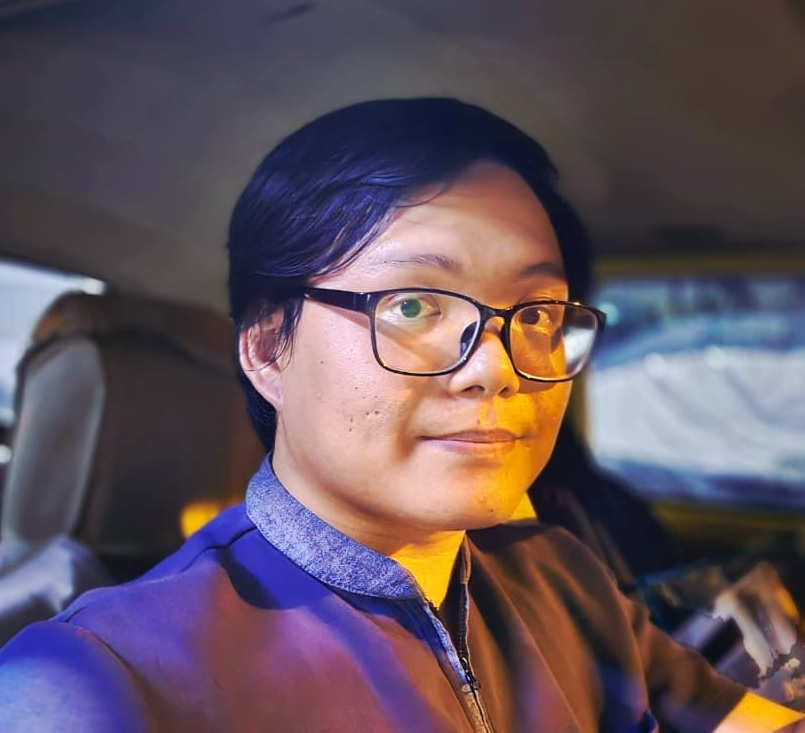
AS artificial intelligence rapidly reshapes the global music industry, Sabahan musician and music educator Gabriel Ong believes one of its greatest opportunities may lie not in replacing musicians, but in helping preserve Sabah’s rich and diverse musical heritage for future generations.
However, he cautions that while AI can reproduce the sounds of traditional music with remarkable accuracy, it cannot understand the cultural meanings, customs and lived experiences that have shaped those traditions over centuries.
“Sabah does have a rich and diverse music scene, stemming from the musical traditions from each of its ethnic groups,” Gabriel said in an interview for this Special Report.
“When one listens to the music, it represents generations of tradition, steeped in its culture – one that AI would not be able to replicate.”
His observations come as artificial intelligence is increasingly capable of composing songs, generating vocals and producing complete musical arrangements within seconds, prompting musicians worldwide to debate its impact on creativity, authenticity and cultural identity.
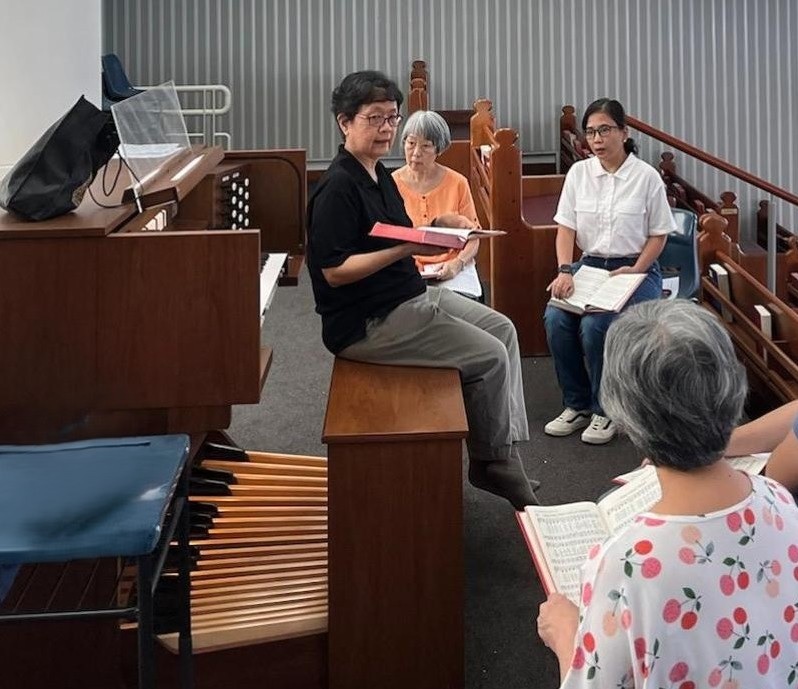
In the first part of this Special Report, Singapore’s leading pipe organist and educator, Dr Evelyn Lim – Pipe Organ Master of the renowned Klais organ at Esplanade – Theatres on the Bay and founder of the Singapore Chapter of the American Guild of Organists – argued that while AI can imitate musical styles and patterns, it cannot replace the human qualities that give music its meaning.
“You get the patterns, the sound, but not necessarily the soul of the composer,” she observed, adding that “AI becomes the tool for further exploration. It does not speak for them.”
While recognising AI’s potential to support music education and preserve cultural traditions, Dr Lim maintained that technology should complement, rather than replace, human creativity.
Gabriel echoes many of those views but approaches the issue through a distinctly Sabahan lens, arguing that the discussion goes beyond whether AI can compose convincing music.
For him, the more important question is whether machines can ever understand why traditional music exists in the first place.
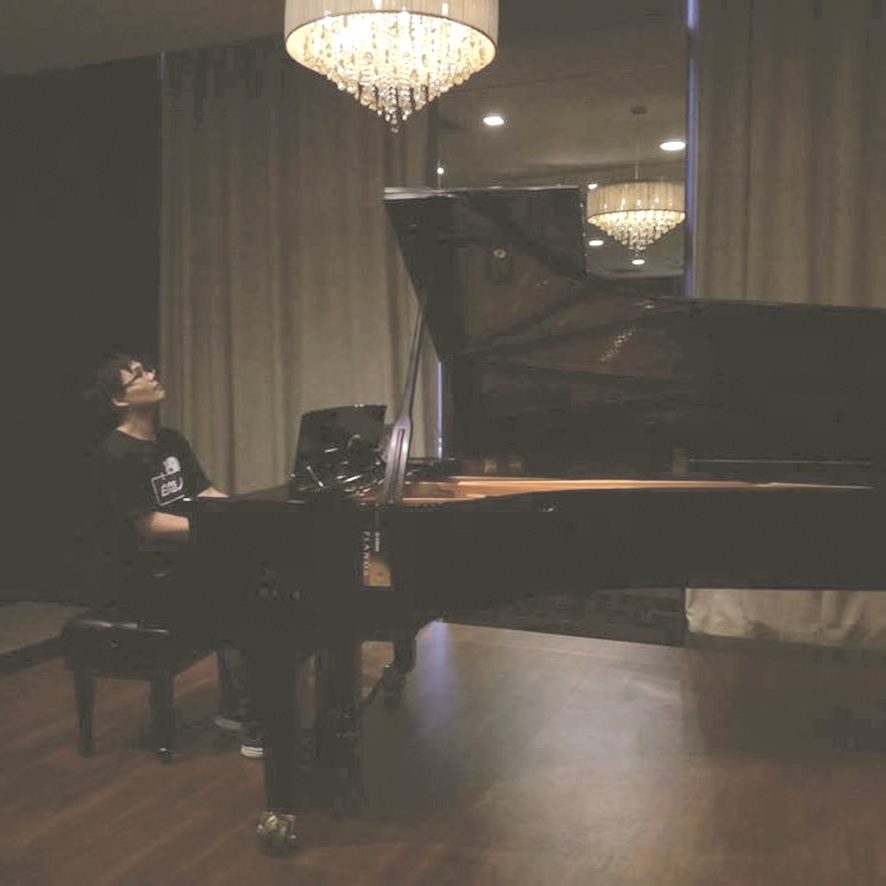
Gabriel holds a Bachelor of Arts (Honours) in Music, majoring in piano and composition, awarded by Middlesex University. An active Electone player and music arranger, he also has experience in music production through both personal and commissioned projects.
He teaches piano and keyboards at two music centres while also offering freelance and private instruction. Beyond the classroom, Gabriel volunteers as the Assistant Choir Master at St Simon Catholic Church, Likas, where he plays an active role in the parish’s music ministry.
According to Gabriel, AI’s biggest limitation is not its ability to imitate sounds – it is its inability to understand context.
“Here is what AI could definitely replicate; the sound,” he said.
“It mimics and no doubt will be able to generate a Sumazau track if needed.”
“But where it will undoubtedly fail is when we talk about the instrumentation; specifically, when and where to use a specific instrument and its symbolic meaning to a piece.”
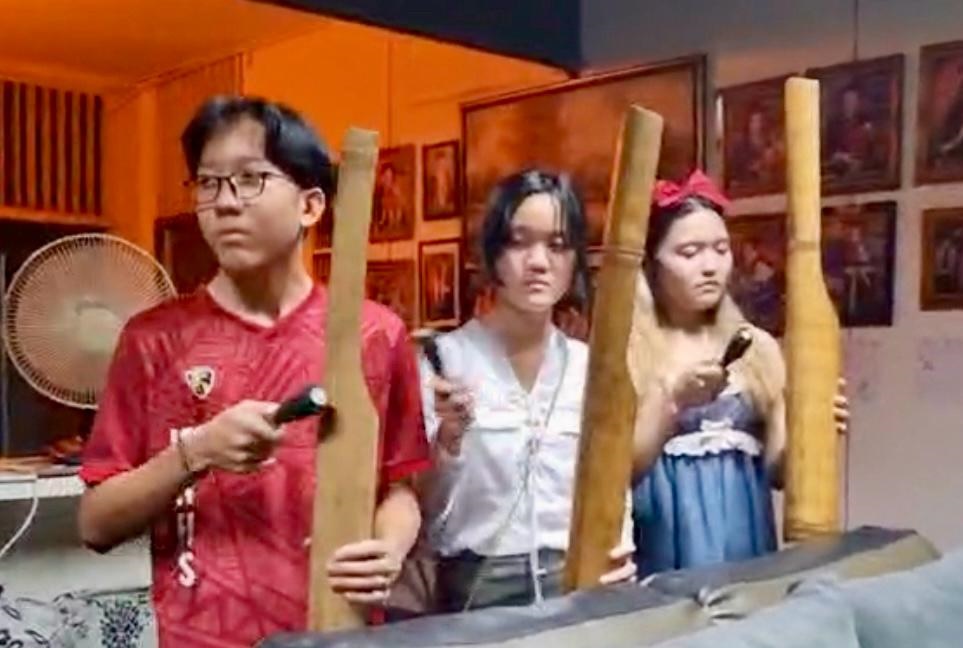
He cites the ‘turali’, or nose flute, as one example.
Using the instrument in a Sumazau celebration, he said, would be highly inappropriate and disrespectful because every traditional instrument carries its own cultural role and symbolism.
Artificial intelligence, trained to recognise patterns rather than traditions, would not necessarily understand such distinctions.
Likewise, AI could unknowingly combine ceremonial or mourning gong rhythms such as ‘dunsai’ with festive Sumazau beats simply because they appear musically compatible.
“That will certainly raise some eyebrows,” Gabriel remarked.
It is precisely this absence of cultural understanding, he argues, that separates human musicians from machines.
While AI may faithfully reproduce melodies, harmonies and rhythms, it cannot inherit the stories, customs and values passed from one generation to another.
Nevertheless, Gabriel does not dismiss the technology.
Instead, he believes AI could become an important ally in safeguarding traditional music that might otherwise disappear.
“Make no mistake, if the idea of using AI is to preserve certain styles of music from going the way of the dodo, it is entirely possible,” he said.
“However, we must keep in mind that, at the end of the day, it is a tool which modern musicians, traditional or otherwise, can use to speed up their creative process, and not a replacement of them.”
That philosophy – that AI should remain a tool rather than a substitute – runs throughout Gabriel’s reflections on music, education and the future.
Like many musicians, he admits he once believed creativity would remain uniquely human.
“Since its mainstream explosion into the scene in the early 2020s, we cannot deny the impact of artificial intelligence in our daily lives,” he said.
“The advancement of the technology is evolving at break-neck speeds, which is both exciting and frightening at the same time.”
“As a musician and musical educator, I used to think AI could never truly replace a human in this area. To create art, music and being creative is innately human and unique to our species.”
Yet within only a few years, AI systems have become capable of producing complete musical works that many listeners struggle to distinguish from those created by people.
“It has been a couple of years since then, and we now have algorithms and applications generating finished tracks that are almost indistinguishable to the untrained ear,” he said.
“It’s definitely an eye-opening experience in terms of what it means for musicians, composers and the music industry in general.”
Even so, Gabriel believes imitation should not be mistaken for genuine artistic expression.
“The thing is, being able to generate a track based on prompts, while amazing, is inherently limiting,” he said.
Asked whether AI could ever create music with genuine emotion and soul, Gabriel’s answer was unequivocal.
“The short answer is no.”
He explained that AI systems are capable of reproducing what listeners recognise as sadness, joy or nostalgia because they are trained on millions of existing works.
Using Suno AI as an example, he said the technology can convincingly recreate “the sound of heartbrokenness” in a ballad or the familiar textures of 1980s synth-pop.
“It reflects to us our own human emotions in mathematical calculations while never having felt those emotions.”
To Gabriel, that disconnect becomes even more apparent when AI attempts to emulate music deeply rooted in culture.
Traditional Sabahan music, he argues, is not merely a collection of notes and rhythms but an expression of identity, history and community – qualities that cannot simply be learned through algorithms.
Algorithms, streaming and the changing music landscape
Beyond questions of creativity, Gabriel believes AI is also reshaping the way music is discovered, consumed and rewarded.
“Navigating to YouTube in 2026, and you will most likely encounter tons of AI-generated content, from flat, monotonous human-like talking videos about politics to playlists of AI-generated tracks,” he said.
He recently stumbled upon a playlist featuring entirely fictional artists performing AI-generated songs in the style of 1980s Japanese city pop.
“Do I like it? Kind of... Do I think it’s wrong? Yes, some part of me feels it is.”
While he acknowledges the novelty and entertainment value of such content, Gabriel worries about the unintended consequences for genuine musicians.
Modern streaming platforms, he noted, rely heavily on algorithms that favour engagement and globally popular trends. With thousands of AI-generated tracks uploaded daily, independent musicians and niche genres – including Sabah’s traditional and contemporary music – risk being pushed further into the background.
“More niche styles of music from local artists may be buried under all that slop,” he said candidly.
He is equally concerned about the financial implications.
Streaming services such as Spotify distribute royalties from a common royalty pool based largely on the number of streams. As AI-generated music floods these platforms, Gabriel fears that already modest earnings for independent musicians could become even smaller.
“The amount of what an independent artist earns per stream is already fractions of a cent,” he observed.
Artificial intelligence is also becoming increasingly adept at generating convincing singing voices.
To the average listener, he said, AI-generated vocals may sound perfectly acceptable.
“It sounds fine, good even.”
Yet to trained musicians, subtle differences remain.
AI may reproduce almost any genre, tempo, instrumentation or arrangement from a simple text prompt, but listeners often encounter unusual phrasing, awkward lyrical choices or vocals that sound almost – but not quite – human.
“It creates a disconnect,” Gabriel said. “One may enjoy the instantaneous results, though settling for occasional audio irregularities, odd choices in wordings, pseudo-humanoid vocals with no cultural soul in them, and it is these subtle nuances that give it away.”
Even so, Gabriel recognises the opportunities that digital platforms have created for independent musicians.
YouTube remains one of the most accessible avenues for Sabahans to showcase and monetise their work, while Facebook, Instagram and TikTok allow musicians to release songs directly to audiences without waiting to complete a full album or secure a recording contract.
For him, however, there remains something irreplaceable about physical media.
“Nothing beats being able to hold a physical medium like a CD, vinyl or cassette,” he said with a smile.
AI in the classroom
As someone who teaches piano and keyboards, Gabriel has witnessed AI becoming part of everyday learning.
“When I was at my alma mater, we did assignments the old-fashioned way,” he recalled.
“Nowadays, everything can be looked up, prompted and summarised in one Google Chrome tab with ChatGPT, Gemini, Copilot and the like.”
Rather than resisting these developments, Gabriel believes educators should teach students how to use AI responsibly.
“As a music teacher, I see AI as a helpful companion to teachers and students alike, provided it isn’t abused and used in the wrong way.”
Tasks that once required hours of searching through books and online references can now be completed in minutes, allowing students to devote more time to understanding concepts instead of merely locating information.
Likewise, AI can become a valuable creative partner during composition.
“It may help curate their ideas, inspire and be able to bounce around ideas. That is generally good to get them to think and decide what they want in their music.”
However, Gabriel repeatedly returns to one principle: technology should never replace strong musical foundations.
“Fundamentals are essential to know, and knowing how to use one’s knowledge and apply it without the help of AI gives you an edge.”
He believes students in Sabah should be exposed not only to AI and music technology but also to the mechanics of songwriting, arranging and production in both traditional and modern settings.
Understanding how music is created, he said, helps young musicians appreciate the dedication behind every performance and every composition.
He also advocates seminars and discussions on the ethical use of AI, encouraging students to develop their own artistic identity instead of relying unquestioningly on machine-generated ideas.
Looking to the future
Although AI continues advancing at remarkable speed, Gabriel remains optimistic about the future of Sabah’s traditional music.
He believes younger generations, empowered by social media, could breathe new life into musical traditions that have been passed down through generations.
“I feel that with the proper methods for educating the next generation of traditional Sabahan music, it will not go away but flourish under the new energy of the young and the reach of ever-growing social media.”
Short-form videos, he said, provide an opportunity for content creators to introduce traditional Sabahan melodies to audiences who may never have encountered them before.
“I think traditional sounds will and are making a comeback in modern music, as musicians rediscover the sounds and equip themselves with the sonic palette to create interesting fusions of styles.”
Artificial intelligence, he believes, can certainly play a supporting role.
It may assist composers and arrangers in experimenting with fresh ideas or modernising traditional arrangements.
But it should never be allowed to alter the essence of the music.
“It will require a composer or arranger to work alongside it to make sure it does not overdo it and alter the essence of the music.”
Gabriel recalled attending a cultural performance in Zhangjiajie, China, where traditional elements were combined with dramatic orchestration, sophisticated production and storytelling.
The experience convinced him that heritage and innovation can coexist without compromising authenticity.
For Sabah, he sees similar possibilities.
Rather than replacing traditional musicians, AI could become another instrument for documenting, preserving and introducing Sabah’s diverse musical traditions to wider audiences – provided human custodians remain at the centre of the process.
Ownership, authenticity and the value of human creativity
Like many musicians, Gabriel acknowledges that questions surrounding copyright and ownership remain unresolved.
“If one creates or generates a track from the use of these AI technologies, who owns it?” he asked.
His own view is that the person crafting the prompt—and particularly anyone contributing original lyrics or creative ideas – should retain ownership of that intellectual property.
Even so, he admits he would rather avoid the legal uncertainty altogether.
“I take pride in crafting music entirely through my own musicianship, and that will always be more rewarding.”
The ease with which AI can generate complete songs also raises broader questions about artistic value.
“Nowadays any being with the intelligence of a monkey would be able to generate a song and share it,” he said, before quickly returning to the point he considers most important.
“But where is the soul in that?”
To Gabriel, music should exist because someone has something meaningful to say.
It should move both the composer and the listener – not simply exist because software can produce it.
He also believes creators have an ethical responsibility to disclose when music has been generated using AI.
“It is just common sense to label it to avoid being disingenuous.”
“I, for one, feel better supporting actual talented musicians and not an algorithm.”
A future where humanity remains at the centre
As the conversation drew to a close, Gabriel reflected on how quickly technology has changed during his lifetime.
He remembered the family’s blue Proton Waja, the excitement of leaving home to study music in Kuala Lumpur before continuing to London, and how those experiences shaped his love of music.
Progress, he acknowledged, never stands still.
Neither will artificial intelligence.
“AI is a tool, and it is a very convenient tool,” he said.
“It can definitely act as a collaborator to some.”
For musicians seeking shortcuts or easy profits, it may also become formidable competition.
Ultimately, however, Gabriel believes the future of music will depend not on how sophisticated AI becomes, but on how wisely people choose to use it.
“My advice would be to always remember it as a tool,” he said.
“Use it responsibly and, if and when used extensively, do right by others and label it, to avoid deception.”
For Sabah, his hope is that AI will become an ally in preserving and promoting the State’s rich musical traditions rather than replacing the people who keep them alive.
“As listeners, support and value real authentic art, crafted and created by fellow human beings, to ensure the humanity in music is not lost to a bunch of ones and zeros.”