.png)
Advertisement
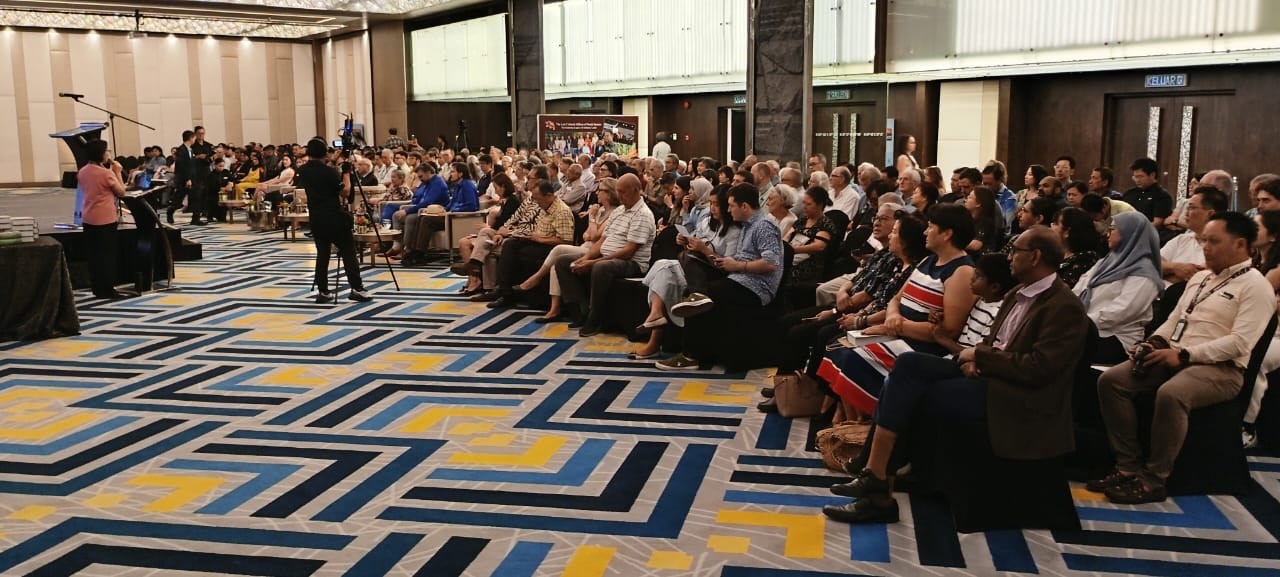
 Chan recounted a friendship that began more than 50 years ago and reflected on Lamb’s pioneering work in orchid research, botanical exploration, conservation and the establishment of the Sabah Agriculture Park in Tenom, which remains one of the country’s premier botanical gardens.
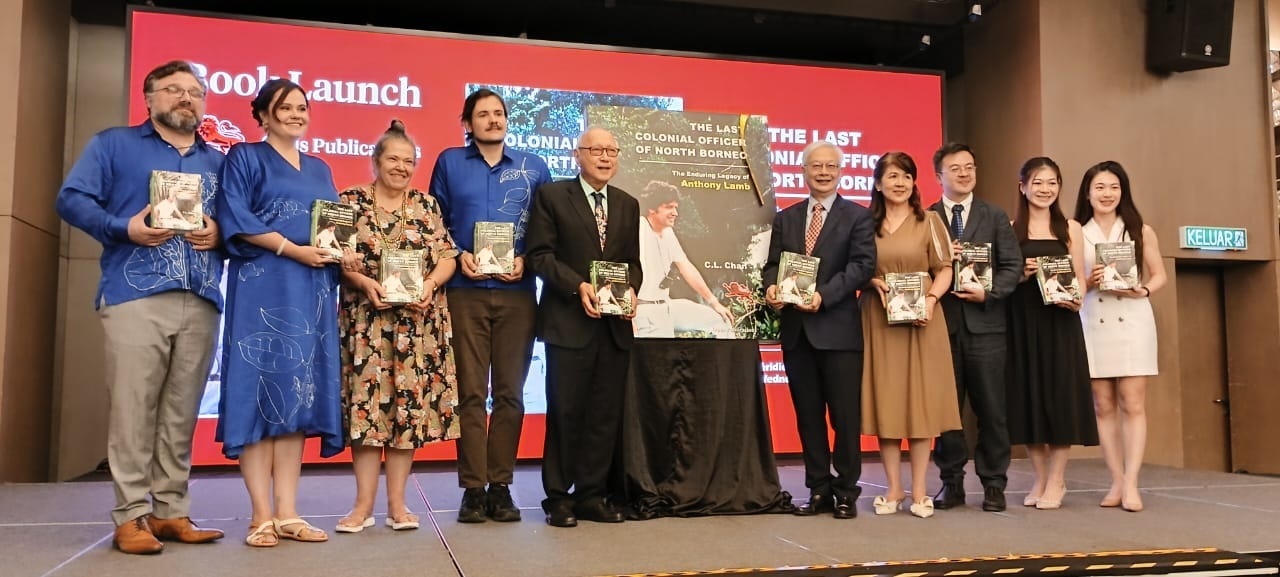
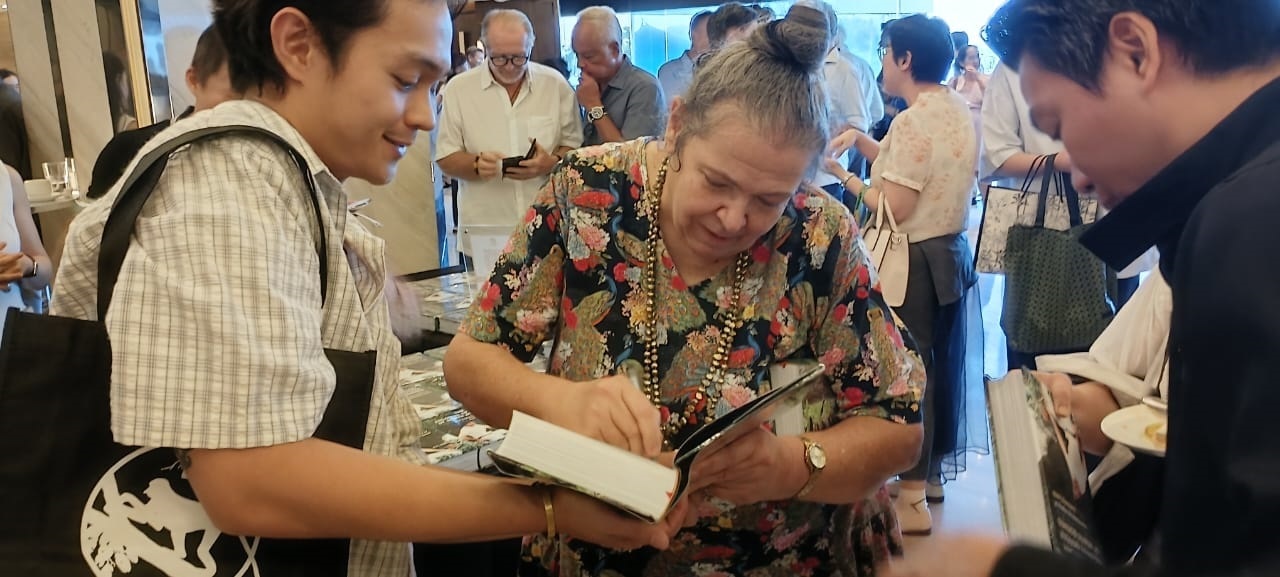
The following is the speech delivered by Chan at the launch of “The Last Colonial Officer of North Borneo: The Enduring Legacy of Anthony Lamb”, reproduced verbatim with only minor editorial adjustments for style, grammar and punctuation.
Chan recounted a friendship that began more than 50 years ago and reflected on Lamb’s pioneering work in orchid research, botanical exploration, conservation and the establishment of the Sabah Agriculture Park in Tenom, which remains one of the country’s premier botanical gardens.
The following is the speech delivered by Chan at the launch of “The Last Colonial Officer of North Borneo: The Enduring Legacy of Anthony Lamb”, reproduced verbatim with only minor editorial adjustments for style, grammar and punctuation.
Advertisement

Advertisement
 One of our earliest field trips took us to Telupid, where we collected what was then believed to be a new species of Dimorphorchis orchid.
Looking back, I realise that this expedition marked the beginning of a lifelong friendship, founded upon our shared fascination with the flora of Borneo and our mutual love of exploration.
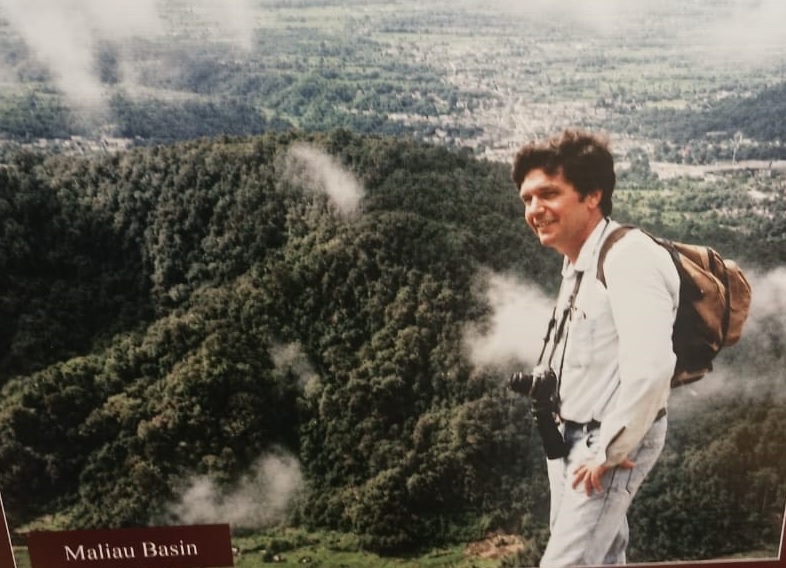
Tony had arrived in North Borneo in 1962, during the final years of British colonial administration. Just two years later, he miraculously survived a helicopter crash in Tawau.
Such an experience would have persuaded many people to abandon a life spent in remote forests.
Tony, however, was of a different character.
He returned to the field with the same courage, resilience and adventurous spirit that defined the rest of his career.
Not long afterwards, he was transferred to the Agricultural Research Station at Lagud Seberang in Tenom, where he served as Senior Research Officer.
It was there that many of the achievements for which he is best remembered began to take shape.
The Tenom Orchid Centre, which he helped establish, became an important centre for orchid research in Borneo and later played a pivotal role in the landmark *Orchids of Borneo* project.
Tony and I first conceived the idea during one of our early visits to the Royal Botanic Gardens, Kew.
One of our earliest field trips took us to Telupid, where we collected what was then believed to be a new species of Dimorphorchis orchid.
Looking back, I realise that this expedition marked the beginning of a lifelong friendship, founded upon our shared fascination with the flora of Borneo and our mutual love of exploration.
Tony had arrived in North Borneo in 1962, during the final years of British colonial administration. Just two years later, he miraculously survived a helicopter crash in Tawau.
Such an experience would have persuaded many people to abandon a life spent in remote forests.
Tony, however, was of a different character.
He returned to the field with the same courage, resilience and adventurous spirit that defined the rest of his career.
Not long afterwards, he was transferred to the Agricultural Research Station at Lagud Seberang in Tenom, where he served as Senior Research Officer.
It was there that many of the achievements for which he is best remembered began to take shape.
The Tenom Orchid Centre, which he helped establish, became an important centre for orchid research in Borneo and later played a pivotal role in the landmark *Orchids of Borneo* project.
Tony and I first conceived the idea during one of our early visits to the Royal Botanic Gardens, Kew.
 With the invaluable support of the late Professor Richard Holttum and Dr Phillip Cribb, the project eventually evolved into one of the most significant botanical documentation projects ever undertaken in the region.
Yet Tony’s vision extended far beyond orchids.
He was also the driving force behind the establishment of the Sabah Agriculture Park in Tenom, one of Malaysia’s most ambitious horticultural and botanical developments.
Conceived as a centre for conservation, education, recreation and research, the park reflected Tony’s deeply held belief that people must first learn to appreciate plants before they can truly be inspired to conserve them.
Today, Sabah Agriculture Park remains one of the region’s finest botanical gardens.
Thousands of visitors pass through its gates each year, often unaware that much of its original concept, design and character stemmed from Tony’s vision.
Few living monuments speak more eloquently of the man than this beautiful park, which continues to educate, inspire and delight visitors of all ages.
Tony also authored and co-authored many publications on the plants of Sabah.
Yet his achievements cannot be measured solely by the books he wrote, the species he documented or the institutions he helped establish. He belonged to a remarkable generation of field botanists whose knowledge was acquired not only from scientific literature and herbarium collections, but through decades of firsthand experience in forests, river valleys and mountain ranges.
He knew the landscapes of Sabah intimately, understood its plants instinctively and appreciated the wisdom of the local communities who had lived alongside them for generations.
Few possessed such breadth of knowledge, and fewer still shared it so generously.
Two years ago today, Tony passed away after a brief illness.
The news came as a profound shock to those of us who had known him for so many years.
It felt as though an important chapter in Sabah’s history had quietly drawn to a close.
By a touching coincidence, today would also have been Tony’s eighty-eighth birthday, making this occasion especially meaningful.
In the months following his passing, I found myself reflecting not only upon his achievements, but also upon the countless stories, observations and experiences he had accumulated throughout a lifetime devoted to Sabah.
For many years, I had encouraged Tony to write his autobiography.
I believed his memories constituted an invaluable historical record that deserved to be preserved for future generations.
Sadly, like so many dedicated scientists and naturalists, he was always more interested in the next expedition than in writing about himself.
That autobiography was never written.
It was then that I resolved to undertake the task myself.
With the invaluable support of the late Professor Richard Holttum and Dr Phillip Cribb, the project eventually evolved into one of the most significant botanical documentation projects ever undertaken in the region.
Yet Tony’s vision extended far beyond orchids.
He was also the driving force behind the establishment of the Sabah Agriculture Park in Tenom, one of Malaysia’s most ambitious horticultural and botanical developments.
Conceived as a centre for conservation, education, recreation and research, the park reflected Tony’s deeply held belief that people must first learn to appreciate plants before they can truly be inspired to conserve them.
Today, Sabah Agriculture Park remains one of the region’s finest botanical gardens.
Thousands of visitors pass through its gates each year, often unaware that much of its original concept, design and character stemmed from Tony’s vision.
Few living monuments speak more eloquently of the man than this beautiful park, which continues to educate, inspire and delight visitors of all ages.
Tony also authored and co-authored many publications on the plants of Sabah.
Yet his achievements cannot be measured solely by the books he wrote, the species he documented or the institutions he helped establish. He belonged to a remarkable generation of field botanists whose knowledge was acquired not only from scientific literature and herbarium collections, but through decades of firsthand experience in forests, river valleys and mountain ranges.
He knew the landscapes of Sabah intimately, understood its plants instinctively and appreciated the wisdom of the local communities who had lived alongside them for generations.
Few possessed such breadth of knowledge, and fewer still shared it so generously.
Two years ago today, Tony passed away after a brief illness.
The news came as a profound shock to those of us who had known him for so many years.
It felt as though an important chapter in Sabah’s history had quietly drawn to a close.
By a touching coincidence, today would also have been Tony’s eighty-eighth birthday, making this occasion especially meaningful.
In the months following his passing, I found myself reflecting not only upon his achievements, but also upon the countless stories, observations and experiences he had accumulated throughout a lifetime devoted to Sabah.
For many years, I had encouraged Tony to write his autobiography.
I believed his memories constituted an invaluable historical record that deserved to be preserved for future generations.
Sadly, like so many dedicated scientists and naturalists, he was always more interested in the next expedition than in writing about himself.
That autobiography was never written.
It was then that I resolved to undertake the task myself.
 Among the most valuable resources available to me were the oral history recordings preserved by the Sabah State Archives.
In these interviews, conducted by Datuk Joanna Kitingan during her tenure as Director of the Sabah State Archives, Tony spoke candidly about his arrival in North Borneo in 1962, his years in the field, his encounters with local communities and his memories of a Sabah that has, in many respects, disappeared forever.
This book has therefore become far more than a biography.
It is also an attempt to preserve the memory of an extraordinary generation whose dedication, vision and public service helped shape modern Sabah.
In preparing this volume, I have been fortunate to receive the assistance of many people.
My heartfelt thanks go to Jane Lamb, Tony’s younger sister in London, who so generously shared family information, personal recollections and photographs that have enriched this biography immeasurably.
I am equally grateful to Tony’s family, especially Datin Anthea, for granting me access to personal papers, photographs and archival material.
Their generosity enabled me to produce a work that is both comprehensive and authentic.
My sincere appreciation also goes to Dr Wong Khoon Meng and Gina Hamilton, whose editorial expertise greatly strengthened the manuscript, and to my good friend Nicholas Tan, who painstakingly restored and enhanced many of the historical photographs reproduced in this volume.
Finally, I wish to acknowledge my dear friend John Tan, who was also one of Tony’s close friends.
His encouragement, friendship and generous support were instrumental in bringing this book to publication.
Ladies and gentlemen,
Some people leave behind buildings.
Others leave behind books.
Tony Lamb left behind forests better understood, gardens that continue to flourish, countless plants that bear witness to his life’s work, and generations of people inspired by his knowledge, kindness and unwavering passion for the natural world.
His contributions continue to live on – not only in the pages of scientific publications or within the grounds of Sabah Agriculture Park, but also in the hearts and minds of everyone who had the privilege of knowing him.
This book is my tribute to a dear friend, an outstanding botanist and one of the finest custodians of Borneo’s natural heritage.
Thank you, Tony.
May your footsteps forever echo through the forests of Borneo.
And thank you all for joining us today to celebrate the life, achievements and enduring legacy of Anthony Lamb.
Before I conclude, I must also thank my family, including Tony’s sister Jane, whose enthusiastic support and encouragement sustained this project from the beginning.
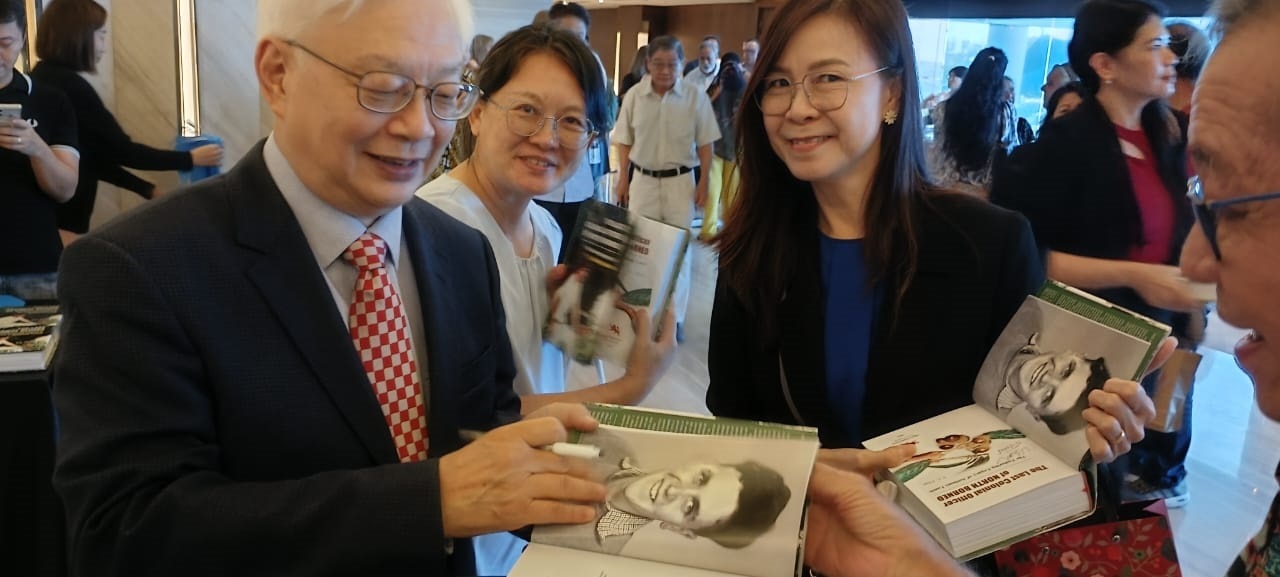
My appreciation also goes to the teams at Opus Publications and Natural History Publications for their hard work, to editors Dr Wong Khoon Meng and Gina Hamilton for their meticulous efforts, to all of Tony’s friends and colleagues who generously shared their memories, stories and photographs, and finally to everyone who took the time to join us this morning.
Your presence is deeply appreciated. Thank you.
Among the most valuable resources available to me were the oral history recordings preserved by the Sabah State Archives.
In these interviews, conducted by Datuk Joanna Kitingan during her tenure as Director of the Sabah State Archives, Tony spoke candidly about his arrival in North Borneo in 1962, his years in the field, his encounters with local communities and his memories of a Sabah that has, in many respects, disappeared forever.
This book has therefore become far more than a biography.
It is also an attempt to preserve the memory of an extraordinary generation whose dedication, vision and public service helped shape modern Sabah.
In preparing this volume, I have been fortunate to receive the assistance of many people.
My heartfelt thanks go to Jane Lamb, Tony’s younger sister in London, who so generously shared family information, personal recollections and photographs that have enriched this biography immeasurably.
I am equally grateful to Tony’s family, especially Datin Anthea, for granting me access to personal papers, photographs and archival material.
Their generosity enabled me to produce a work that is both comprehensive and authentic.
My sincere appreciation also goes to Dr Wong Khoon Meng and Gina Hamilton, whose editorial expertise greatly strengthened the manuscript, and to my good friend Nicholas Tan, who painstakingly restored and enhanced many of the historical photographs reproduced in this volume.
Finally, I wish to acknowledge my dear friend John Tan, who was also one of Tony’s close friends.
His encouragement, friendship and generous support were instrumental in bringing this book to publication.
Ladies and gentlemen,
Some people leave behind buildings.
Others leave behind books.
Tony Lamb left behind forests better understood, gardens that continue to flourish, countless plants that bear witness to his life’s work, and generations of people inspired by his knowledge, kindness and unwavering passion for the natural world.
His contributions continue to live on – not only in the pages of scientific publications or within the grounds of Sabah Agriculture Park, but also in the hearts and minds of everyone who had the privilege of knowing him.
This book is my tribute to a dear friend, an outstanding botanist and one of the finest custodians of Borneo’s natural heritage.
Thank you, Tony.
May your footsteps forever echo through the forests of Borneo.
And thank you all for joining us today to celebrate the life, achievements and enduring legacy of Anthony Lamb.
Before I conclude, I must also thank my family, including Tony’s sister Jane, whose enthusiastic support and encouragement sustained this project from the beginning.
My appreciation also goes to the teams at Opus Publications and Natural History Publications for their hard work, to editors Dr Wong Khoon Meng and Gina Hamilton for their meticulous efforts, to all of Tony’s friends and colleagues who generously shared their memories, stories and photographs, and finally to everyone who took the time to join us this morning.
Your presence is deeply appreciated. Thank you.