GARDENING enthusiasts always believe that a lot of space must be needed to plant something. Most also believe that gardening involves having to struggle with the handling of a lot of muck, goo or sludge, plus the unbearable stench emanating from rotting organic matter such chicken dung, kitchen waste and cat poop.
The latter is especially stinky so that it is necessary for gardening enthusiasts to steer clear of such nauseating stuff that cats love to deposit in the garden.
Some also believe that gardening activities are heavy, sweaty and back-breaking despite the allure of lovely fruits such as mangoes and avocado in the backyard, and loads of musang king, D24, Red Prawn or Black Thorn durians from the fruit orchards elsewhere.
As for gardening that involves water, especially those areas that have garden ponds, outdoor aquariums or mini waterfalls, the problem of drainage and mosquitoes immediately comes to mind.
These are by no means small matter but they are non- issues if skilfully handled. Indoor aquatic gardens also face similar scrutiny especially if they are densely planted and set in dim or dark corners.
The interesting part is that it is easy to scale the size of the water feature according to the needs of the home. For instance, a pond measuring 1.5 m wide, or an aquarium measuring a metre wide, 0.5 m high and 0.5 m in Z direction, is considered to be quite massive.
But it is also possible to instruct the glass technician to produce one that is much smaller, say, 50cm x 30cm x 30cm which is much easier to handle even if a few fishes and some aquatic plants are thrown in.
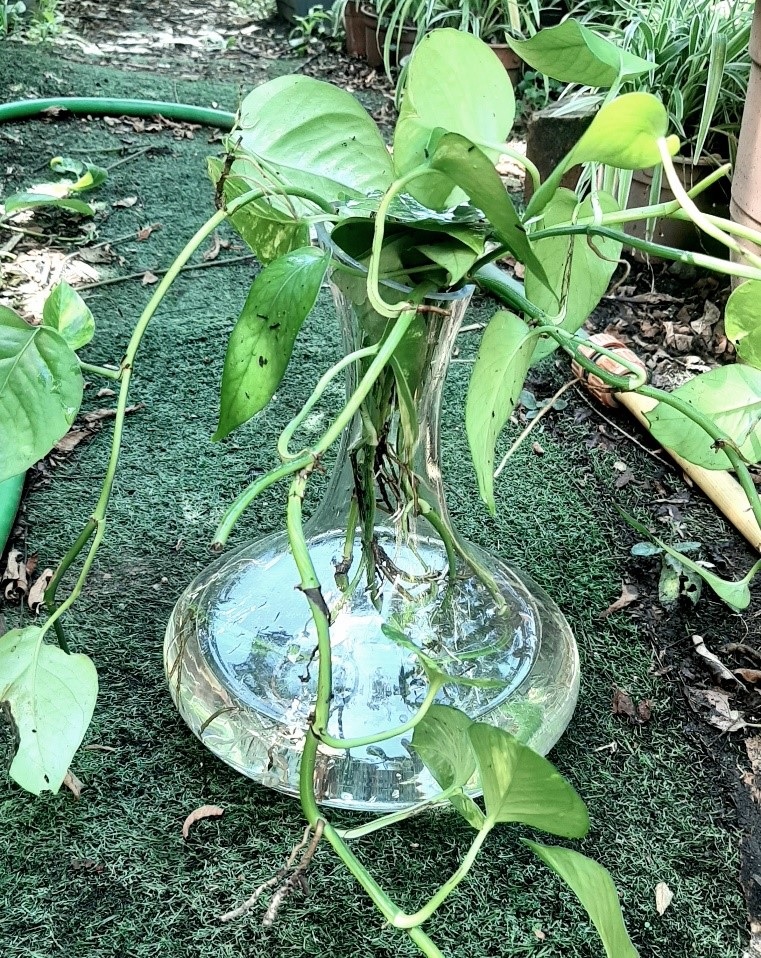
However, the easiest way is to leverage on discarded or used bottles especially those beautiful ones made of glass. In supermarkets, there are nice beverage decanters or bottles of fiery stuff which, if filled with suitable plants, may be gainfully used to decorate homes and offices. Even opaque bottles of attractive shapes may be used.
All these are about 20-25 cm in height which should be fine to hold several water tolerant plants. Just make sure the bottles are cleaned thoroughly before greens are inserted.
Then there are the even smaller bottles such as those of the clear-glass types that come with a bulging waist or those with constricted waists. Such bottles look cute but they are usually considered as being too small for any meaningful gardening purposes except tiny plants with thin stems and small leaves.
Therefore, it is necessary to select the right size of the bottles and plants to be grown to fit the available space. Small plants in bottles need little space and little or no soil at all. Sometimes glass beads or pea pebbles may be used to fill the lower third or half of the bottle to add stability as well as colour to the contraption.
As growing in bottles usually involves very small or even miniscule plants, the process yields much enjoyment and fun especially with busy people who slogs virtually the whole day so as to be able to meet payment due dates of credit cards, housing and car loans, and ah longs’ timetable.
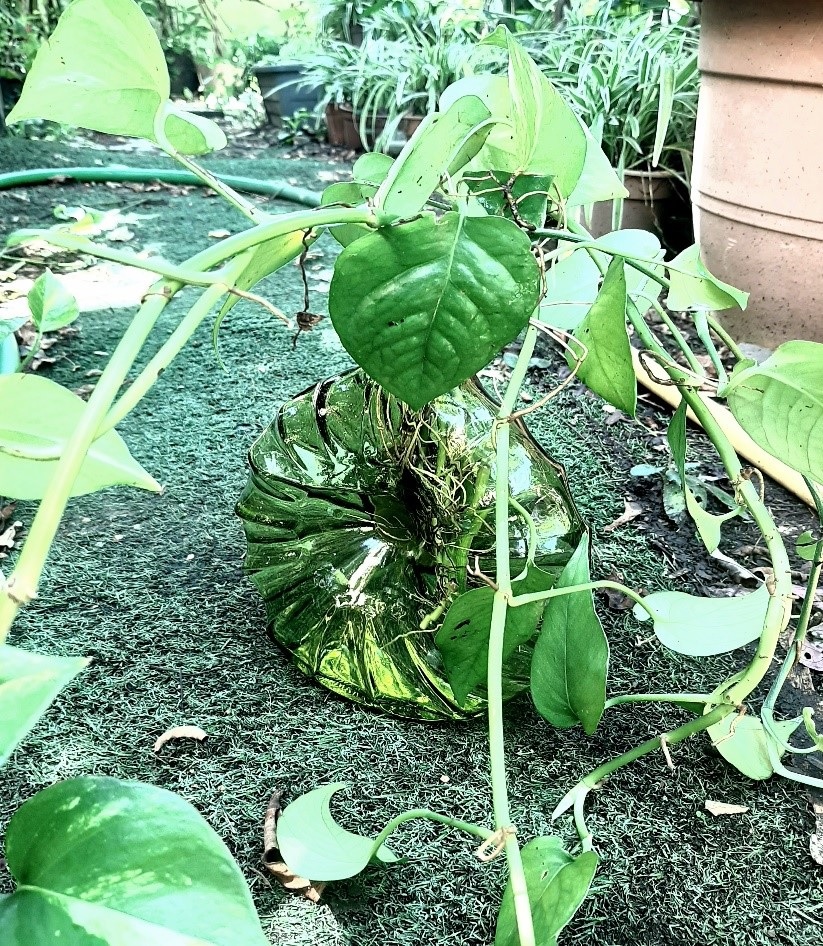
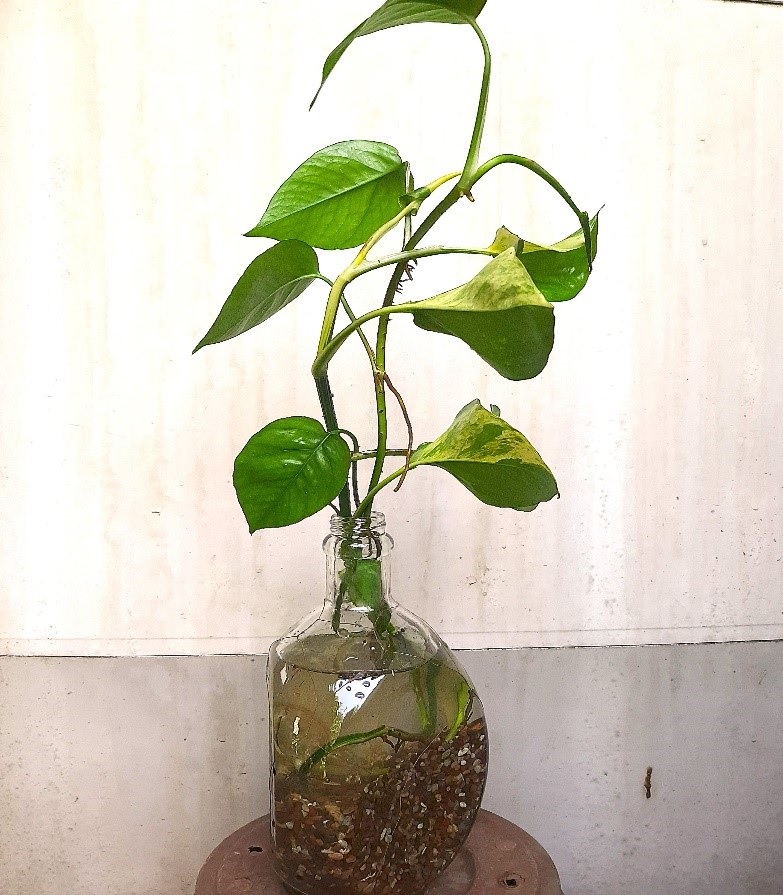
On the positive side, among the many common varieties that are available for bottle culture, the most widely used variety appears to be the Money Plant or Scindapsus aureus.
This is one of the toughest, hardiest and easiest plants to grow and sustain using all types of cultivation media such as soil, sand, mud, pebbles, fibre, timber plants and columns, tree trunks and even concrete or brick walls.
The containers to nurture such a plant are also very wide ranging and may include plastic or clay pots, jars, cans, tubs, bottles, tins, coconut husks, large cups and mugs, etc.
While this may sound incredible but money plants can actually grow vertically upwards – that’s right, vertically upwards - along tree trunks, walls, fences, piers, columns, etc.
Such a character is due to its ability to produce adhesives that allow the roots to stick along and extend the growth of the plant upwards or sideways. The problem is that such sticky stuffs often leave behind stains that mar the colour of the wall once the plant is removed.
But small space gardening particularly gardening in bottles does not need front yard or backyard or other large swaths of land. Even balconies and spaces below awnings are optional.
With terrestrial gardening, the practice is the same, that is, collect some soil to fill up some pots or planting plots on the ground, to be followed by selecting suitable planting materials to serve the planting purpose.
With bottle gardening, the task is even lighter. Just select some suitable planting materials such as money plant, and then look around for several nice clear glass bottles. These are then lugged home to serve some joyous and immersive gardening experience known as bottle gardening.
If time is a bit tight, then it is perfectly alright to trim the money plant vine into lengths of 30-40 cm and then dip them into a shallow basin of water.
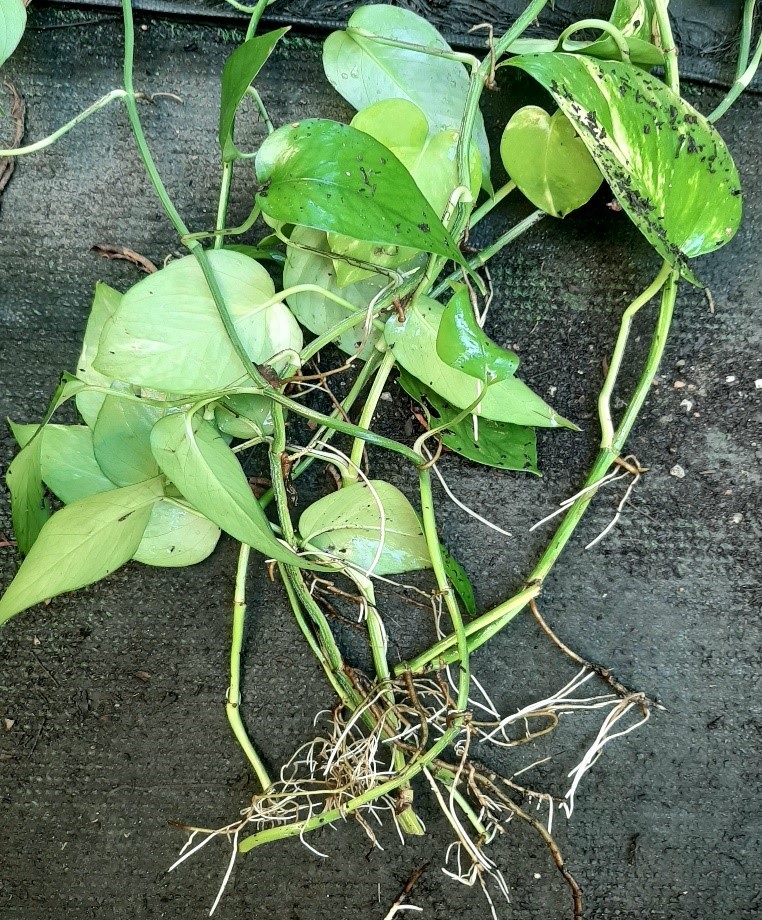
After about 3 weeks, new whitish roots may be visible at the leaf axils of the vine.
From here, it is just a matter of picking up the best ones to be inserted into selected glass bottles for them to continue growing and sprouting new leaves and shoots.
With 4-5 pieces per bottle, such contraptions do appear to be nice additions within indoor, shaded or partially shaded environments. They may last for months but regular water changes are necessary to keep out the pesky little mosquito larvae.
The above writer may be reached at: [email protected]