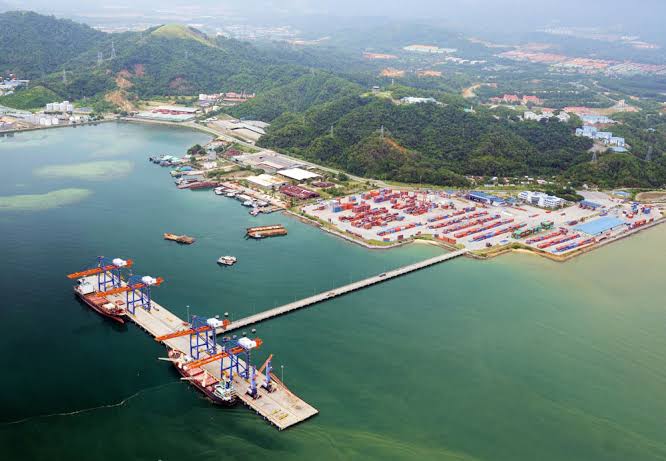
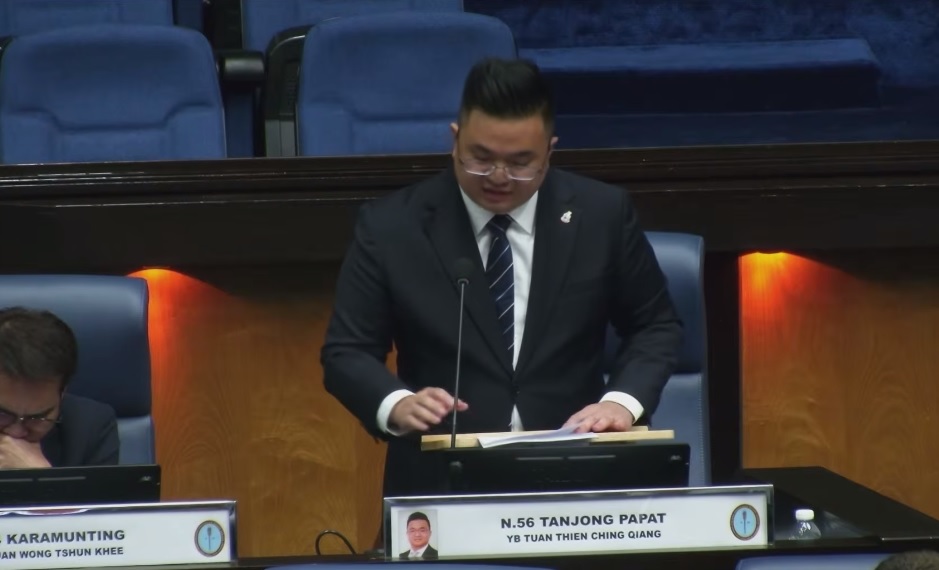
Kota Kinabalu: Tanjong Papat Assemblyman Alex Thien Ching Qiang said Sabah consumers are paying more for goods because of chronic delays and breakdowns at the State’s ports, calling for the government to overhaul how ports are governed and monitored.
“When ships wait, shipping costs increase. When lorries wait, transportation costs increase. When containers are delayed, traders bear additional charges. Eventually the cost is passed to consumers through higher prices for goods,” he said when debating the Sabah Ports Authority (Amendment) Enactment 2026 Bill, Wednesday.
Thien said congestion at the Sepanggar Bay container port had hit Sabah’s economy, with ships waiting longer, containers delayed and lorries left idle as logistics costs rose.
He acknowledged the government had taken steps to ease the congestion but said the problem recurring showed those measures had not resolved the root cause and that the State Legislative Assembly needed to know whether it stemmed from port capacity, storage management, equipment shortages, delayed expansion works, or operator performance.
Turning to Sandakan Port, he said ageing cranes and equipment needed urgent attention.
“When a crane breaks down, the impact is not felt only within the port. It is felt by lorry operators, shippers, exporters, importers and consumers alike,” he said, noting the port is vital to the east coast economy, handling containers, palm oil and general cargo.
Advertisement

Additionally, he wants an annual report on the state of Sabah’s ports to be tabled in the State Legislative Assembly and for monthly performance data such as ship and lorry waiting times, crane availability and breakdown rates to be published.
“The key performance indicators (KPIs) are not meant to embarrass any operator. They are needed so performance can be measured objectively and problems can be detected early,” he said.
He also proposed a port users consultative council for shipping firms, lorry operators, exporters and importers to raise problems directly, a mechanism to waive charges when delays are caused by operator failures rather than users, and performance bonds in concession agreements that the government could activate if operators fail to meet targets.
He posed several questions to the State Industry, Entrepreneurship and Transport Minister, including the actual status and binding completion date of the Sepanggar Bay port expansion project, the lifespan and breakdown rate of Sandakan’s main cranes and when replacement equipment would arrive, whether the government would table an annual port report in the State Legislative Assembly and the investment amount, timeline and agreed KPIs under the partnership with DP World.
He said the Ports Authority already held broad powers under existing law but questioned why expected performance had not followed.
“If the powers already exist, why has the performance we expect still not been seen,” he said, pointing to possibly unclear standards, weak monitoring and rare enforcement action.
He said he had no objection to the bill’s technical amendment but said the government should not stop at renaming a portfolio after more than four decades under the 1981 enactment and called for a full review of port governance and performance.


.png)