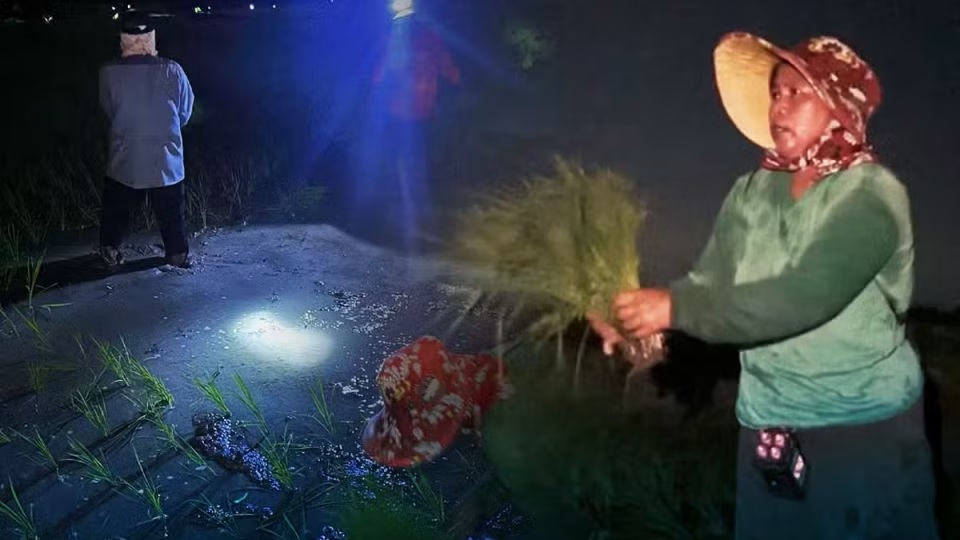
Long before sunrise, when most Filipinos are still asleep, 47-year-old Marlyn Pascua is already knee-deep in a rice field in Alicia, Isabela.
For Pascua and dozens of fellow farmworkers, the workday begins not at dawn but shortly after midnight.
As early as 4 pm, she goes to bed to get enough rest before waking up at around 11pm. By 1am, she and 29 other farmers are already transplanting rice seedlings across the vast fields of Barangay Salvacion.
“Agraraep kamin (We start planting the seedlings),” they told the Inquirer, explaining that some workers even begin as early as 11.30pm to maximize the cooler hours before sunrise.
For Pascua, this schedule has become a necessity rather than a choice.
She has spent four decades working in rice fields, having started helping her family farm when she was just seven years old. Over the years, she has watched the heat become increasingly unbearable.
“The heat is no longer bearable. That is why we take advantage of the cooler weather from midnight until early morning, until around 7am,” she said while walking across the fields under the night sky.
“If you work at midday, you become dehydrated, your blood pressure rises, and your body becomes weak,” Pascua said, adding that what farmers fear most is suffering heat stroke.
Although the Philippine Atmospheric, Geophysical and Astronomical Services Administration has stopped issuing daily heat index bulletins following the official onset of the rainy season, the heat index in Echague, Isabela, still reached the “danger” level of 42 degrees Celsius on July 2.
Despite working through the night to avoid extreme heat, the pay remains meagre.