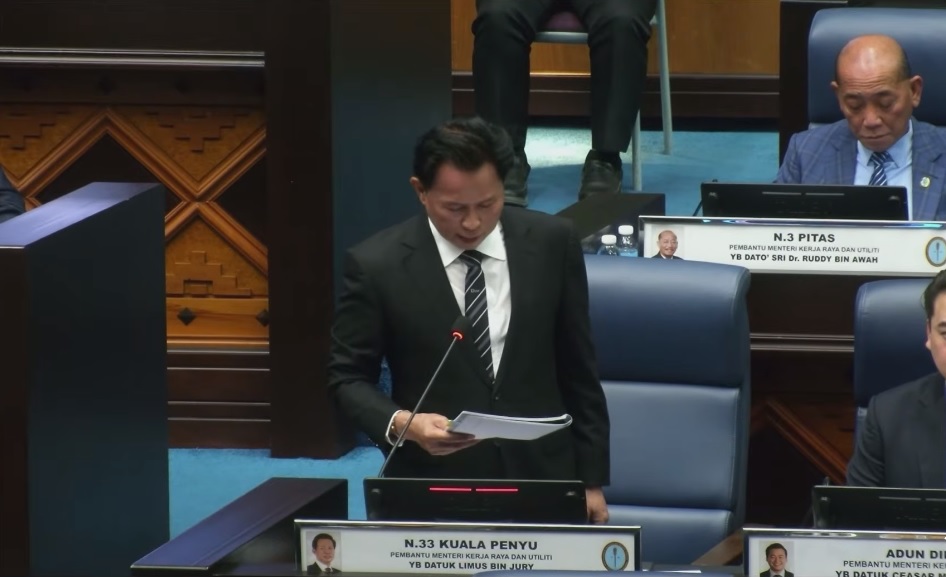
Kota Kinabalu: Sabah aims to reduce its Non-Revenue Water (NRW) rate from 59.6 per cent to 45 per cent by 2030 through a series of rehabilitation and leakage reduction programmes under the 13th Malaysia Plan (RMK-13).
Assistant Works and Utilities Minister Datuk Limus Jury said the Sabah Water Department is implementing a holistic NRW reduction plan that includes integrated operations against illegal water connections, replacement of critical pipelines, replacement of faulty or ageing consumer water meters, water pressure management and proactive leak detection and repair.
He said the plan comprises the National NRW Programme Phase 2, funded by the Federal Government and covering 18 districts in Sabah, as well as the State Government-funded NRW Reduction Programme involving 12 districts.
“Through the continuous and comprehensive implementation of these measures, the Sabah Water Department aims to reduce the State’s NRW rate to 45 per cent by 2030,” he said when replying to Datuk Ir Chin Shu Ying (Nominated).
Limus said the State’s NRW rate stood at 59.6 per cent in 2025.
He added that the NRW Rehabilitation, Monitoring and Maintenance Active Leakage Control Project is currently being implemented in Kota Kinabalu, Lahad Datu and Tawau to further reduce water losses. The projects are scheduled for completion between 2026 and 2027.
Advertisement

During supplementary questions, Jamil Hamzah (Warisan-Bugaya) asked for the current NRW rate in Semporna, particularly Bugaya, and sought an update on the replacement of ageing water pipes in the district.
He also raised complaints that contractors carrying out pipe replacement works had damaged fences belonging to residents, with some homeowners still awaiting compensation despite assurances given over the past two to three years.
In response, Limus said the Ministry did not have the specific NRW data for Semporna and would provide a written reply.
On the damaged fences, he said the Ministry had taken note of the complaints and would conduct site inspections to identify the affected locations before taking the necessary follow-up action.


.png)