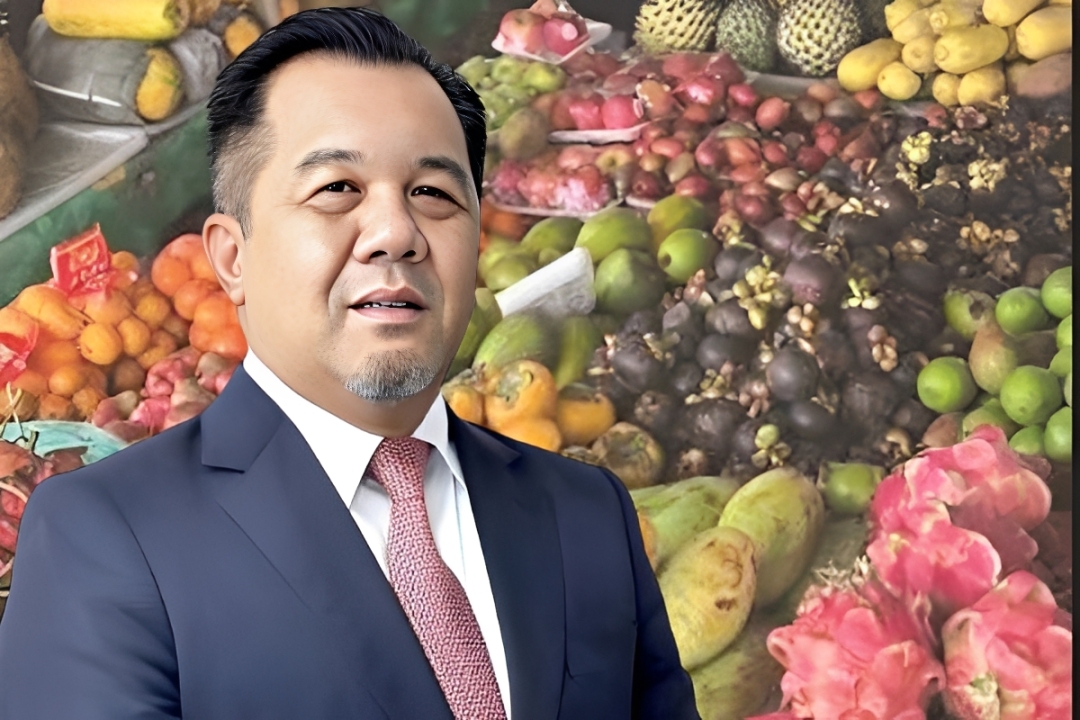
Kota Kinabalu: State Agriculture, Fisheries and Food Industry Minister Datuk Jamawi Jaafar urged all elected representatives, department heads and state government administrators to prioritise locally grown fruits as gifts to support Sabah’s farmers and agricultural industry.
He said the practice of giving imported fruits such as apples and grapes as gifts or tokens of appreciation should be reduced and replaced with locally produced fruits, enabling the State’s farmers to benefit directly.
“We hope all elected representatives and heads of departments will take the lead in promoting and supporting local fruits.
“If you are visiting someone in hospital, attending a wedding or looking for a gift, avoid using imported fruits. We want to support the local fruit industry so that our farmers can market their produce more effectively,” he told reporters during a visit to the Media Room at the State Legislative Assembly building, here, Thursday.
Jamawi said his Ministry, through the Sabah Agriculture Department, the Sabah Rubber Industry Board (LIGS) and related agencies, could help improve the packaging of agricultural produce to make it more attractive and suitable as gifts.
He said the Ministry’s previous campaigns promoting local agricultural produce had received an encouraging response, including initiatives to distribute chicks, ducklings and quail chicks to communities.
Advertisement

“Alhamdulillah, many elected representatives have informed us that they are now enjoying produce from their own livestock.
“However, some have become too attached to the animals to slaughter them because they have become pets,” he said.
Jamawi said the Kitchen Garden (Kebun Dapur) programme introduced by the Ministry has shown encouraging progress, with more people taking up home gardening, rearing chickens, ducks and quails, and undertaking small-scale aquaculture activities around their homes.
“I have received very positive feedback from heads of departments following their visits to the ground.
“There has been a shift among the public towards growing crops around their homes to improve self-sufficiency while generating additional income by selling surplus produce,” he said.
According to him, the Ministry’s new approach of mobilising all its departments and agencies as a coordinated team has enabled assistance related to basic food supplies to be delivered more effectively.
“I want the people to have direct access to rice, vegetables, fish, chicken and other sources of protein through our agricultural agencies because this sector provides both food and livelihoods for the people of Sabah,” he said.
Jamawi said the Ministry had initially targeted 5,000 Kitchen Garden participants over five years, but a survey found that about 3,000 individuals had already taken part in the programme within its first six months.
Following this achievement, he said the Ministry plans to introduce an incentive scheme or special recognition during this year’s Farmers’ Day celebration to honour successful participants.
“I have tasked the Agriculture Department with monitoring participants’ progress and identifying those who have excelled so that they can be recognised and serve as an inspiration to others,” he said.
In an effort to expand the programme into urban areas, Jamawi said he had held discussions with Kota Kinabalu City Hall (DBKK), Sandakan Municipal Council and Tawau Municipal Council to identify small parcels of land or pocket land that could be used by residents of flats and condominiums for community gardening.
“We are awaiting proposals from the three local authorities so that the programme can be implemented in a more organised and systematic manner,” he said.
He also announced that the Kitchen Garden programme would be expanded to educational institutions from next year, with an initial focus on schools offering agriculture-related subjects.
He said discussions had already been held with the relevant ministry, while funding is expected to be allocated next year for the initiative.
“Any school interested in participating can obtain advisory services from the Agriculture Department, the Rural Development Corporation (KPD) and LIGS.
“Exposing students to agriculture from an early age is crucial in raising awareness of food security and food safety, which are essential for Sabah’s future,” he said.


.png)