.png)

Advertisement
 “Even before we became the regulator, we had already developed the Sabah Energy Roadmap and Master Plan 2040 (Se-Ramp 2040),” he told Daily Express.
That plan, co-developed with Sabah ministries, departments, industry players and utilities, is today the guiding document for Sabah’s energy transformation. It maps out
“Even before we became the regulator, we had already developed the Sabah Energy Roadmap and Master Plan 2040 (Se-Ramp 2040),” he told Daily Express.
That plan, co-developed with Sabah ministries, departments, industry players and utilities, is today the guiding document for Sabah’s energy transformation. It maps out
Advertisement

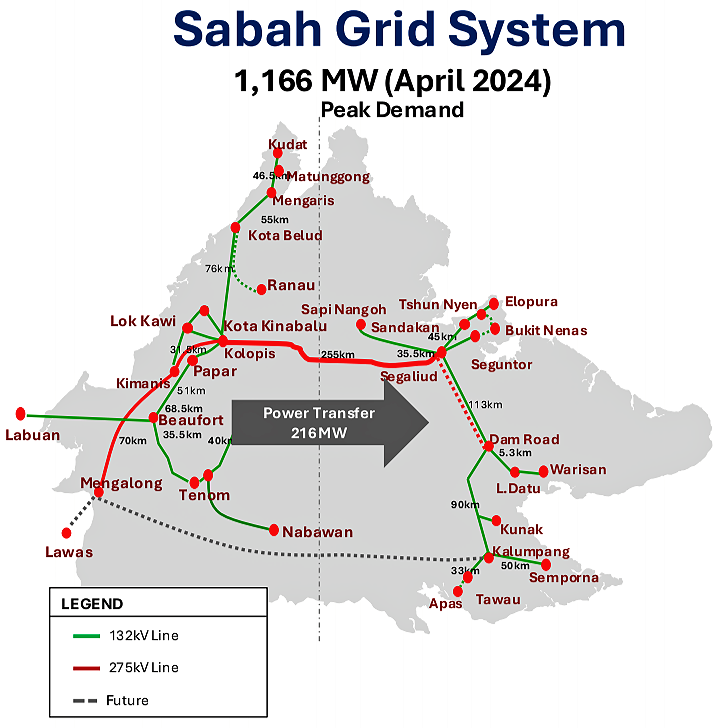
 Sabah’s electricity supply, historically overseen by Federal authorities, has long been plagued by reliability issues, frequent outages and an over-reliance on ageing assets.
Advertisement
 By the third quarter of 2025, with the commissioning of the Lahad Datu Battery Energy Storage System (Bess) – Southeast Asia’s largest at 100MW/400MWh – and an interim gas plant in Kimanis, Sabah expects its reserve margin to exceed 25pc.
“These fast-tracked projects are already in motion. They stabilise the system, buy us time and give us the confidence to implement the longer-term transformation,” said Nasser.
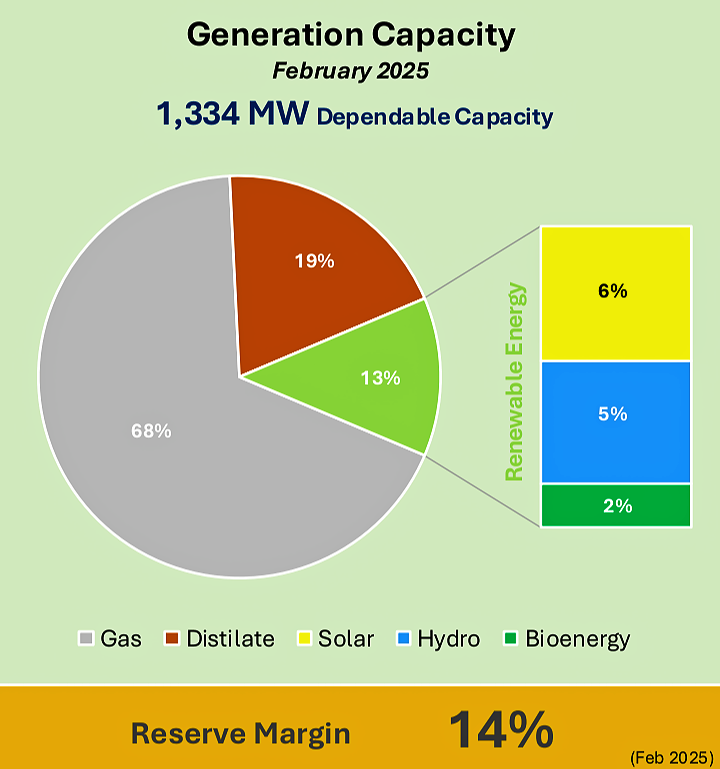
Today, Sabah’s energy mix is more than 80pc dependent on natural gas, with diesel and MFO making up most of the rest. Renewables – mainly small hydro and biomass – account for only a fraction.
“There’s nothing wrong with gas; it is still the cheapest source of power in Sabah thanks to special pricing by Petronas,” said Nasser.
“But we cannot sustain this over-dependence. Gas reserves are finite, industries also need it and we have a responsibility to decarbonise.”
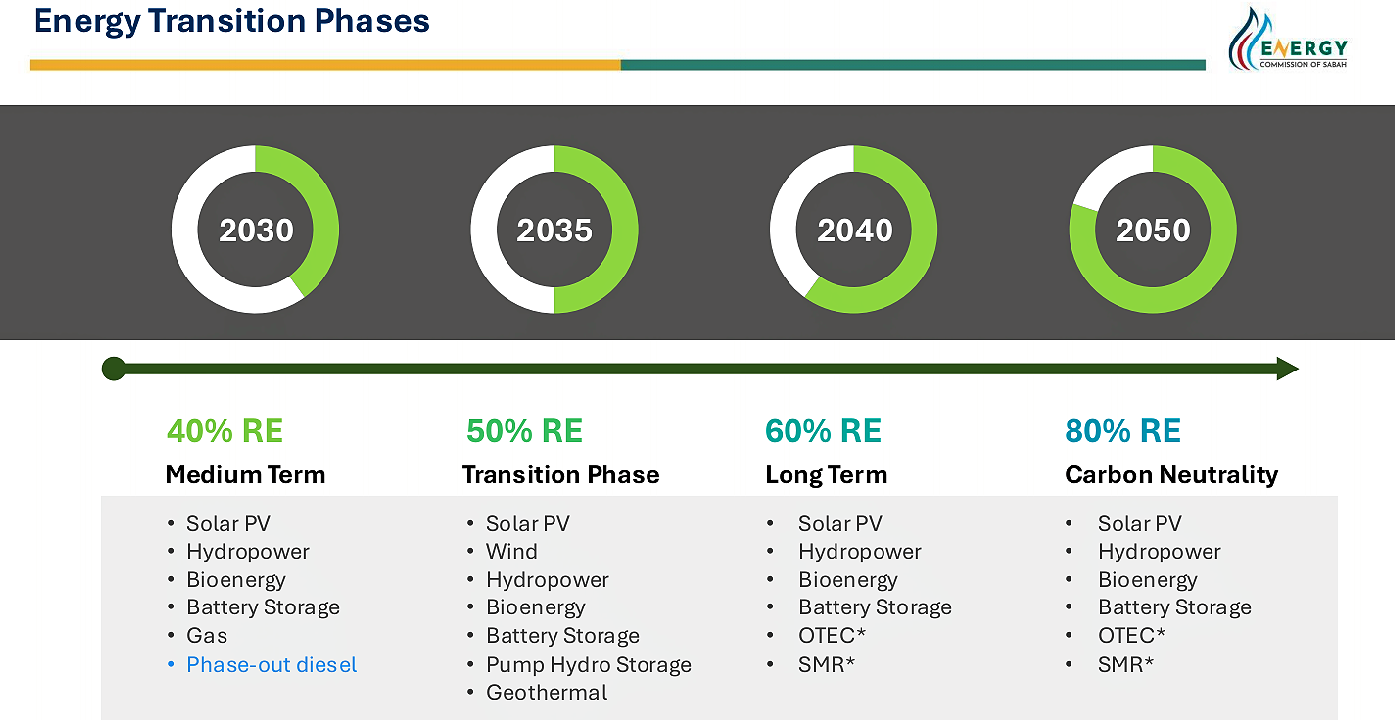
The target is bold: 50pc renewable energy (RE) by 2035, on the way to 80pc RE by 2050.
By the third quarter of 2025, with the commissioning of the Lahad Datu Battery Energy Storage System (Bess) – Southeast Asia’s largest at 100MW/400MWh – and an interim gas plant in Kimanis, Sabah expects its reserve margin to exceed 25pc.
“These fast-tracked projects are already in motion. They stabilise the system, buy us time and give us the confidence to implement the longer-term transformation,” said Nasser.
Today, Sabah’s energy mix is more than 80pc dependent on natural gas, with diesel and MFO making up most of the rest. Renewables – mainly small hydro and biomass – account for only a fraction.
“There’s nothing wrong with gas; it is still the cheapest source of power in Sabah thanks to special pricing by Petronas,” said Nasser.
“But we cannot sustain this over-dependence. Gas reserves are finite, industries also need it and we have a responsibility to decarbonise.”
The target is bold: 50pc renewable energy (RE) by 2035, on the way to 80pc RE by 2050.
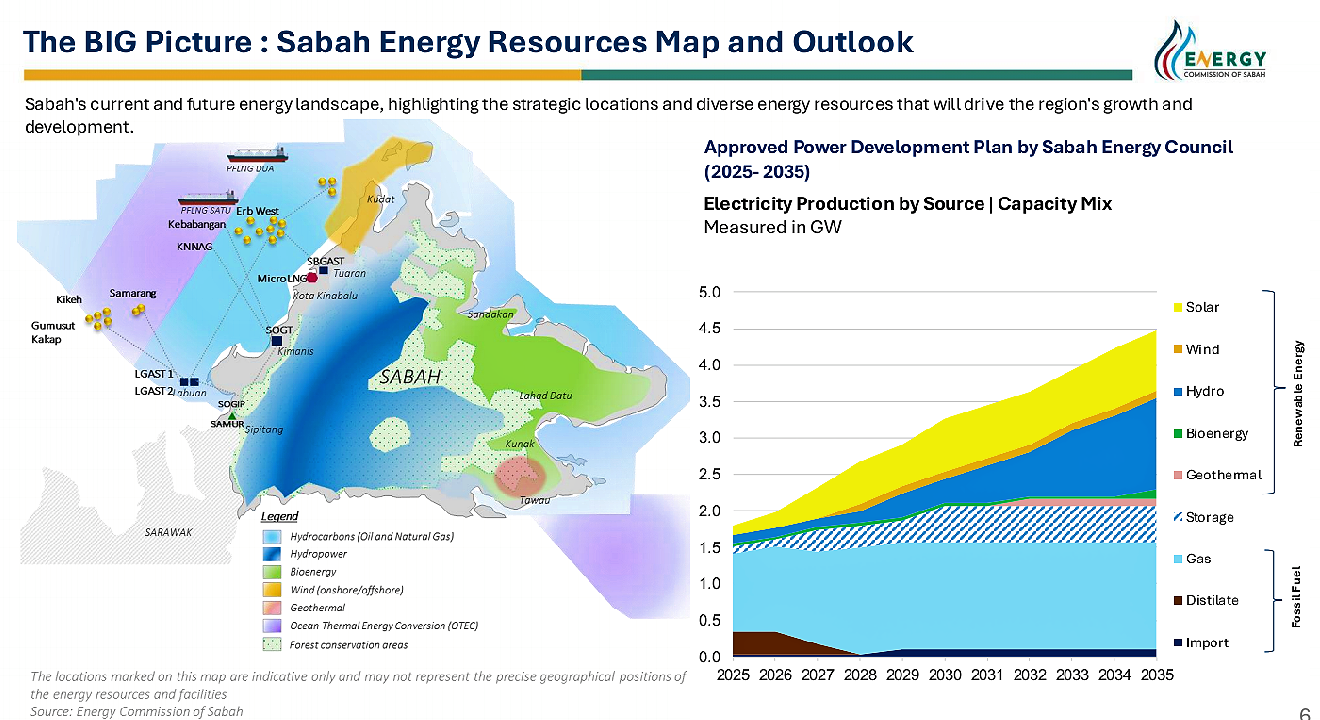
 “This is possible because Sabah is blessed with solar irradiance, significant hydro potential and emerging opportunities in biomass, geothermal, wind and frontier technologies like Ocean Thermal Energy Conversion (Otec),” said Chu.
Already, 826MW of solar projects are targeted by 2030, while a Hydro Development Master Plan has identified more than 1,500MW of viable projects across cascading rivers, dams and pumped storage schemes. Two large hydro plants in Padas alone could add 400MW.
“This is possible because Sabah is blessed with solar irradiance, significant hydro potential and emerging opportunities in biomass, geothermal, wind and frontier technologies like Ocean Thermal Energy Conversion (Otec),” said Chu.
Already, 826MW of solar projects are targeted by 2030, while a Hydro Development Master Plan has identified more than 1,500MW of viable projects across cascading rivers, dams and pumped storage schemes. Two large hydro plants in Padas alone could add 400MW.