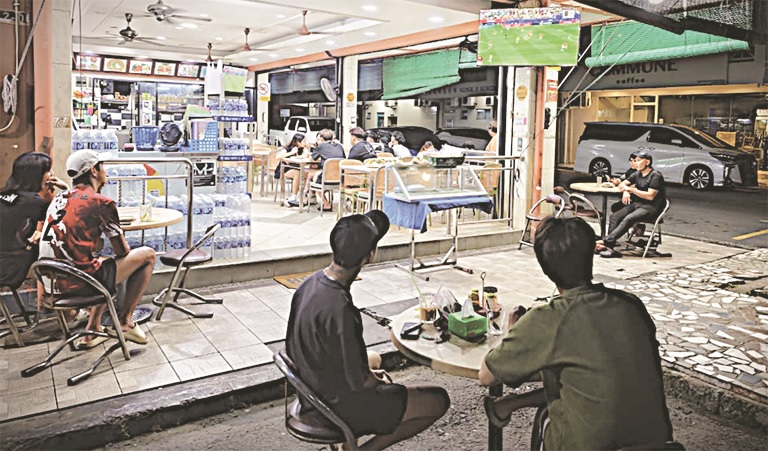
Kota Kinabalu: Many Indian Muslim eateries here claim that crowds thronging their 24-hour outlets to view World Cup football matches this year have dropped.
Operators dismissed a report which suggested that the 2026 World Cup event could inject up to RM2.1 billion into Malaysia’s food and beverage sector, driven by late-night dining and that Mamak restaurants are poised to reap the gains.
Advertisement

Mohd Hassan from the Salim Restaurant said:
“You can see fewer people now here watching the dawn timed match, ordering less food and drinks than before Covid time.
“Our prices have not increased much. Many people are not coming, maybe because their subsidised fuel quotas were reduced by the Government.”
He denied that the no-smoking protocol in place was discouraging older generation from coming as they could not smoke.
He pointed to those sitting outside on the road parking lot with some who were seen smoking and vaping.
He gathered that many in the younger generations were not as passionate at football as the older generations, with computer games and other pastimes.
Even pubs and hotels that host television screening of World Cup matches acknowledge the drinking crowd. The younger generations are not into heavy beer drinking bouts, and don’t dance a lot over any of their favourite national team’s progress in the World Cup towards the final match.
Abu Bakar at Anak Mami Restaurant complained to Daily Express that on the morning of the semi-final match between Spain and France, the electricity supply was disconnected from 2am to 8.05am, sending the crowd home disappointed.
He blamed SESB for the loss of business income for that morning with the unannounced and unexpected load shedding outage.
“We making big profits? No, SESB should be more considerate. Who will bear for this loss of income? We are suffering from high rent, overhead costs, inflation of material and our customers were unhappy and went off at this blackout to other shops elsewhere,” he told Daily Express, of the blackout at Lintas Plaza, Lintas Square, Heritage Plaza with at least five Muslim restaurants operating with other pubs and three hotels there.
The area used to be the happening spot for World Cup viewing on television and projector screens in the past.
There were also eatery outlets like the Nanyang Café which posted notices of no water supply that necessitated their earlier closure of business operating hours.
This year, Astro, which had held a past monopoly on broadcast rights for the World Cup football tournament, changed, as RTM took over the broadcast rights. As a result, more people with handheld devices can access to watch World Cup football matches, particularly on their cell phones, via RTM Klik and Unifi TV besides other mobile telecom players.
CelcomDigi offers an “Unlimited Internet Pass” for RM10, specifically giving users 24-hour unlimited internet to stream matches on the RTM Klik app.
U Mobile launched its “ULTRA Football Pass,” giving all mobile and broadband prepaid/postpaid subscribers free, unlimited high-speed data specifically to stream all 104 matches to acquire subscribers.
Mamak operators were not sure if this trend has affected customers patronising their shops but for the younger generations and those with mobile battery powered devices, it’s another new way to watch World Cup matches at the place of their choosing even when the power supply is unavailable unexpectedly in Sabah.