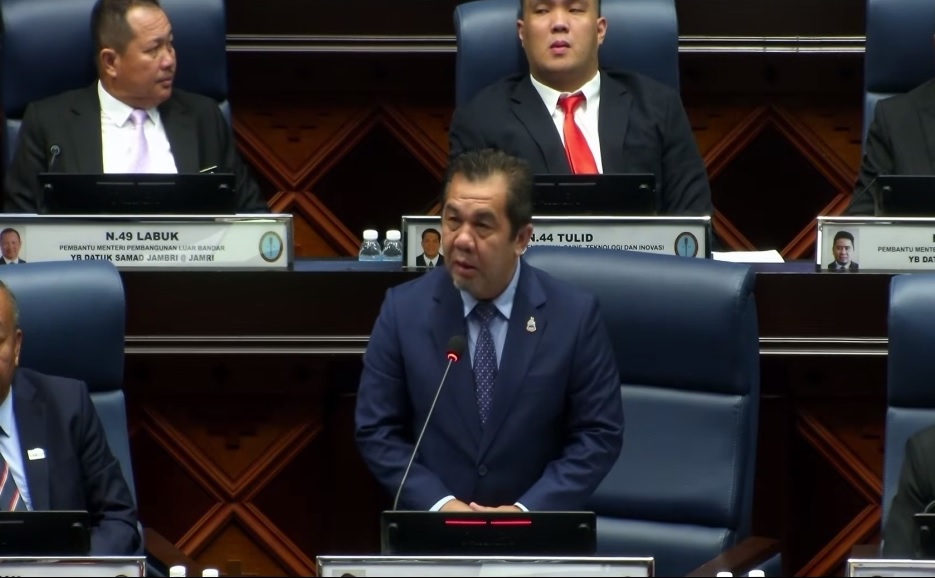
Kota Kinabalu: Livestock farms and slaughterhouses in Sabah will be required to obtain licences under amendments passed by the State Legislative Assembly on Thursday.
Agriculture, Fisheries and Food Industry Minister Datuk Jamawi Jaafar said the Animal (Amendment) Bill 2026 would strengthen regulation and enforcement across the livestock industry.
The Bill was passed by a majority voice vote without amendments after its third reading.
Those operating a livestock farm or slaughterhouse without a licence face a fine of up to RM50,000, imprisonment of up to two years, or both.
Winding up the debate, Jamawi said Sabah had 12 public slaughterhouses and 36 privately operated facilities.
The public facilities comprised four for ruminants, five for poultry and three for pigs, while the private facilities comprised 33 poultry slaughterhouses, two for ruminants and one for pigs.
Advertisement

He said the Ministry had proposed 150 new positions, including enforcement officers and meat inspectors.
Jamawi said a proposed RM150 licensing fee would apply to operations exceeding specified livestock thresholds.
These cover farms with more than 50 pigs, 500 chickens, 1,000 quails, 50 cattle or buffaloes, or 100 goats, sheep or deer.
Smaller operations would only need to register and would not be charged.
Alex Thien (Warisan - Tanjung Papat) had earlier urged the Government to distinguish clearly between domestic, small-scale and commercial farming.
“Definitions must be clear, penalties must be balanced and small farmers must be assisted, not burdened,” he said.
Jamawi also welcomed Luyang Assemblyman Samuel Wong Tshun Chuen’s proposal for a one-stop centre to coordinate licensing, inspections and approvals.
He said the proposed processing period was 90 days for new licences and 30 days for renewals, although applicants would still need to deal with local authorities, the Environment Department and other agencies.
Wong had warned that excessive compliance costs could eventually be passed on to consumers through higher food prices.
Jamawi said the law would also help the authorities act against unlicensed livestock premises in Tamparuli.
“We are aware that Tamparuli produces millions of chickens and eggs every year, and some farms there do not have licences.
“This law will allow enforcement action, including the closure of unlicensed premises,” he said.
Tamparuli Assemblyman Datuk Seri Wilfred Madius Tangau had raised concerns over pollution and water-supply disruptions in his constituency.
He said Sungai Bawang and Sungai Mangkaladoi must be protected, while the Telibong I water treatment plant had reportedly suffered several disruptions due to high ammonia levels in its raw-water source.
“There is no point producing millions of chickens and eggs if the people are forced to endure water-supply disruptions caused by pollution of raw-water sources,” Tangau said.
He claimed there were more than 19 chicken farms in Tamparuli, while pig farms there were estimated to hold more than 50,000 animals.
Jamawi said detailed licensing procedures, operating standards and technical requirements would be set through subsidiary regulations.
He added that RM500,000 had been allocated for rabies vaccines under the 13th Malaysia Plan.
The amendment will take effect upon publication in the Gazette.


.png)