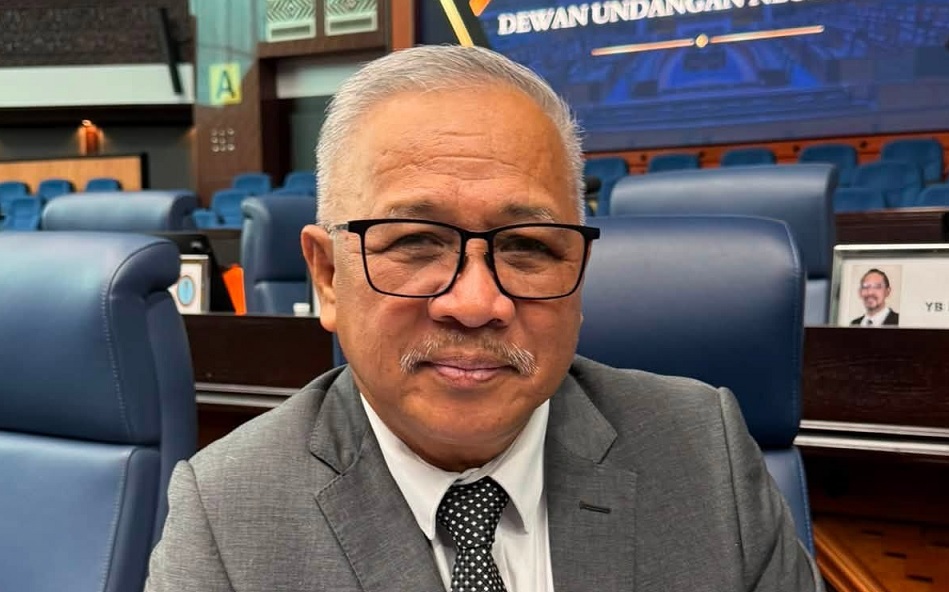
LAND disputes left unresolved for years have locked villagers in Paginatan out of farming and loan opportunities, said Paginatan Assemblyman Datuk Rusdin Riman, who called for new Adat officers to resolve cases quickly.
“The absence of a qualified investigating officer under the existing law is the main reason why customary disputes get trapped for months, even years, in my constituency,” he said when debating the Majlis Hal Ehwal Anak Negeri Sabah (Amendment) 2026 Bill.
“When a native land boundary dispute or a sogit violation is not investigated quickly and professionally, the result is that the customary land is locked out of any economic development activity.
“Villagers cannot farm cash crops or apply for micro-financing because the customary dispute remains hanging without legal certainty,” he said.
He said Clause 4, which introduces a new Section 5A providing for the appointment of Adat officers from among state civil servants, would function as a form of investigative audit and risk control for the native court system.
“Under Section 5A Subsection 3, the Adat officer appointed will act as a compliance officer with official power to receive, investigate and initiate proceedings for customary offences in court in a systematic and evidence-based manner,” he said.
Advertisement

“An Adat officer free from local conflicts of interest will resolve investigations quickly and at the same time unlock the economic potential of customary land left idle in Paginatan and across Sabah,” he added.
On the financial implications of the amendment, Rusdin said the additional expenditure required to pay emoluments for new Adat officers under Section 5A and to run the council under Section 6 should not be viewed as a burden.
“This is not a sunk cost or a fiscal burden. It is a productive investment, a high-yield social investment,” he said.
“When customary institutions are managed efficiently, the cost of social inefficiency such as community disputes, property damage and congestion of claims in the civil courts can be reduced drastically.
“Social stability in rural areas is a key requirement for attracting private investment into the agrotourism and agriculture sectors in districts like Ranau,” he said.
Rusdin also linked Clause 3, which inserts a new paragraph 2A empowering the council to advise the state government on customary education and native customary law, to youth skills development in his constituency.
“We cannot see customary education as merely a classroom subject,” he said.
“I propose that paragraph 2A be used as the basis to design an accreditation programme in customary law administration for young people in Sabah.
“Our youths in Ranau and across other districts who hold diplomas or degrees can be trained professionally under a module designed by the council, learning not only customary codification but investigation skills, legal document management and court procedures so they can be absorbed as customary officers under Section 5A or as assistant administrators at district offices,” he said.
He said Clause 5, which amends Subsection 6(1) to include the Director of the Sabah Native Affairs Department as an ex officio member and increases the number of expert members from six to nine, reflected sound corporate governance.
He described the Bill as a mature and well-structured reform that upholds indigenous identity while unlocking economic capital tied up in rural areas and creating new skilled career opportunities for youths.
“I am confident that passing this amendment is an administrative and moral duty we must fulfil for the future of the coming generation,” he said.


.png)