Kota Kinabalu: The Sabah government has been asked to explain why payments linked to privatised water services have risen to nearly RM183mil this year while consumers continue to face supply disruptions.
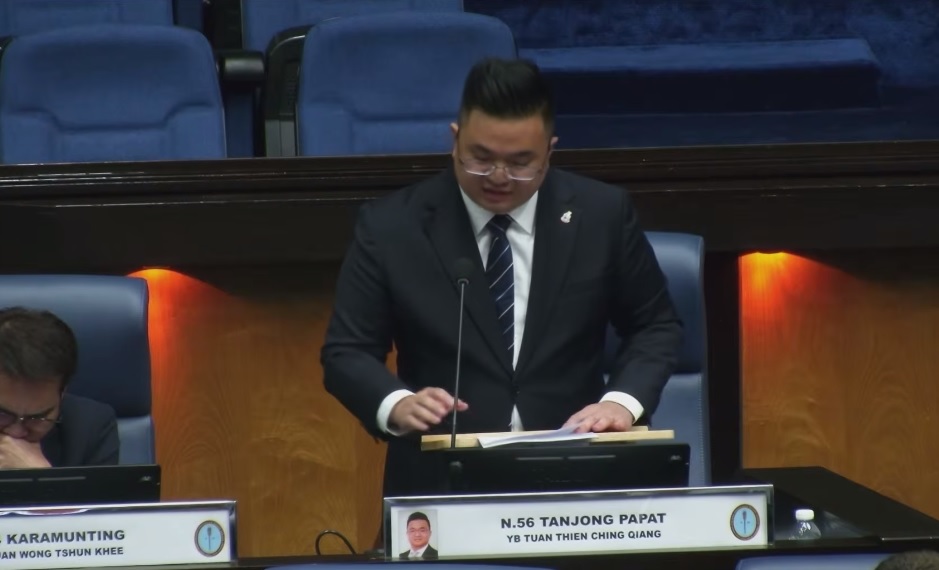
Tanjong Papat assemblyman Alex Thien said the original 2026 Budget had allocated RM140mil for water purchases and privatisation-related expenditure, but the government was now seeking another RM42.911mil.
“If payments to concession companies were already fixed under contracts, why could the amount not have been estimated more accurately when the original Budget was prepared?” he asked.
Thien raised the matter while debating the 2026 Supplementary Supply Bill at the state legislative assembly sitting on Monday (July 20).
He sought clarification on whether the additional allocation was caused by revised contractual rates, outstanding payments, higher operating costs or changes to the concession agreements.
He also asked whether the contracts contained minimum-payment or “take-or-pay” obligations, under which the government would still have to pay even if the agreed volume of treated water was not supplied.
Advertisement

“If payments to concession companies continue to increase every year, the people have the right to know whether this is being translated into a more stable and higher-quality water supply,” he said.
Thien said about RM349.5mil had been allocated to the Water Department and asked how much would be spent in Sandakan.
He called on the government to identify the projects planned for the district, including treatment plant upgrades, replacement of ageing pipelines and the development of boreholes as an alternative water source.
“The people of Sandakan have endured water supply disruptions for far too long.
“They deserve to know what long-term solutions are being implemented and when they will see the results,” he said.
Thien also questioned the RM856mil contribution to statutory funds, which accounted for more than half of the RM1.6126bil supplementary budget.
He said transferring money into a fund should not, by itself, be regarded as development.
“The people will only feel the benefits when the allocation is translated into completed projects, better services and facilities that genuinely solve their problems,” he said.
He proposed quarterly reports detailing the projects financed, their locations and implementation progress.
Thien also sought details on a RM210mil allocation for equity investments in government-linked companies, saying the documents did not identify the recipients or purpose of the investments.
He said capital injections might be justified for GLCs carrying out strategic projects or public services, but they should be supported by measurable returns.
“GLCs should generate revenue, pay dividends and increase value for the state government, rather than continuously depend on government financing,” he said.
He also warned that Sabah must prepare for a possible Super El Niño, which could increase the risk of water shortages, forest fires, haze and damage to the agriculture sector.
Thien said the supplementary development allocation for the Agriculture, Fisheries and Food Industry Ministry was only about RM1.5mil, with no clearly identified allocation for El Niño preparedness.
“Early warning is only the first step. Real preparedness requires a clear action plan, coordination between agencies and sufficient funding,” he said.
On energy security, Thien said recent disruptions at an upstream Petronas gas platform had affected supplies to several independent power producers and led to electricity rationing.
He said the incident showed that a positive reserve margin was insufficient if the fuel supply itself was disrupted.
He proposed that Sabah study strategic gas storage facilities, introduce a residential solar rebate programme and provide an update on the Tawau geothermal project.
On issues in his constituency, he urged the government to repair or replace unsafe bridges and jetties in Kampung Sim-Sim.
He said several structures were leaning and cracked, but no follow-up action had been seen despite a site visit with Rural Development Department officers two months earlier.
Thien also asked when clean water and rural electricity facilities would be provided to residents of Pulau Berhala.
He said only about RM435.54mil, or 27 per cent of the RM1.6126bil supplementary budget, was directly itemised as development expenditure.
“Sabah does not merely need bigger allocations. Sabah needs better planning, more effective implementation and more transparent governance,” he said.


.png)