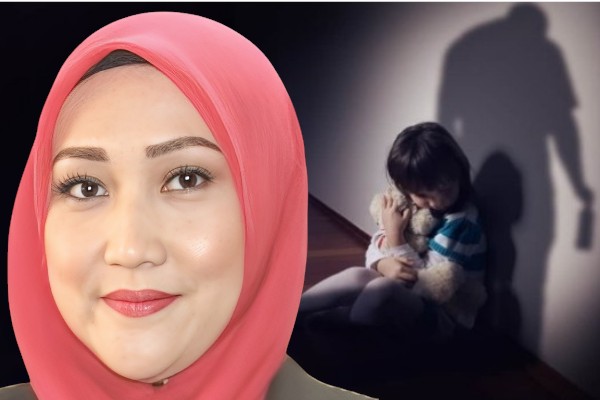
Kota Kinabalu: Members of the public reporting suspected child abuse must provide the child’s full name and complete address, as incomplete information can delay rescue efforts and place the child at greater risk.
Sabah Social Welfare Department Children’s Division Officer Ponniya Irham
said the child’s address is the most important information investigators need.
Advertisement

“When we receive a public complaint, the most important thing is that we know the child’s full address so it is easier for us to locate them,” she said.
“In Sabah, many houses do not have numbers, making it difficult for us to take immediate action when the address is incomplete.
“This is one of the biggest obstacles our team faces when responding to public complaints.”
She was speaking at the Child Safeguarding Conference at the Sabah International Convention Centre here.
Ponniya cited a case she handled at a government housing area where the complainant failed to provide a unit number and identified the child only as “Boy”.
“Imagine if we had to go door to door asking whether the child’s name is Boy. By then, the child may have suffered even worse abuse,” she said.
She said a contact phone number is helpful but not compulsory, as officers can go directly to the address to check on the child’s welfare.
Once a complaint is received, officers appointed as Protectors under Section 8 of the Child Act 2001 will visit the location, whether a home or school, to assess the child’s situation. If temporary shelter is required, the Department will apply to the court for a placement order, although this remains a last resort.
“Whatever happens, a child is safer and happier when they can return to their family,” she said, adding that officers first try to identify a suitable family member to assume care before considering institutional placement.
Ponniya said Sabah has only one welfare shelter under the Department – Rumah Kanak-Kanak Kota Kinabalu (RKKKK) in Kg Beringgis, Papar – with a capacity of about 100 children. It currently houses around 60 children involved in cases ranging from rape and abuse to neglect.
Court approval is required both to place a child at the RKKKK and for outsiders to enter the premises, as the facility is a restricted area.
She stressed that the Department’s role goes beyond removing children from dangerous situations.
“We do not only look at rescuing the child but at the whole family,” she said, citing cases where the father is the perpetrator while the mother still has other children who require support.
She added that counselling and most Department services are provided free of charge, apart from a RM250 registration fee for childcare centres, which is valid for five years.
Ponniya said reports may be lodged directly with the Department or through Talian Kasih 15999, a free national helpline based in Putrajaya. The hotline forwards reports to the relevant district office within an hour, or in some cases within two hours, for initial action.
She said Talian Kasih handles all Social Welfare Department-related matters, including domestic violence, and not only child protection cases. The service is free and can even be accessed from public telephones.
Ponniya explained that the Children’s Division operates under the Child Act 2001. Where other laws, such as those relating to sexual offences, also apply, the child’s rescue is carried out under the Child Act, while the alleged offender is charged separately under the relevant legislation.
“The Child Act 2001 was amended in 2016 to include forms of parental negligence that were previously not covered, such as leaving a child in a car, bringing a child to an illegal gathering or leaving a child home alone. These can now result in negligence charges against a parent,” she said.
She added that penalties and prison terms under the Act were increased following the amendment, while a further amendment was completed last year.
Ponniya also said the Department’s Children’s Division has been designated to become a standalone Children’s Development Department. However, the separation has yet to be formalised, and the division continues to operate under the Social Welfare Department.