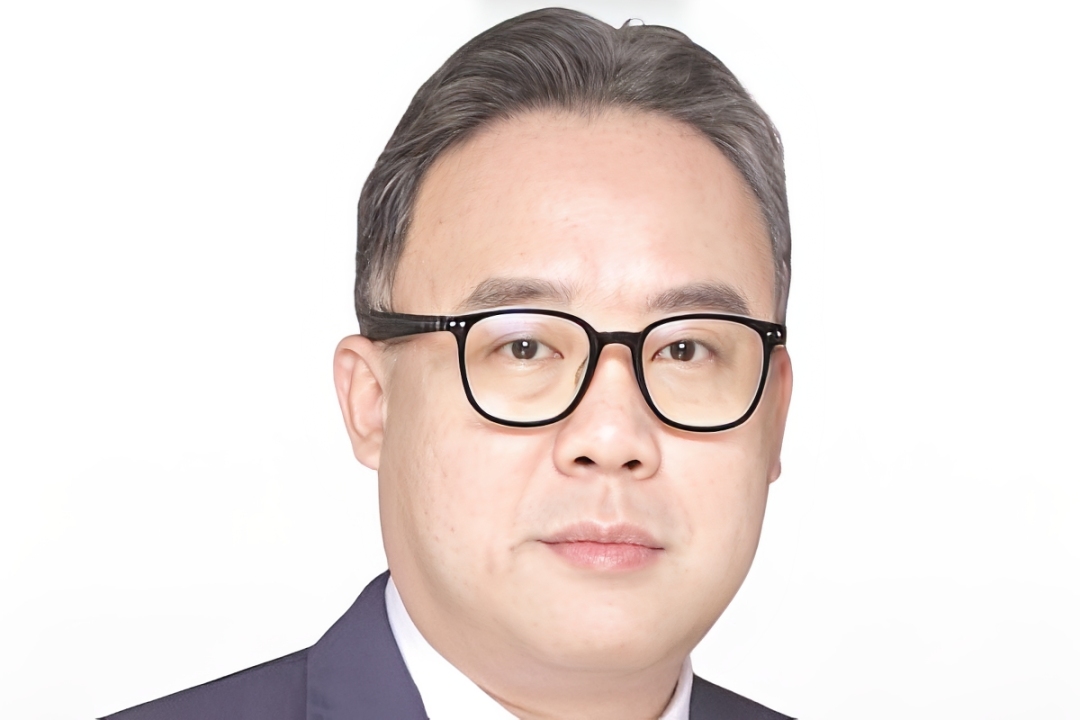
DIGITAL Public Infrastructure (DPI) can provide the technological backbone for development, but without education to build human capability, its full potential cannot be realised, said Wawasan Open University (WOU) Vice Chancellor and President Professor Dr Yap Eng Hwa.
He said the conversation on digital transformation should move beyond technology itself to focus on whether people and institutions have the capability to use digital systems effectively.
“While digital infrastructure provides important technological foundations, the real challenge lies in enabling people to learn, adapt and apply these systems to address real-world problems.
“The real task is not whether these systems exist, but rather whether people and institutions can learn and adapt and apply them to solve real-world problems,” he said at the Sabah Asia-Pacific Impact Investing for Sustainable Development Summit 2026.
Yap noted that education plays a central role in developing the talent, capability and adaptability needed to translate digital systems into sustainable development outcomes.
He described education as a complementary form of infrastructure that supports broader development transformation by equipping individuals with the knowledge and skills required to make effective use of technology.
Advertisement

Referring to the summit, he said it exemplified a development ecosystem by bringing together governments, policymakers, universities, NGOs, industries, social enterprises and community-based organisations to pursue shared sustainability goals.
Within such an ecosystem, he emphasised that universities have an important responsibility in ensuring that digital investments create lasting societal impact.
“DPI can provide a digital backbone, but education builds the human capability needed to use it meaningfully,” he said.
Yap added that technology alone cannot drive sustainable development. Instead, meaningful progress depends on participation, continuous feedback, adaptation and lifelong learning. Universities therefore have a critical role in transforming digital infrastructure into practical solutions that benefit communities.
From WOU’s perspective, he highlighted the university’s contribution through Open and Distance Learning (ODL), lifelong learning, applied research and sustainability education.
He explained that WOU views ODL not simply as an online mode of teaching, but as an access infrastructure that creates educational opportunities for learners regardless of their location or personal circumstances.
“ODL enables people to pursue higher education while remaining connected to their workplaces, families and communities. The model combines flexible learning delivery, structured learner support, technology-enabled access and recognised academic pathways to ensure education remains both accessible and credible,” he explained.
He said WOU’s experience demonstrates how ODL can widen participation in higher education, particularly for learners facing barriers such as geographical distance, time constraints, financial limitations, lack of confidence or conventional entry requirements.
“Sustainable development requires capability to be built exactly where development happens,” he said, referring to workplaces, public institutions, local enterprises, communities and underserved populations.
Looking ahead, Yap shared that WOU is developing a sustainability-focused postgraduate programme designed to strengthen practical capabilities among professionals working in fields including Environmental, Social and Governance (ESG), environmental consultancy, renewable energy, smart technologies, climate adaptation, green building and sustainable development.
He stressed that sustainable development is fundamentally a capability challenge rather than purely a technological one.
“Technical solutions alone are not enough. They require people who can integrate sustainability knowledge with digital technologies, practical judgement and local context,” he concluded.


.png)