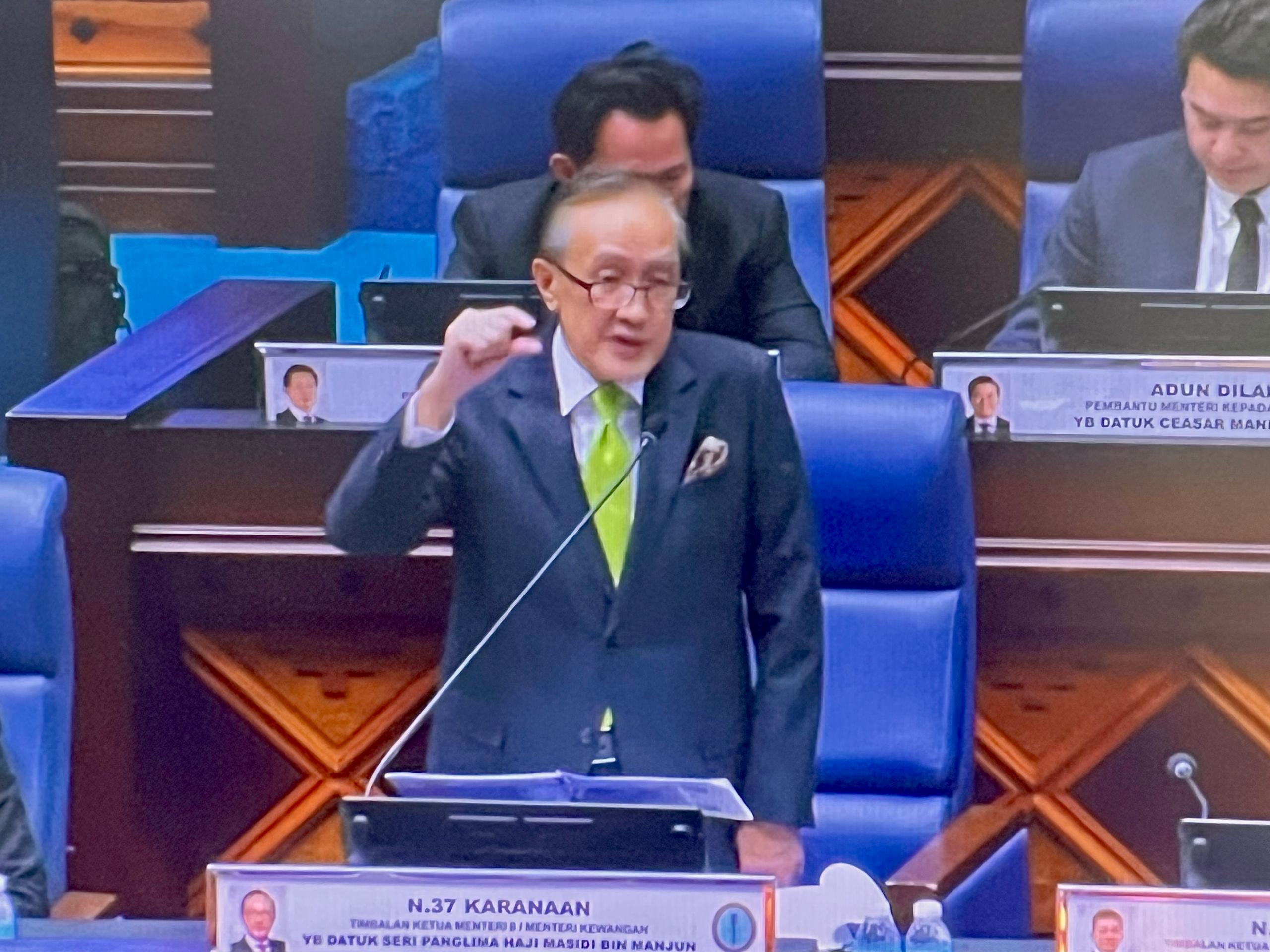
THE Sabah Government is reviewing its sales tax structure to encourage more companies to undertake downstream processing, said Deputy Chief Minister II cum State Finance Minister Datuk Seri Masidi Manjun.
“We are in the process of reviewing all the companies currently subjected to the tax to ensure that it encourages them to carry out downstream activities in the State.
Advertisement
“We currently impose state sales tax on palm oil and have been studying whether incentives can be introduced for companies that process palm oil within the State,” he told the State Legislative Assembly, Tuesday.
Masidi said the State Government engaged industry stakeholders in June regarding the palm oil sector tax.
He said among the options being considered are tax incentives or maintaining taxes at a reasonable level for companies undertaking downstream processing so they can channel more resources into research and development as well as expanding value-added activities in Sabah.
Masidi was responding to a supplementary question from Moyog Assemblyman Datuk Donald Mojuntin, who asked whether the State Government planned to review taxes for certain sectors to improve the competitiveness of Sabah’s industries.
Advertisement

Earlier, Assistant Finance Minister Datuk Chong Chen Bin @ Ben Chong said the Sabah Finance Ministry would further study the State’s tax policies, including those related to petroleum, to support downstream development and ensure more petroleum resources are processed within Sabah instead of being exported in raw form.
He said the Ministry would refine its proposals to strengthen petroleum tax policies as part of efforts to promote downstream industries.
Meanwhile, Sabah’s state sales tax collection for the main sectors as of June 30 this year stood at RM1.38 billion.
Chong said the breakdown of the collection comprises crude palm oil, including palm biomass, amounting to RM703.55 million, followed by petroleum products (RM679.45 million) and Sabah’s exports of fishery commodities (RM4.22 million).
“Meanwhile, the forestry sector is not subject to the imposition of state sales tax,” he said.
Chong was replying to an oral question from Donald who wanted to know Sabah’s sales and service tax (SST) collection by major sectors such as petroleum, palm oil, marine products and forestry products for the latest year.
Adding to Chong’s reply, Finance Minister Datuk Seri Masidi Manjun said the SST tax is imposed by the Federal Government, while the state sales tax is imposed by the State Government, and the State Government is reviewing its rates.


.png)