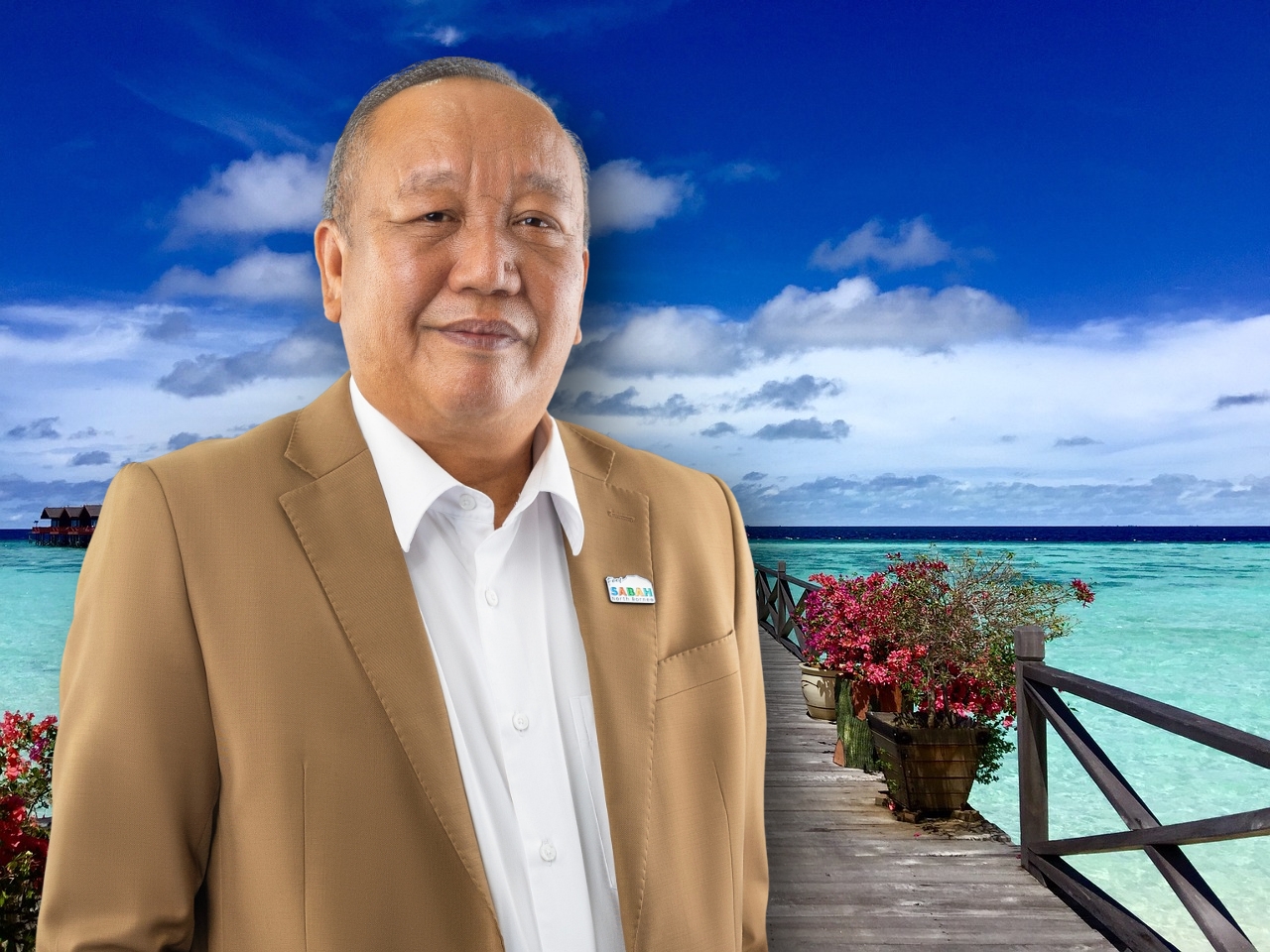
Kota Kinabalu: The use of local nominees by foreign operators to run tourism businesses under so-called “Ali Baba” arrangements could damage Sabah’s reputation and have far-reaching consequences for the State’s economy and livelihoods.
Sabah Tourism, Culture and Environment Minister Datuk Jafry Ariffin said the practice has been identified as one of the key issues affecting Semporna’s tourism industry, with capital investment and day-to-day operations believed to be controlled by foreign nationals despite businesses being registered under local names.
He noted that tourism contributes about 12 per cent of Sabah’s gross domestic product (GDP) and supports approximately 380,000 jobs across various sectors.
“I am optimistic that we can resolve this issue properly. Give us a little more time to ensure everything is addressed and structured in accordance with the law,” he said.
Bernama’s special report Semporna: An Illusion of Paradise, published on April 7, highlighted concerns over foreign ownership in Semporna, where local nominees were allegedly being used to front tourism businesses, posing a threat to the local economy.
According to Jafry, the operations are believed to span the entire tourism value chain, including resorts, accommo-dation, boat, van and tourist transportation services.
Advertisement

The State Government is also investigating allegations that some tourism package transactions are conducted entirely overseas, resulting in revenue bypassing Malaysia’s financial system and generating little benefit for Sabah’s economy.
The issue was raised by Semporna Member of Parliament Datuk Seri Mohd Shafie Apdal during the State Assembly sitting on July 20, when he alleged that hundreds of Chinese nationals were operating tourism businesses at resorts around Semporna.
Responding to the matter, Jafry said an integrated committee involving multiple ministries and agencies was established in January to identify the root causes of the problem, gather evidence and formulate comprehensive solutions.
He said investigations must be conducted carefully as the issue falls under the jurisdiction of several authorities, including the Ministry of Tourism, Arts and Culture (Motac) and local councils.
Among the matters under review is whether local individuals listed as owners of resorts and tourism businesses worth millions of ringgit actually have the financial capacity to own and operate such enterprises.
Jafry said some locals were believed to have allowed foreign operators to use their names in exchange for relatively small payments, although the number of individuals and premises involved remains under investigation.
The committee has so far identified about 198 tourism operators in Semporna, but only around 80 possess valid licences and approvals from the relevant authorities.
The remaining operators face various compliance issues, including businesses built on land under Temporary Occupation Licences (TOL) for fisheries purposes and those that have failed to secure local authority approvals or Certificates of Completion and Compliance (CCC).
Jafry stressed that efforts to tackle the “Ali Baba” issue have been ongoing since 2022 and are now being prioritised for a comprehensive solution.
The restructuring exercise is also expected to be expanded to other major tourism destinations in Sabah, including Kundasang, Sandakan and Tawau.
Meanwhile, Mohd Shafie, who is also a former Sabah Chief Minister, when raising the issue, also described the growing influence of foreign operators throughout the district’s tourism supply chain as a serious concern that could undermine economic opportunities for the locals.
He said the situation creates a negative multiplier effect on the economy and urged the government to engage affected operators and seek practical solutions.
To address the issue, Mohd Shafie proposed a regularisation programme that would encourage foreign operators to form joint ventures with local businesses or integrate into existing local enterprises.
“We do not want measures that could affect Chinese tourist arrivals. At the same time, foreign operators should not be allowed to dominate the entire tourism value chain,” he said.


.png)