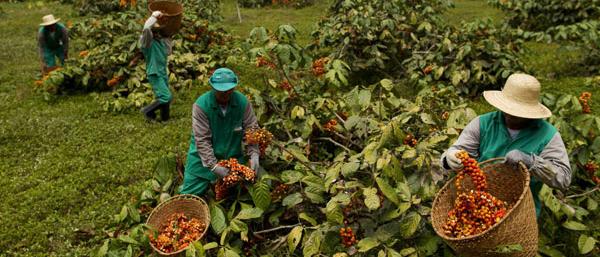
Kota Kinabalu: The Borneo International Guarana Conference 2024 (BIGC 2024) which aims to explore the opportunities and challenges facing commercial guarana farming is scheduled to be held at the Hilton Hotel here from Sept 24 – 25.
Guarana is a climbing plant in the family Sapindaceae, native to the Amazon basin and especially common in Brazil. It has large leaves and clusters of flowers and is best known for the seeds from its fruits, which are about the size of a coffee bean.
Currently, commercial farming of guarana is not permitted by the Agriculture Department of the Federal Ministry of Agriculture and Food Industries. This follows a ban on guarana importation due to concerns about potential harm to the country’s rubber industry.
However, recent developments have ignite renewed interest in the crop. In August this year, the Sabah Agriculture Department announced plans to conduct a study on guarana to develop a policy for the crop in Sabah.
This decision was made following study conducted by Universiti Kebangsaan Malaysia (UKM), which discovered that guarana has been present in Malaysia for five generations with no apparent detrimental consequences.
The legal status of guarana cultivation in Malaysia remains a topic of debate.
Advertisement

“I am glad that this Guarana International Conference is going to be held in Sabah,” Deputy Chief Minister cum Agriculture, Fisheries and Food Industry Minister Datuk Seri Dr Jeffrey Kitingan told a media conference, here, Tuesday to inform of the upcoming BIGC 2024 jointly organised Cupana Holding Malaysia Sdn Bhd, Koperasi Star Sabah Berhad and the Azman Hashim International Business School of Universiti Teknologi Malaysia.
“I am here because, like you, I am curious to know what guarana is all about because I have heard so much about guarana that it is economically good and the potential goes beyond economy,” said Jeffrey.
“It is also good for medicine and pharmaceutical uses. It is listed by the Ministry of Economy of Malaysia as a high value commodity.
“Unfortunately, it is also a product that is not yet officially allowed to be planted in Malaysia. That is what I heard. But I also hear that it is planted everywhere in Malaysia.
“There are a few questions that need to be answered. I hope this conference will come up with these answers from experts around the world so that we are not kept hanging.
When we get the answers, then it will be easier for people to feel comfortable that this industry will assist them to get out of poverty and to drive economy just like other commodities.
“I mean, look at rubber. Where did it come from? Brazil. Where did the oil palm come from? South Africa. But now we have Malaysian rubber. We are among the biggest producers of oil palm. And now it is called Malaysian oil palm or Malaysian rubber.
“Could it be that one day our guarana that grows here will be a Malaysian guarana? I have heard also that in the Borneo Island, guarana is also in the jungle. It is native to Borneo. We need the answers to that as well.
“So, this conference is crucial to find out the answers and that’s why it is good that we have this conference so that we can have the answers. And then, when the answers are available, then we need political will to make the decision.
“If we don’t organise this, we will never find out the answers and 20 years from now, we might regret not making a decision earlier,” said Jeffrey.
On what are the main key points that the Sabah Government will look into to consider allowing guarana cultivation in Sabah, Jeffrey said “The most important part is whether it will be economically helpful the country.
“Second, that it is not harmful. Third, that we can plant it, we are allowed to plant it. Once we get this three questions answered and we are confident about it then we will go all the way to help promote the industry in Sabah,” he said.
When asked if hosting the conference implied the Sabah Government’s endorsement of guarana cultivation, Jeffrey said “Not exactly. We want to find out before we make a decision.”
“It is better to do it now then to wait until somebody else hijacks this opportunity,” he said pointing out the importance of exploring the opportunity proactively.
Also present was Cupana Holdings Sdn Bhd Chief Operating Officer Datuk Syed Isa Syed Alwi who said that as far as the Nagoya Protocol is concerned, there is no restriction.
The Nagoya Protocol on Access to Genetic Resources and the Fair and Equitable Sharing of Benefits Arising from their Utilization to the Convention on Biological Diversity (the Protocol) aims to ensure that owners or guardians of genetic resources receive a “fair share” of any benefits that arise from research conducted with those resources.
The Nagoya Protocol came into force on 12 Oct 12, 2014, and has been signed by over 50 countries including the UK and the EU.
“The Nagoya Protocol was signed by the Malaysian and the Brazilian government in which there is a shared of wealth from the plant. There is actually no restriction,” Syed said when asked whether the Nagoya Protocol has been taken into consideration over the proposed guarana cultivation in Malaysia.
“We had a meeting with the Ministry of Environment, the Deputy Director was there and she clearly explained the Nagoya Protocol to us, stating the same information I’ve just told you.
“Unfortunately, the minutes for that meeting were not recorded, but we attended the meeting. It was held at UKM a couple of months ago and was attended by Mardi, Department of Environment, Department of Agriculture, and many other people. We had a discussion there.
“So as far as the Nagoya Protocol is concerned, there are no restrictions. This is what we have been led to understand,” he said.
He also believes that the widespread adoption of guarana farming could generate sustainable income.
“The idea is to bring 450,000 B40 families from the B40 to go into the M40 bracket by using something like guarana.
“If you were to earn RM2, 000 to RM4, 000 a month, you need 10 acres of land and you have to have quite a big plantation. But when you do it with guarana, you only need 30 plants with 4,000 square feet of land,” he said.
The upcoming conference will feature speakers addressing various aspects of guarana cultivation and industry development, including legal considerations.
A total of 16 experts from around Malaysia, Indonesia, including Seth Garfield a historian professor from the University of Austin in Texas, who has been studying guarana for more than 30 years.


.png)