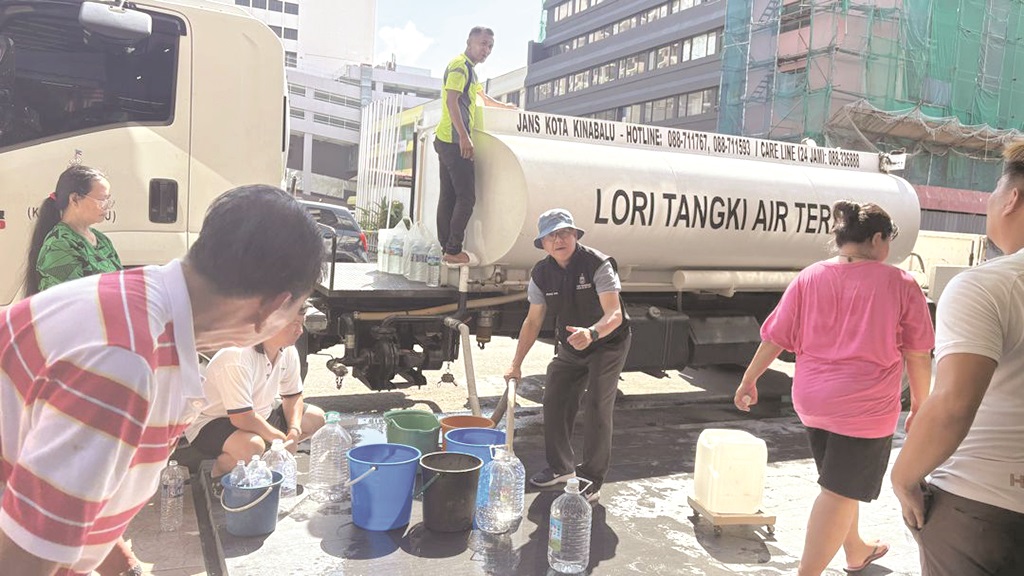
Kota Kinabalu: Api-Api Assemblyman Loi Kok Liang said the widespread water disruptions affecting several areas in Kota Kinabalu over the past two weeks are not isolated incidents, but yet another reminder that Sabah’s long-standing water supply problems remain unresolved.
He said it is particularly concerning that the crisis is no longer confined to rural areas. Major commercial and residential areas in the city centre, including Segama, KK Plaza and Merdeka, have also experienced prolonged water disruptions, reflecting the growing severity of Sabah’s water supply challenges.
Advertisement

“This should serve as a wake-up call for the State Government to demonstrate greater commitment and urgency in addressing the root causes of the problem, rather than relying on temporary measures,” he said in a statement, Friday.
Since the disruptions began, the constituency service centres of Api-Api, Likas and Luyang have worked closely with the State Water Department, affected residents and business operators to coordinate emergency water supply assistance and minimise the impact on daily life and business activities.
Over the past two weeks, the teams have coordinated the deployment of water tankers to affected locations on a daily basis. In Segama alone, one to two water tankers were arranged almost every day to provide emergency water supply for residents and businesses.
The service centres also facilitated coordination meetings between the management of KK Plaza and Merdeka and senior officers from the Sabah Water Department (JANS) to relay the challenges faced on the ground and secure additional tanker support for affected areas.
Beyond coordinating emergency water supply, staff from the constituency offices have been on the ground every day, assisting residents in carrying and delivering water to homes and business premises, with particular attention given to senior citizens, persons with mobility challenges and families with young children.
Loi said the experience has reinforced an important lesson.
“During a crisis, what people need most is not explanations, but practical assistance that genuinely eases their burden. As long as residents continue to face water disruptions, our teams will remain on the ground to coordinate assistance and work with all relevant agencies to find the best possible solutions,” he said.
He also expressed his appreciation to JANS for maintaining close communication with the constituency offices and for its cooperation in coordinating emergency water supply efforts.
He further thanked the department’s frontline technical personnel for working tirelessly around the clock to repair damaged infrastructure, restore water supply and deploy water tankers to affected communities.
Loi stressed that while emergency tanker deliveries, repair works and other temporary relief measures are necessary, they cannot substitute for sustained investment in water infrastructure and long-term planning.
“If every major water disruption forces people to depend on water tankers just to meet their basic daily needs, then this should never become the accepted norm,” he said.